Full story
Pilot talks delayed
A planned virtual meeting between Lebanese, Israeli and US military representatives to discuss the implementation of pilot zones in southern Lebanon was postponed on Friday, sources told Arab News.
The meeting had been expected to focus on finalizing the pilot zones, setting a timetable for Israel’s withdrawal and expanding the Lebanese army’s deployment under the framework agreement signed in Washington on June 26.

A Lebanese military source told Arab News, “It was supposed to take place today, but no time had actually been set for it, partly because of the time difference between Lebanon and the US,” and the source said the postponement was to a later date “yet to be agreed.”
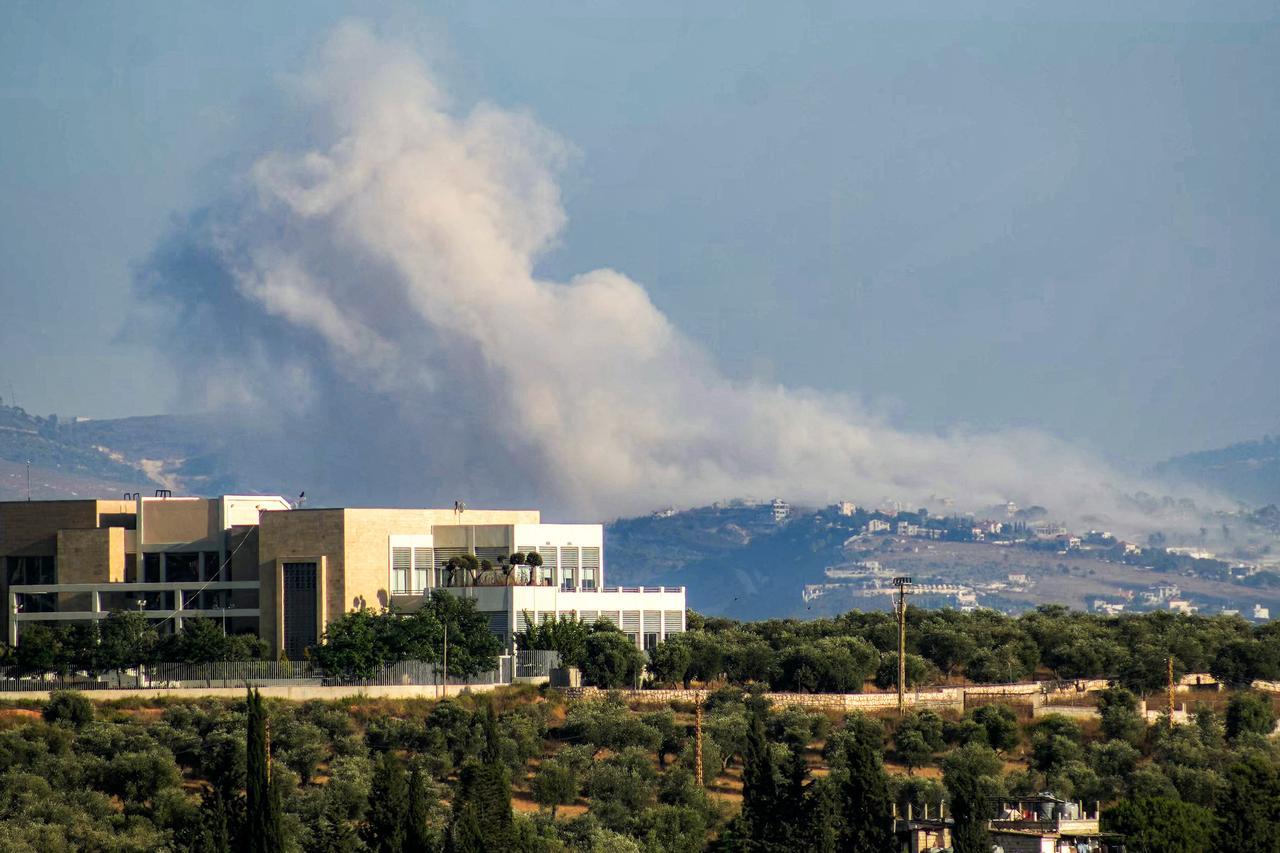
As Lebanese army units stepped up their presence in southern Lebanon, conducting patrols and establishing checkpoints in the towns of Froun, Ghandourieh, Qalaouiyeh, Burj Qalaouiyeh and Kfar Dounine, the military source said, “We are present in these zones and have reinforced our deployment over the past two days to make it clear that we are on the ground and carrying out our mission.”
Competing interpretations
Western diplomatic sources cited by Ici Beyrouth said divergences had emerged between the two Lebanese delegations in charge of the discussions, one political and the other military, and that disagreements led to the postponement of the virtual meeting planned between the American, Lebanese, and Israeli military delegations.
Ici Beyrouth said the Lebanese Army, absent from the Rome meeting, continued to demand a clear timetable for the Israeli withdrawal from the occupied Lebanese territories and refused to include villages and localities located beyond the Blue Line in the perimeter of the experimental zones.

Lebanese sources told Ici Beyrouth that the postponement was due to the lack of sufficient preparation to launch the implementation and supervision mechanism, while it also said “no date has yet been set for the start of the said zones.”
Ici Beyrouth added that Western diplomatic sources were “much less optimistic,” saying that Iran's blocking effort, first and foremost, and Israel's blocking effort, second, remained stronger than the intentions and decisions of the Lebanese authorities.
Yellow Line stakes
A broader reading of the negotiations in L'Orient Today said the verification mechanism under discussion was intended not only to oversee Hezbollah's disarmament but also to dismantle the group's military infrastructure, prevent it from rebuilding its capabilities and ensure its fighters remained away from the Israeli-imposed “yellow line.”
L'Orient Today said Lebanon remained focused on discussions over the proposed “pilot zones,” including how they would be implemented and how the Lebanese Army would verify its responsibilities there, but it also said “No timetable has been set for extending the pilot zones to other parts of southern Lebanon.”
In Arab News, retired Brig. Gen. Mounir Chehade said the postponement of the military meeting was not “merely a procedural detail that can be overlooked,” and he warned that the central point of contention over the ‘pilot zones’ reflected broader concerns over Lebanese sovereignty.
Chehade told Arab News that Lebanon considers a pilot zone to be territory occupied by Israel during the war, where an Israeli withdrawal would coincide with the deployment of the Lebanese army, while Israel considers a pilot zone not necessarily to be territory under direct occupation but an area where the Lebanese army’s ability to establish control can be tested.