Lebanon14 August, 20262 min read
Lebanese PM Nawaf Salam Urges Clear Timetable for Israeli Withdrawal From Lebanon
This article is an automated aggregation of coverage from news outlets. Our editorials offer in-depth analysis curated by the NewsCord team.
Salam pressed for a clear timetable for Israel's withdrawal from Lebanese territory. He discussed the military track of the negotiating framework with US officials.
Al Jazeera was read line by line by the Watchdog: 1.5. See the score →
Withdrawal timetable demanded
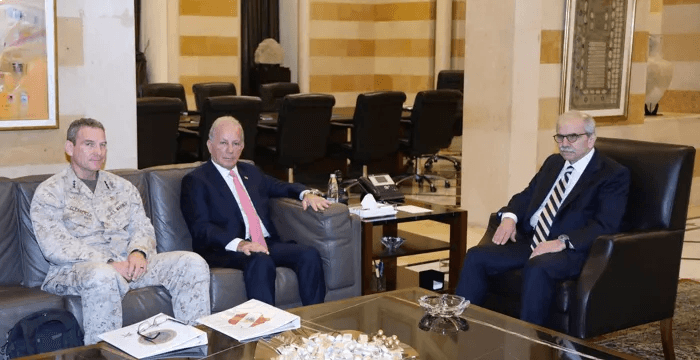
Lebanese Prime Minister Nawaf Salam met US Ambassador to Lebanon Michel Issa and Major General Joseph Clearfield, head of the Military Coordination Group for Lebanon (MCG4L), and called for an end to Israeli military operations in Lebanon, an expansion of designated pilot areas, and a clear timetable for the withdrawal of Israeli forces from Lebanese territory. Salam stressed the need to halt Israeli destruction operations, expand the scope of the pilot areas, and set a clear timetable for Israel’s withdrawal from Lebanese territory, according to Lebanon’s National News Agency.
In a related development, Salam responded to Hezbollah Secretary-General Naim Qassem, who accused the Lebanese government of offering Israel “free concessions,” and Salam said those accusing political authorities of “helping Israel instead of supporting Lebanon’s sovereignty” were ignoring the realities of recent years. The Times of Israel reported that Salam also condemned what he said was Israel’s “systematic destruction” in the country’s south as a violation of international law, while Defense Minister Israel Katz said its military was “destroying all the houses” there.

Hezbollah, US push back
Parliament Speaker Nabih Berri met the same US officials separately and said, “Israel has not stopped its violations and attacks on Lebanon,” citing continued village demolitions, bulldozed farmland, forest fires and damage to heritage sites. Berri added, “The key to stability remains forcing Israel to stop its war and withdraw to the international border,” while Issa described the atmosphere as “positive” and said negotiations would continue without specifying a date for the next round.
Hezbollah chief Naim Qassem hit back at Beirut’s remarks by accusing Lebanese officials of putting the army under “undue pressure” by implementing a non-functional agreement. Qassem also challenged the deal by pointing to Israel striking homes and demolishing tunnels inside Zawtar al-Gharbiyeh, the first designated pilot zone, despite the Lebanese army’s presence there, and he asked officials to “name a single achievement from the seven rounds of negotiations”.

Casualties, next talks
Lebanese authorities say Israel’s attacks since March 2 have killed 4,335 people, wounded 12,277 and displaced more than a million, as the next round of talks was expected to resume in early September. The Times of Israel reported that the Lebanese Armed Forces are implementing the first pilot zone and that the United States will continue to support full implementation of that process, while a State Department official said “A permanent military presence in south Lebanon is not consistent with the commitments made in the framework.”
Al Jazeera reported that US Ambassador Issa said Israeli attacks would stop only once Hezbollah disarms, adding, “If they give up their weapons, everything will stop,” while Israeli Defense Minister Israel Katz said Israel will not withdraw until Hezbollah is disarmed. The Times of Israel also said Israeli troops carried out detonations in southern villages including Zawtar al-Shariqya, where Lebanon’s army said Israel blew up “the municipal building in Zawtar al-Shariqya” as well as “a public school, a health clinic, a children’s nursery and a number of homes.”