Crime21 October, 20253 min read
Lisbon Funicular Operator Uses Uncertified Cable, Causing Deadly Crash That Kills 16
This article is an automated aggregation of coverage from news outlets. Our editorials offer in-depth analysis curated by the NewsCord team.
The cable that snapped was uncertified and unsuitable for passenger funicular transport. The cable used since 2022 had incompatible material properties, including a synthetic fiber core.

9 outlets told this the same way.
Lisbon Funicular Crash Investigation
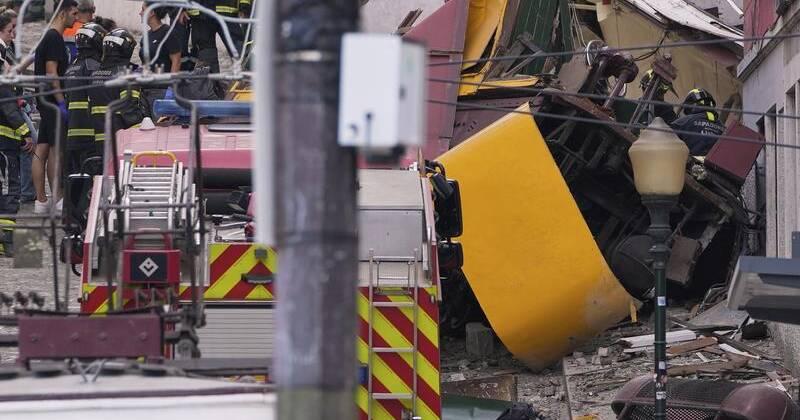
A preliminary probe into the September crash of Lisbon’s historic Glória/Gloria funicular found the steel haulage cable was not certified for passenger use and failed to meet the operator’s standards. The cable snapped and sent the cars out of control, killing at least 16 people and injuring many more. Reports describe the top carriage derailing and crashing into a building after the break.
“A preliminary report into the September crash of Lisbon's Gloria funicular, which killed at least 16 people and injured 21, found that the steel cable... was not certified for public transport and did not meet the city's transport operator's standards.”
Witnesses said the car was “out of control” before impact. Authorities and media emphasize both the human toll and technical failings.

A memorial with notes and flowers now marks the site as the city mourns. Investigators say this was a deadly railcar crash triggered by the snapped cable on the popular 19th‑century Elevador da Glória line.
Funicular Safety and Maintenance Issues
Investigators and media agree the cable was uncertified and below standards. They also highlight wider safety and maintenance failures. DW reports outdated or inapplicable maintenance standards.
Emergency braking systems capable of stopping the car after a cable break were either inoperable or insufficient. Devdiscourse cites the GPIAAF preliminary probe pointing to inadequate cables, poor internal controls at operator Carris, and systemic maintenance deficiencies.

Fakti.bg likewise quotes GPIAAF saying the cable was not suitable for this type of funicular. Authorities suspended services, with DW noting all Lisbon funiculars halted as the probe proceeds.
Cable Rupture Details and Discrepancies
Key details diverge on how long the cable had been in service and what the rupture signifies. DW says the cable had been in use for less than a year. Plataforma Media specifies a rupture after 337 days at the cabin fixing socket inside the detwister—an area inspected only during cable replacement.
“The cable had been in use for less than a year.”
Plataforma Media also notes similar cables had previously run over 600 days without issues and that it’s unclear if the rupture directly caused the accident. In contrast, fakti.bg reports the cable was used since 2022 on the “Gloria” line, creating a timeline contradiction with DW and Plataforma Media. All outlets agree the cable snapped, but the causation chain and service duration remain areas of ambiguity pending the final report.
Maintenance Issues at Carris Funicular
Maintenance governance and contractor practices emerge as systemic weaknesses. Devdiscourse reports that GPIAAF found outdated procedures, inadequate cables, and poor internal controls at Carris, which has outsourced maintenance since 2007. Plataforma Media adds granular detail, stating that the external provider MNTC Portugal lacked specialized funicular engineering staff.
Cables were installed without clear technical guidelines or quality control. Workers noted unusual cable behavior. Socket installation relied on informal, undocumented methods.
Carris failed to update maintenance standards or document supervision. DW highlights outdated or inapplicable maintenance standards. Fakti.bg focuses on the cable being unsuitable for this type of funicular.
Lisbon Funicular Incident Update
Authorities expect a final report within about a year. Lisbon has suspended funicular operations while mourning victims and assessing accountability. DW reports that all other funiculars in Lisbon have been suspended and that a full investigation report is expected next year.
“Following the accident, all other funiculars in Lisbon have been suspended.”
Fakti.bg and Plataforma Media similarly note a final report is due within a year. Букви highlights the public grief with a makeshift memorial.

Fakti.bg adds that the funicular’s scale and heritage—around 3 million riders annually on the 19th-century Elevador da Glória—underscore the broad impact of the shutdown. Until the final findings clarify causation and responsibility, investigators are focusing on uncertified equipment, maintenance standards, and procedural lapses identified so far.