
Yemen · updated 1h ago · 3 min read
Macron Deploys French Military Assets to Protect Saudi Yanbu as Houthis Target Saudi Arabia
Macron announced deployment of military means to protect the Yanbu oil terminal. Yanbu is Saudi Arabia's main crude oil export terminal on the Red Sea.
10 outlets told this the same way.
10outlets compared
Yanbu, missiles, and support
France’s President Emmanuel Macron announced the deployment of “military assets” to Saudi Arabia to protect the Yanbu site, which Saudi Arabia described as its main crude oil export terminal on the Red Sea and a target for Yemen’s Houthis. Macron said France would send “soldiers, radars, defense systems to protect” Yanbu, while Saudi Arabia reported that it intercepted ballistic missiles launched by the Houthis after issuing warnings for several regions including Mecca. Euronews tied the attacks to fighting in Yemen between the Houthis and government forces backed by Riyadh, and it described a series of increased Houthi attacks since July when hostilities resumed after a multi-year truce.
Euronews also reported that the coalition led by Saudi Arabia said it had intercepted six ballistic missiles, foiling attacks on Taif and Yanbu, as Houthi strikes targeted oil tankers and territory and seized large swaths of the Yemeni coastline on the Red Sea. France’s deployment was framed as defensive and aimed at protecting a crucial energy node, with Macron telling France 2 and TF1 that “Not to participate in battles, but to protect this site.”
Debate in France
Jean-Luc Mélenchon denounced Macron’s plan as he called for Parliament to be seized under Article 35 of the Constitution, saying “Troops in Saudi Arabia mean settling on a theater of war.” Sébastien Chenu argued against sending French military personnel to protect Yanbu, telling RMC-BFMTV that “we should not send French military personnel to protect the Yanbu site.” Turki al-Maliki, the coalition spokesman, said on X that “The escalations and violations by the terrorist Houthi militia will be dealt with firmly,” as Saudi Civil Defense issued alerts including one for Mecca.
The Houthis claimed they launched an attack involving ballistic missiles and drones to target command centers and weapons depots in southern Saudi Arabia, and the Houthis claimed Yemeni, Sudanese and Saudi personnel were killed and wounded. Iranian President Masoud Pezeshkian denied that Tehran directs the Houthis’ battle plans, saying “The Houthis are responsible for their own actions.”
Energy stakes and Yemen war
Yanbu’s strategic role anchored the stakes, because the port is connected to oil-producing regions near the Gulf by the East-West pipeline, also known as Petroline, and the sources described it as an alternative route to bypass the Strait of Hormuz. TF1info said Yanbu’s location on the Red Sea gives Saudi Arabia an alternative route for delivering crude and petroleum products to European markets, and it added that the East-West pipeline connects the port city to Abqaiq. The pipeline’s capacity extends about 1,200 km to Yanbu and is 4 to 5 million barrels per day, while the corridor was attacked this month by Yemeni Houthi rebels with drones and missiles hitting the pipeline and the Yanbu terminal.
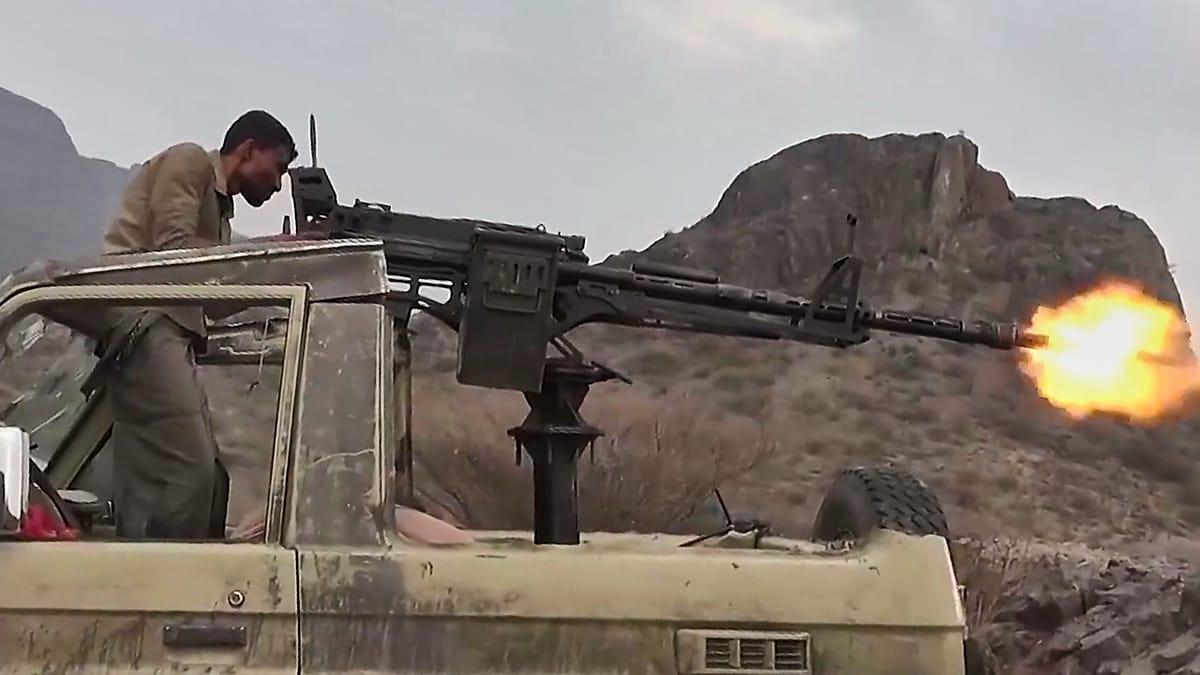
The clashes in Yemen have killed at least 150 people in the last 24 hours, and AFP’s tally counted at least 98 members of government forces killed and at least 52 Houthi fighters killed. The Houthis claimed attacks against Aramco facilities in Yanbu and an unidentified site in Riyadh, as Saudi air defenses announced they had shot down six missiles targeting the Ta’if and Yanbu regions on the Red Sea.