Iran07 October, 20262 min read
Marco Rubio Says Iran Lost Complete Control Of Strait Of Hormuz
This article is an automated aggregation of coverage from news outlets. Our editorials offer in-depth analysis curated by the NewsCord team.
Rubio claims Iran has lost complete control of the Strait of Hormuz; oil flow near pre-conflict levels. Iranian officials say the Strait remains closed and under full control of Iran's armed forces.
Rubio and Iran’s claims
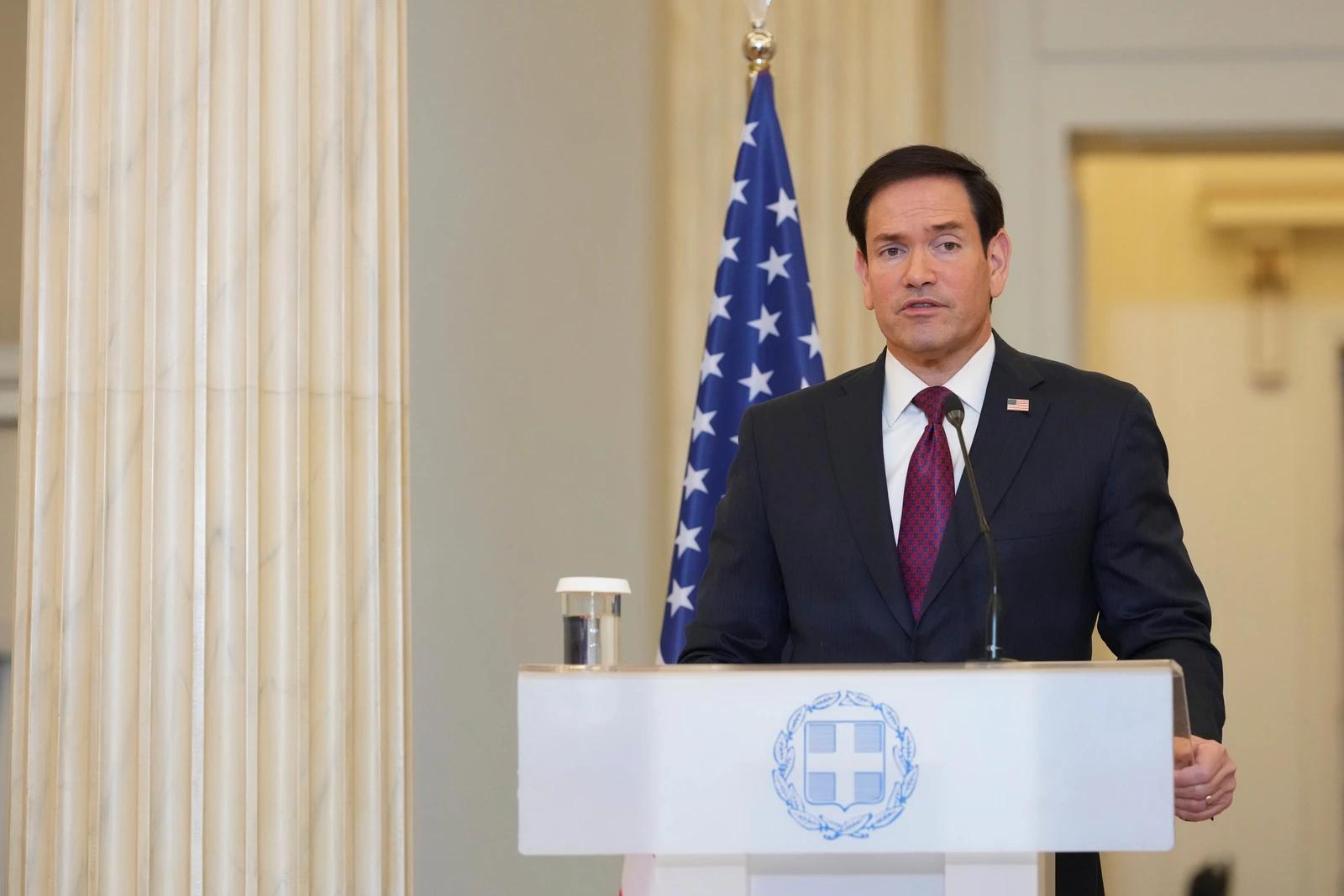
US Secretary of State Marco Rubio told reporters during a visit to Athens that Iran “lost complete control” of the Strait of Hormuz, adding that “There’s almost as much oil flowing out now as there was before this conflict began.” Rubio argued that “crippling” sanctions have pushed Iran’s economy into “total and complete freefall,” and he said every dollar received by “the radical Shia clerics” is spent on Hezbollah and Hamas.
Brigadier General Naghdi said Tehran’s position is that the Strait of Hormuz remains closed and under the full control of Iran’s armed forces until Iran’s “legitimate demands are met.” Mohammad Reza Naqdi said Iran is preparing to shut “illegal passages” through the Strait of Hormuz, and he said Iranian forces have full control over the strait and will block unauthorized routes in rocky sections.
Oil flows and shipping
U.S. Vice President JD Vance echoed Rubio’s assessment that Iranian attacks on commercial shipping were “largely failing” and had not been enough to halt the flow of oil and gas.
President Donald Trump told reporters that millions of barrels of oil had been delivered through the waterway over the previous couple of days, with flows reaching levels that were “even and sometimes exceeding” those recorded before the war.

U.S. Central Command (CENTCOM) said in September that American forces supported more than 2,000 commercial vessel transits through the Strait of Hormuz and helped move more than 1 billion barrels of crude oil from Gulf partner nations over the previous several months.
Kpler Risk and Compliance data, based on MarineTraffic tracking, showed 157 vessel crossings from Sept. 28 to Oct. 4, down 22.7% from 203 the previous week, while Kpler estimated 21 liquefied natural gas (LNG) cargoes exited the Strait of Hormuz in September.
The New Arab said estimates by data tracking platform Kpler indicate that Arab countries shipped at least 16.5 million barrels of oil out of the region per day during the month.
Leverage, negotiations, and risk
The New Arab said Iran and the US were taking tentative steps towards a deal to re-open the Strait of Hormuz, and it framed the question as whether Iran is losing control of the chokepoint. Ria Reddy, Iran team deputy lead at the American Enterprise Institute’s Critical Threats Project, said, “Iran appears to have lost significant leverage over the Strait of Hormuz.” The New Arab said the US blockade turned the tables on Iran by trapping its oil in the region and depriving it of billions of dollars of vital revenues, while also describing a “tanker for tanker” policy aimed at deterring IRGC attacks on maritime traffic.
Rubio said Iran cannot have a nuclear weapon, “simple, period, end of story,” and he argued that any agreement acceptable to the United States must ensure Iran will never have a nuclear weapon. Naghdi said Iran’s limited weapon range is a matter of policy rather than technical constraints, and he emphasized that domestically produced weapons can be increased based on battlefield needs and requirements.