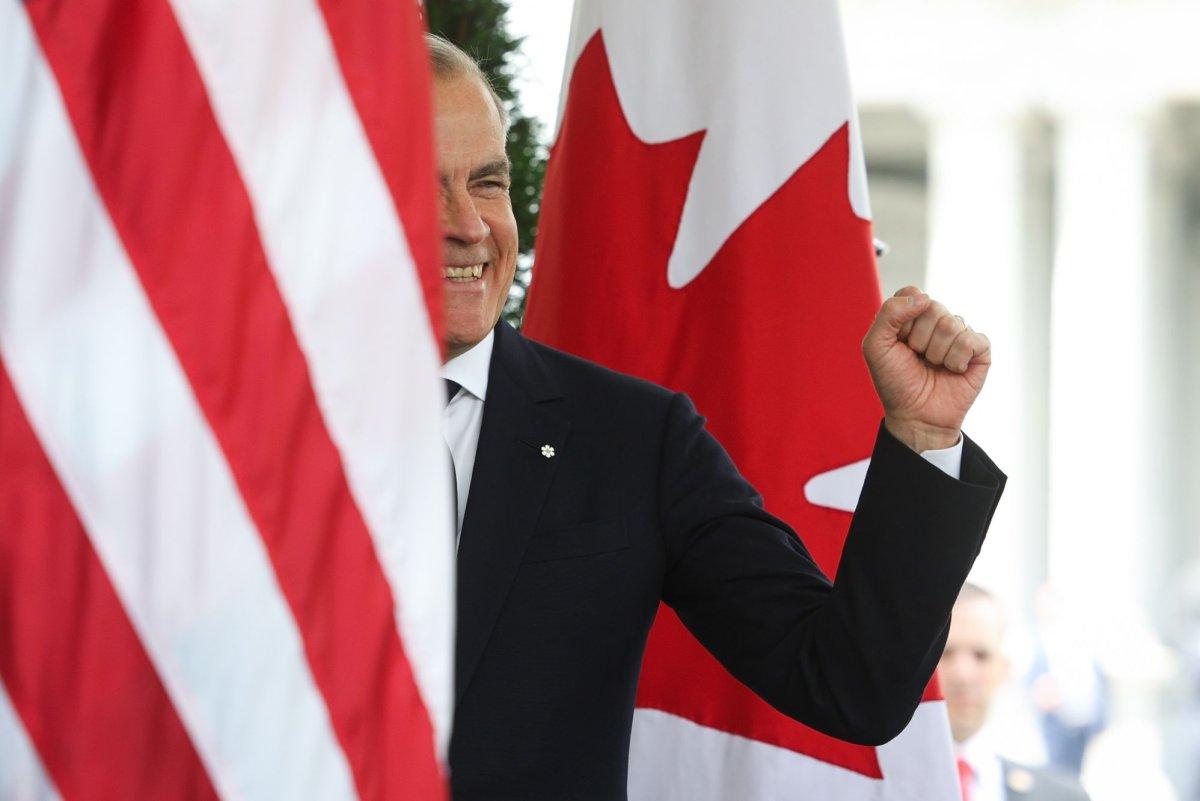
Mark Carney Says Canada’s Close Economic Ties With United States Have Become Weaknesses
Key Takeaways
- Canada plans to diversify foreign trade away from the United States through new trade agreements.
- Carney: Canada-U.S. economic ties are a weakness that must be corrected.
- Carney plans to give Canadians regular updates on diversification efforts.
Carney’s “Weakness” Message
Canadian Prime Minister Mark Carney said in a 10-minute video posted Sunday that Canada’s close economic ties with the United States have become a “weakness” that must be corrected.
“Canadian Prime Minister Mark Carney has said that after decades of partnership with the United States, close economic ties between the two countries have become a “weakness” that must be corrected”
Carney framed the shift as a response to what he described as a fundamental change in U.S. trade policy, saying “The US has fundamentally changed its approach to trade, raising its tariffs to levels last seen during the Great Depression.”

He added, “Many of our former strengths, based on our close ties to America, have become weaknesses,” and concluded, “Weaknesses that we must correct.”
In the same video, Carney told Canadians, “We have to take care of ourselves because we can’t rely on one foreign partner,” and said, “We can’t control the disruption coming from our neighbours. We can’t control our future on the hope it will suddenly stop.”
Carney also said, “Security can't be achieved by ignoring the obvious or downplaying the very real threats that we Canadians face,” and promised, “I will never sugarcoat our challenges. Instead, I'll talk to you directly and regularly about the plan.”
The remarks came as U.S. President Donald Trump’s tariffs and trade posture continued to pressure sectors including auto, steel and lumber, with Carney saying workers in those industries “remain under threat.”
Tariffs, Trade Review, and China
Carney’s “weakness” argument was tied directly to tariff levels and to the broader North American trade review process.
CBC reported that Carney’s video came “just days after U.S. Commerce Secretary Howard Lutnick took a swipe at Canada's trade strategy” ahead of reviewing the current version of North America’s free trade agreement.
In CBC’s account, Lutnick responded to a suggestion from Canada’s former trade negotiator, Steve Verheul, that time was on Canada’s side, saying, “That is, like, the worst strategy I’ve ever heard. They suck, they — look, we are a $30-trillion [US] economy, right?”
Lutnick also attacked Carney’s approach to China, saying, “Carney has a problem with us. He gets on a plane and he goes to China,” and adding, “Does he think the Chinese economy is going to buy his stuff?”
The tariff pressure described in the reporting included a specific set of rates and sectors, with UPI saying the disruption was “triggered in part by a broad 10% tariff” and describing “a 50% tariff on Canadian products that are almost entirely made of steel, aluminum or copper” and “a 25% tariff” on products “largely” made of those metals.
Carney’s diversification plan was also anchored in a China deal that CBC described as allowing “49,000 Chinese electric vehicles into its market at a tariff rate of 6.1 per cent — down from 100 per cent,” while China agreed to lower tariffs on Canadian canola to “15 per cent” and remove levies on canola meal, lobsters, crab and peas “until at least the end of 2026.”
Opposition Pushback and Lutnick’s Critique
Carney’s video also drew immediate political pushback from the Conservative Party, while U.S. officials continued to challenge Ottawa’s trade approach.
CBC reported that in a Conservative video published Sunday afternoon, deputy leader Melissa Lantsman argued Carney had failed to make meaningful progress on major projects, saying, “What has [Carney] delivered? More speeches, more so-called guidance, more agreements to make agreements.”
Lantsman told Canadians, “Canadians don't need forward guidance. They live in the real world, not the Bank of Canada press conference world,” and said, “The Liberals have had their decade, and it's been another year. It's time for results.”
In the same CBC report, Carney’s message was contrasted with Lutnick’s remarks about Ottawa’s China strategy, including Lutnick’s line, “Carney has a problem with us. He gets on a plane and he goes to China,” and his question, “Does he think the Chinese economy is going to buy his stuff?”
Lutnick also criticized the idea of taking Chinese electric cars, saying, “Carney] came back and said, 'Oh, we'll take their electric cars.' I mean, is this nuts?”
CBC said Carney’s video framed his outreach as a direct conversation with Canadians and promised “regular updates on Canada's diversification efforts,” while also warning, “Security can't be achieved by ignoring the obvious or downplaying the very real threats that we Canadians face.”
Davos, “Forward Guidance,” and the Brock Statue
Carney’s Sunday remarks were also presented as part of a broader political narrative that included his Davos speech and a symbolic reference to Canadian history.
CBC said Carney’s video highlighted a miniature statue of Maj.-Gen. Sir Isaac Brock, a British soldier dubbed the “Hero of Upper Canada” during the War of 1812 against the United States.
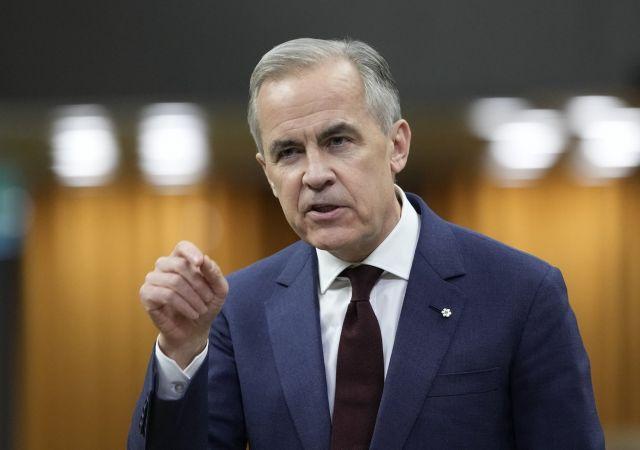
Carney told viewers, “Brock was a hero who fought and gave his life for our forebearers in the War of 1812,” and said, “Before Canada even existed on paper, it had a shape in Brock's imagination.”
CBC reported that Carney described Brock’s actions as building alliances across the land and said the statue on his desk reminded him “that when we're united as Canadians, we can withstand anything.”
In Castanet’s account, Carney branded his Sunday video with the title “Forward Guidance,” saying it was a term he invented as a central banker responding to crises, and he described it as involving acting with “overwhelming force against our problems until they were solved,” while providing updates to the public.
AP later tied the Davos episode to a dispute over whether Carney had retracted his comments, reporting that Carney rejected a Fox News claim by U.S. Treasury Secretary Scott Bessent and said, “To be absolutely clear, and that’s what I told the president: what I said in Davos, I meant it.”
Carney’s Next Steps and Stakes
The stakes of Carney’s diversification push were described in the reporting as both economic and political, with the prime minister linking trade strategy to security and to Canada’s ability to withstand disruption.
CBC said Carney’s video framed his message as a chance to talk to Canadians directly about threats the country faces and promised “regular updates on Canada's diversification efforts,” while also insisting, “I will never sugarcoat our challenges.”

UPI reported that Carney’s comments came as Trump’s trade actions and the “oft-repeated desire to annex Canada as the '51st state'” were part of the pressure environment, and it quoted Carney saying, “Workers in our industries most affected by U.S. tariffs in autos and steel and lumber are under threat.”
AP reported that Carney told Trump he stood by what he said in Davos and that Canada plans to diversify its foreign trade “through a dozen new trade agreements,” and Carney said Trump was “impressed” after he described the plan as “12 new agreements, four continents, in six months.”
AP also reported that Carney said Trump threatened last weekend to impose a “100% tariff” on goods imported from Canada if Canada pressed ahead with a trade deal with Beijing, while Carney said Canada has “no interest in negotiating a comprehensive trade agreement with China.”
AP further reported that Carney said he plans to travel to India, Australia, and other countries to diversify trade and move away from dependence on the United States, which AP said absorbs “more than 75% of Canada’s exports.”
More on Canada

Montreal Shooting Kills Police Officer, Civilian, and Suspect in Côte-des-Neiges
44 sources compared

Harshita Nair And Mahial Sran Die After Being Swept Into Ocean Near Yellow Bank Beach
14 sources compared

Justin Trudeau Defends Skipping Canada World Cup Opener To Watch U.S. Vs Paraguay
17 sources compared

PSNI Charges 30-Year-Old Sudanese Man With Attempted Murder in North Belfast Knife Attack
15 sources compared