South America · updated 1h ago · 2 min read
Michelle Bachelet Withdraws UN Secretary-General Bid After Security Council Straw Poll
Bachelet withdraws UN secretary-general bid after poor Security Council straw-poll results. Brazil and Mexico had supported her candidacy; Chile had withdrawn sponsorship earlier.
Al Jazeera.
3 of 4 outlets skipped it: chile withdrew its support after President Jose Antonio Kast took office.
15outlets compared
Same story, two versions
tap a side to read it in full
The Straits Times
“Bachelet stressed that by running for the top UN post, she had helped spark debate “that the next secretary-general should be a woman from Latin America”.”Read the original ↗
Al Jazeera
“she received just one “encourage” vote, 11 “discourage” votes and three “no opinion” votes”Read the original ↗
Some outlets foreground her symbolic gender goal; others foreground her weak Security Council poll performance.
Bachelet quits UN bid
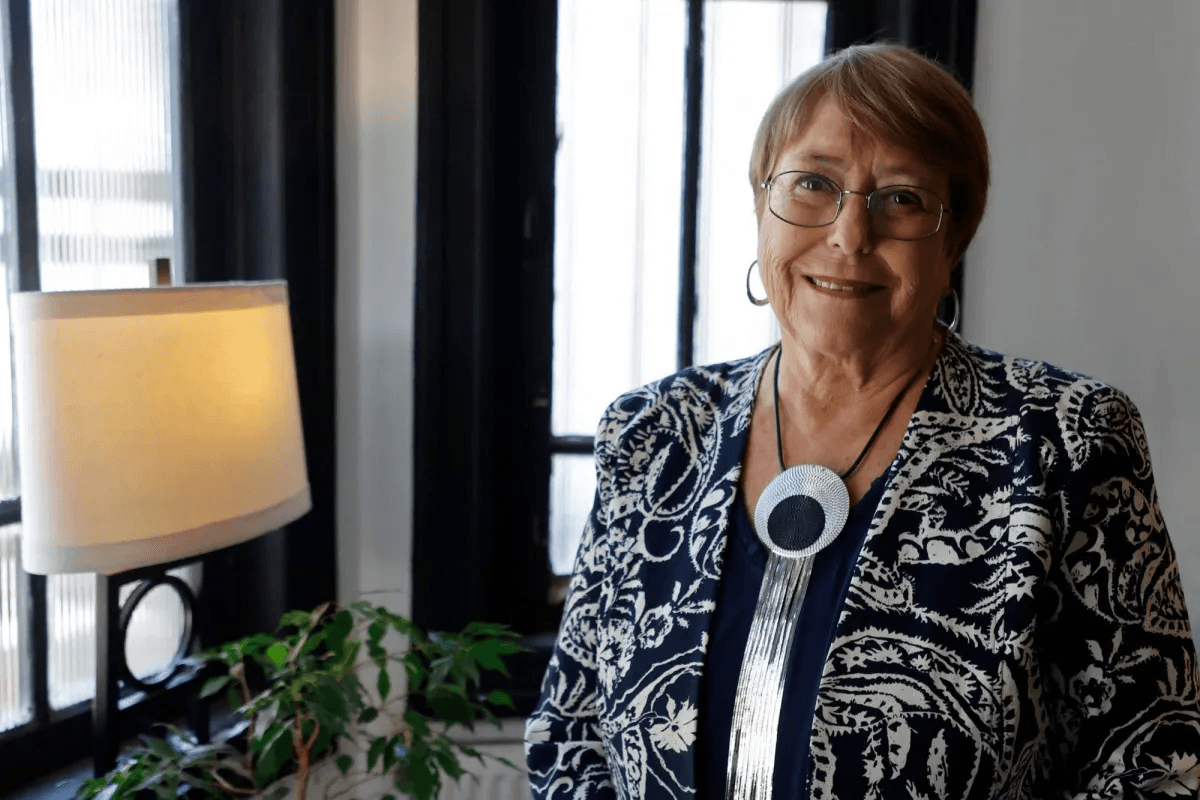
Michelle Bachelet withdrew from the race to become the next United Nations secretary-general, ending her bid to become the first woman to lead the world body in its 80-year history.
“Today I announced that I have decided not to continue with my candidacy for the position of Secretary-General of the United Nations”
Bachelet, 74, announced her decision on Saturday in a video posted on Instagram, saying, “Today I announced that I have decided not to continue with my candidacy for the position of Secretary-General of the United Nations,”.

Her withdrawal followed the UN Security Council’s third informal straw poll held on Friday, in which she received just one “encourage” vote, 11 “discourage” votes and three “no opinion” votes.
The same poll put Costa Rica’s Rebeca Grynspan in the lead with nine encouraging votes, closely followed by Guyana’s Carolyn Rodrigues-Birkett with eight.
Bachelet had been nominated by Chile in February with backing from Brazil and Mexico, and Antonio Guterres’s term ends on December 31.
Mexico and Chile debate
Mexico defended Bachelet’s credentials after her withdrawal, with the Government of Mexico saying it regrets her resignation to lead the UN and praising her as an “integral, humanist, and just” figure.
In Mexico’s Foreign Ministry statement, it said, “Mexico promoted Michelle Bachelet's candidacy convinced of her suitability due to her experience as two-time president of Chile, high commissioner for Human Rights, and executive director of UN Women,”.

In Chile, lawmakers and foreign policy leaders disputed the government’s role in the campaign after the third informal poll returned only one favorable vote, 11 against, and three abstentions.
Senator Juan Luis Castro of the Socialist Party said, “There remains an unavoidable political question: what would have happened if Chile had supported, from the start, with the full weight of the state, a candidacy of this magnitude?”
Senator Iván Moreira of the UDI dismissed blame on Chile and directed criticism at Brazil and Mexico, saying, “The main people responsible here are, precisely, Mexico and Brazil, which lacked the influence and leadership necessary to push their own campaign,”.
Race shifts to others
With Bachelet out, the UN race to succeed António Guterres now features remaining candidates after the Security Council’s informal consultations.
“the possibility of electing the first woman and first Latin American woman to lead the international organization”
The Straits Times reported that Bachelet’s withdrawal left four women and three men in the race to succeed Guterres, who completes his second five-year term on Dec 31.T
The SANA report said the third round of informal consultations ranked Rebeca Grynspan first, followed by Guyana’s Carolyn Rodrigues-Birkett, and described the process as requiring Security Council recommendation to the General Assembly.
SANA also listed seven candidates remaining after Bachelet’s withdrawal, including four women—Rebeca Grynspan, Carolyn Rodrigues-Birkett, Maria Fernanda Espinosa and Ivonne A-Baki—and three men: Rafael Grossi, Oulare Otunnu and Macky Sall.
Bachelet had framed her campaign as advancing debate about electing “the first woman and first Latin American woman to lead the international organization,” and her exit leaves that objective unresolved in the accounts provided.