South America · 19 September, 2026 · 3 min read
Cuba Restores Power After Eighth Nationwide Blackout This Year
Nationwide blackout left millions without power as Cuba's grid collapsed. Eighth total disconnection in 2026 with restoration protocols under way.
Weather conditions included/excluded as a trigger.
4 of 6 outlets skipped it: US threats about a friendly takeover.
20outlets compared
Same story, two versions
tap a side to read it in full
BBC
“due to a transmission fault coupled with poor weather conditions in central Cuba.”Read the original ↗
Reuters
“Friday's collapse was triggered by a failure in high-voltage transmission lines in central Cuba”Read the original ↗
Some outlets add weather as a factor, subtly shifting technical causation emphasis.
Cuba grid collapses again
Cuba suffered another nationwide blackout on Friday after its national power grid suffered a “total disconnection,” plunging the island into darkness during an energy crisis, according to the Energy Ministry and Unión Eléctrica (UNE).
“A total disconnection of the National Electro-Energy System has occurred.”
BBC reported that the entire electricity grid suffered “total disconnection” that triggered a nationwide outage, and that power was restored to some priority areas by late evening, including those near hospitals and water pumping stations in Havana.B
UNE said the outage started just before 14:00 local time on Friday due to a transmission fault coupled with poor weather conditions in central Cuba, and France 24 with Reuters said the blackout was triggered by a failure in high-voltage transmission lines in central Cuba around 2pm local time.R
Cadena SER said the general fault occurred after a prior failure in the transmission lines in the western region, with the interruption spreading from Matanzas province to Guantánamo, and said UNE explained the exact origin was the triggering in the 220 kV line section that connects Matanzas with Cienfuegos.
Azərtac said the Friday outage was the latest in a series of nationwide power cuts affecting Cuba this year, citing that Cuba experienced several nationwide outages in July and a major blackout on August 2.
Restoration begins, outages persist
As Cuba began restoring service, UNE said it activated protocols for “gradual restoration,” with BBC reporting that protocols to begin the “gradual restoration” of power were activated and the process was ongoing on Saturday.B
Cadena SER said Félix Estrada, head of the UNE National Load Office, confirmed on state television that the priority was to feed critical circuits such as hospitals, potable water pumping plants, and communications centers.

Connaissance des Énergies reported that in Havana about 5% of the population still had electricity on Friday afternoon, while DW said only 5% of Havana had electricity and that UNE blamed a failure in transmission lines and unstable weather for the nationwide blackout.
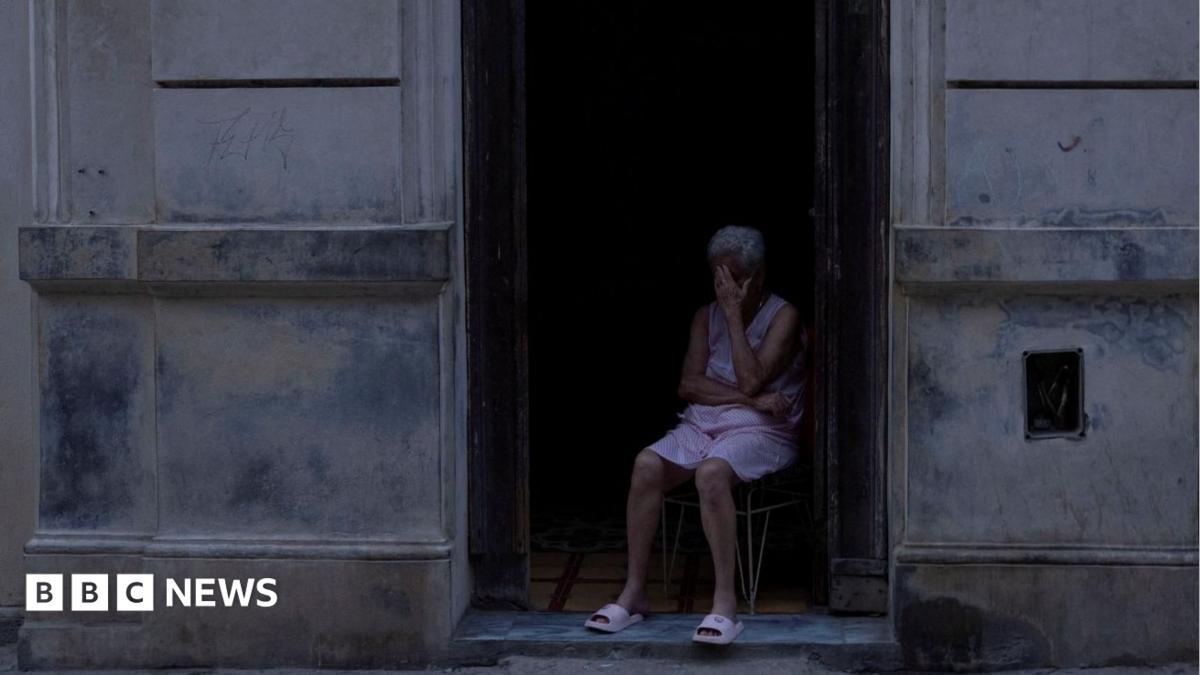
BBC described how repeated blackouts have prompted rare protests in Cuba, where unauthorised demonstrations are illegal and those who defy the ban risk being jailed, and it quoted Havana resident Frank Lorenzo saying, “Lately, it's becoming a habit.”B
France 24 quoted Frank Lorenzo saying, “Yesterday I'd gone without power for 24 hours. They turned the lights on for an hour, and then the grid collapsed,” as the city remained largely dark under cloudy skies and rain.
Fuel shortages and sanctions
Multiple outlets tied the blackout to Cuba’s energy crisis and fuel shortages, with BBC saying ageing electricity infrastructure and chronic fuel shortages have been placed under further strain by a US blockade on oil shipments to the communist-run nation.
“chronic fuel shortages have been placed under further strain by a US blockade on oil shipments”
Cadena SER said rebuilding the island’s electrical grid is usually a slow task that can take more than 24 hours and described a restoration approach that starts up quick-response sources such as solar parks, hydroelectric plants, and distributed generation motors to energize small zones.
Connaissance des Énergies said the island has 9.4 million inhabitants and relies on an aging thermal fleet, regularly unable to meet demand, and it reported that outages disrupt water supply and telecommunications because they depend on pumps, relays, and equipment powered by the grid or by generators.
DW said Cuba is also facing a deepening economic crisis and cited an independent study released this week estimating that 66% of the population now lives in poverty, up from 45% in mid-2025, and it quoted Mercedes Rodriguez saying, “No one can stand these constant blackouts.”
Azərtac reported that the Cuban government attributes the worsening energy crisis to American measures and restrictions affecting fuel supplies, while Washington attributes Cuba’s energy crisis to poor internal management and has accused it of posing a “national security threat.”