Africa28 September, 20262 min read
Moroccan Pro-Palestine Protesters Demand Rabat End Normalisation With Israel
This article is an automated aggregation of coverage from news outlets. Our editorials offer in-depth analysis curated by the NewsCord team.
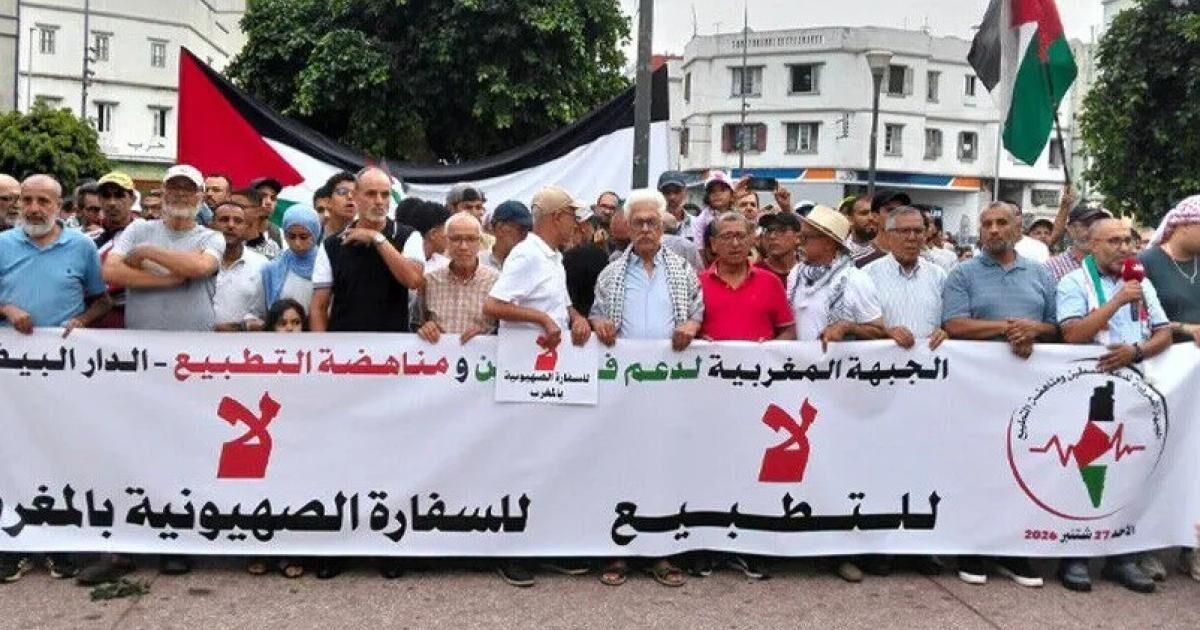
Protests nationwide across 46 Moroccan cities demanding end to normalization with Israel Demonstrators oppose upgrading Morocco-Israel ties to full embassies, call to halt ambassador exchange
Protests as ties deepen
Moroccan pro-Palestine protests spread across several Moroccan cities as demonstrators demanded an end to diplomatic normalisation with Israel while Rabat deepens ties with Tel Aviv. The latest mobilisation took place on September 27, at the end of three days of action called by the Moroccan Front for Supporting Palestine and Against Normalisation. The Moroccan Committee for Supporting the Nation’s Causes said it had organised 76 events in 45 cities under the slogan “Friday for Al-Aqsa and against normalisation”.
Moroccan media reported gatherings in cities including Rabat, Casablanca, Marrakesh, Tangier, Fez, Agadir, Oujda, Tetouan, Kenitra and Sale, while the 76-event figure was the committee’s own count with no independent national tally of participants. In Rabat, protesters gathered outside Parliament, while a demonstration in Marrakesh developed into a march through several main streets, according to Lakome.

Bans, arrests, and slogans
In Tangier, local authorities issued a decision banning a planned demonstration on September 27, and Achkayen later reported that security forces dispersed hundreds of participants and that more than 12 people were detained. Lakome reported that authorities also prevented demonstrations in M’diq, while security forces surrounded a gathering in Agadir to prevent it from becoming a march. The Moroccan Committee for Supporting the Nation’s Causes subsequently condemned what it described as bans, restrictions and arrests.
In Marrakech, protesters shouted “No ambassador, no embassy,” and demonstrators in Rabat chanted “The people want the fall of normalization,” according to Moroccan media. Moaz al-Hajri, national coordinator of the Front, criticized the Israeli liaison office’s move to Mehdi Ben Barka Avenue in Rabat, calling the location “a provocation to the Moroccan people and to the memory of the martyr Mehdi Ben Barka.”

Embassy upgrade and Western Sahara
Morocco and Israel agreed on September 16 in New York to elevate their diplomatic missions to full embassies and appoint ambassadors, after a trilateral meeting involving Moroccan Foreign Minister Nasser Bourita, Israeli Foreign Minister Gideon Sa’ar and US Ambassador to the United Nations Mike Waltz. The three countries confirmed plans to exchange ambassadors and conclude agreements on investment protection and avoiding double taxation, expand direct flights and organise high-level reciprocal visits. The protests reflected a dispute over whether embassy ties can coexist with public support for the Palestinian cause, with Kathya K Berrada telling Al Jazeera that “Normalisation is being consolidated at a time when the war in Gaza has generated unprecedented public anger”.
Morocco’s Western Sahara policy added another layer as the United Nations Security Council was due to consider the mandate of the UN Mission for the Referendum in Western Sahara (MINURSO) in October, with its current mandate running until October 31, 2026. The September 16 trilateral statement came against the backdrop of US recognition of Moroccan sovereignty over Western Sahara and Israel’s support for Morocco’s position on the territory, while the protests continued to demand an end to the war in Gaza and the cessation of cooperation with Israel.