Africa12 August, 20263 min read
MSF Warns Somalia’s Baidoa Malnutrition Crisis After U.S. Cuts Leave Children Severely Malnourished
This article is an automated aggregation of coverage from news outlets. Our editorials offer in-depth analysis curated by the NewsCord team.
Funding to tackle acute malnutrition in parts of Somalia has fallen by 80% this year. One in four children screened in displacement camps in Baidoa's southwest is severely malnourished.

Baidoa malnutrition crisis
In Baidoa, southwestern Somalia, Médecins Sans Frontières (MSF) said one in every two children screened at displacement sites is acutely malnourished and one in every four is severely malnourished, citing a malnutrition survey conducted in July across 888 households in 14 displacement sites. MSF project coordinator Allara Ali said, "What we are seeing is shocking and far beyond the threshold of an extremely critical emergency," while also warning that donors continue to downscale and withdraw support from Somalia.
Reuters reported that at least one in every four children screened in displacement camps in the southwest is severely malnourished, and that MSF Health Adviser Mitchell Sangma said the United States cut its support from $70 million last year to no funding this year. MSF said it has screened more than 21,000 children under five since the beginning of the year, and that the crisis is driven by consecutive failed rains and worsening drought that have deprived hundreds of thousands of Somalis of food, water, crops and livestock.
Donor cuts and admissions
Mitchell Sangma told Reuters, "This year we have admitted 22,000 nutrition cases, more than 80% higher than last year," as MSF said funding to tackle acute malnutrition in parts of Somalia has dropped by more than 80% this year. At the Elbet 1 camp in Baidoa, Reuters described parents bringing children to a clinic under a corrugated iron roof to be weighed and measured, after a July MSF survey of 888 households in 14 displacement sites found one in four children was severely malnourished.
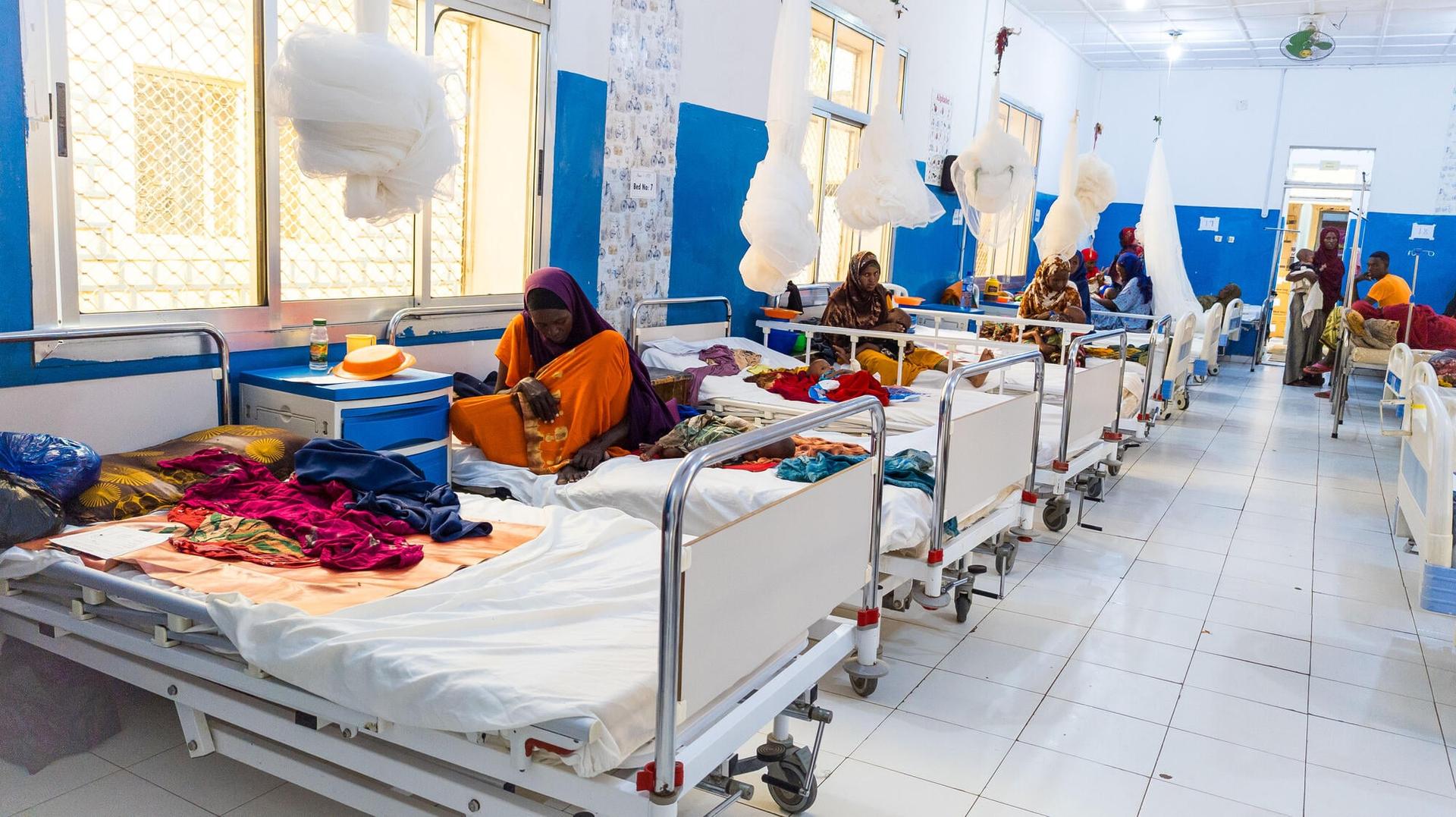
MSF said it has tripled the number of beds in its Baidoa facility to 150 in recent months due to the number of malnourished patients, while Sangma said teams were having to make difficult decisions over who to admit and who to discharge. In a separate MSF statement, Allara Ali said, "What is equally shocking is the lack of urgency from donors who continue to downscale and withdraw support from Somalia," and MSF warned that medical care alone cannot meet the scale of the crisis.
Displacement, measles, and risk
The United Nations figures cited by Reuters said more than half a million people were displaced in Somalia in the first three months of 2026, with drought driving virtually all of the movement, and women and children accounted for about 85% of those displaced. MSF said the crisis is reviving fears of a repeat of Somalia's 2022 near-famine, while also warning that the response is constrained by severe funding shortfalls and that there is only about $300 million available for Somalia from donors compared with $2.2 billion provided in 2022.
MSF said it has treated around 2,500 measles cases in Baidoa since the beginning of the year compared with about 1,700 cases during all of 2025, and that pregnant and breastfeeding women have also been admitted for malnutrition support. Allara Ali said, "The world cannot wait for a famine declaration before acting," as MSF called on donors, international organisations and health authorities to ensure a coordinated, adequately funded and effective emergency response in Baidoa and other affected parts of Somalia.