Technology and Science · updated 1h ago · 2 min read
NASA, SpaceX Launch Crew-13 With Four Astronauts to International Space Station
Four astronauts launched to the ISS aboard SpaceX's Crew-13 Dragon capsule. Launch used Falcon 9 rocket from Cape Canaveral Space Force Station.
16 outlets told this the same way.
7 of 8 outlets skipped it: kutryk brought a 100-year-old pocket watch as a family heirloom.
16outlets compared
Crew-13 heads to ISS
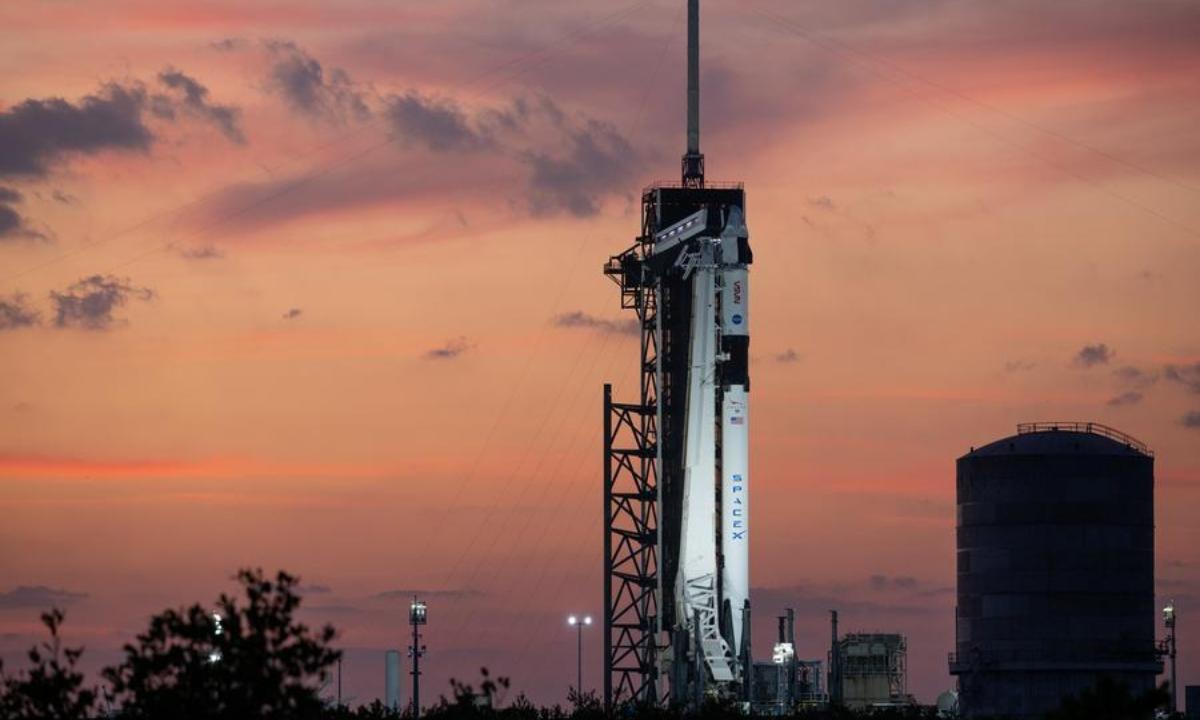
NASA and SpaceX launched four astronauts on Thursday aboard a SpaceX Dragon spacecraft on the Crew-13 mission to the International Space Station, with the crew comprising NASA astronauts Jessica Watkins and Luke Delaney, Canadian Space Agency astronaut Joshua Kutryk, and Roscosmos cosmonaut Sergey Teteryatnikov.
The crew lifted off at 11:10 a.m. Eastern Time aboard a SpaceX Falcon 9 rocket from Cape Canaveral Space Force Station in southeastern Florida, and the spacecraft was scheduled to dock at about 7 p.m. Eastern Time on Thursday.
NASA and SpaceX said the mission would conduct scientific research and technology demonstrations, including studying human stem cell-derived tissues to help researchers advance medicine, disease modeling, and future pharmaceutical screening related to heart disease and Parkinson's disease.
NASA also said the crew would explore crop production in space, study abnormalities in blood flow in space, and test new medical diagnostic equipment for monitoring crew health.
Canadian Space Agency astronaut Joshua Kutryk brought a more than 100-year-old pocket watch aboard the Dragon spacecraft as the crew flew to the ISS.
Fast trip and mission patch
SpaceX and NASA framed Crew-13 as a record-fast trip, with the mission described as the fastest launch-to-docking by a U.S. spacecraft in the history of the International Space Station.
NASA Administrator Jared Isaacman said, "Crew-13 is another demonstration of America’s unmatched capability in human spaceflight and the strength of our commercial partnerships," as the Falcon 9 carried Watkins, Delaney, Kutryk, and Teteryatnikov from Space Launch Complex 40.

The crew would take 7 hours and 50 minutes to reach the ISS, with docking time scheduled for 7 p.m. ET.
The crew would spend up to six months living and working aboard the outpost before returning home, and Watkins was making her second trip to space after launching on Crew-4 in 2022.
The crew incorporated elements of Apollo 13 into their mission patch, and Dana Weigel said, "I think it really represents what we can do when we're faced with extremely challenging and dire circumstances."
Docking and what comes next
A SpaceX Falcon 9 rocket blasted off and chased down the International Space Station on Thursday, delivering two NASA astronauts, a cosmonaut and a Canadian flier, and the crew moved in for docking at the lab's forward port about 7 p.m. The docking welcome involved hatches opening after pressures equalize, and the crew floated into the lab to hugs and handshakes from the seven crew members working aboard the outpost since arriving earlier this year. Crew 13 commander Jessica Watkins said, "It's amazing and kind of ironic to think that it's such a short trip to get here because the journey to get here has been long," during a brief welcome-aboard ceremony.
“A warm welcome aboard Crew 13 docked at the station just after 7 p.m.”
The mission included technology demonstrations and scientific research during the crew's time on the ISS, including studying human stem cell-derived tissues and exploring crop production in space. Crew-13 would perform maintenance on the orbiting lab and conduct science experiments, including a stem cell investigation related to Parkinson's disease, crop production in space, and testing new medical equipment for monitoring crew health.