20Minutos
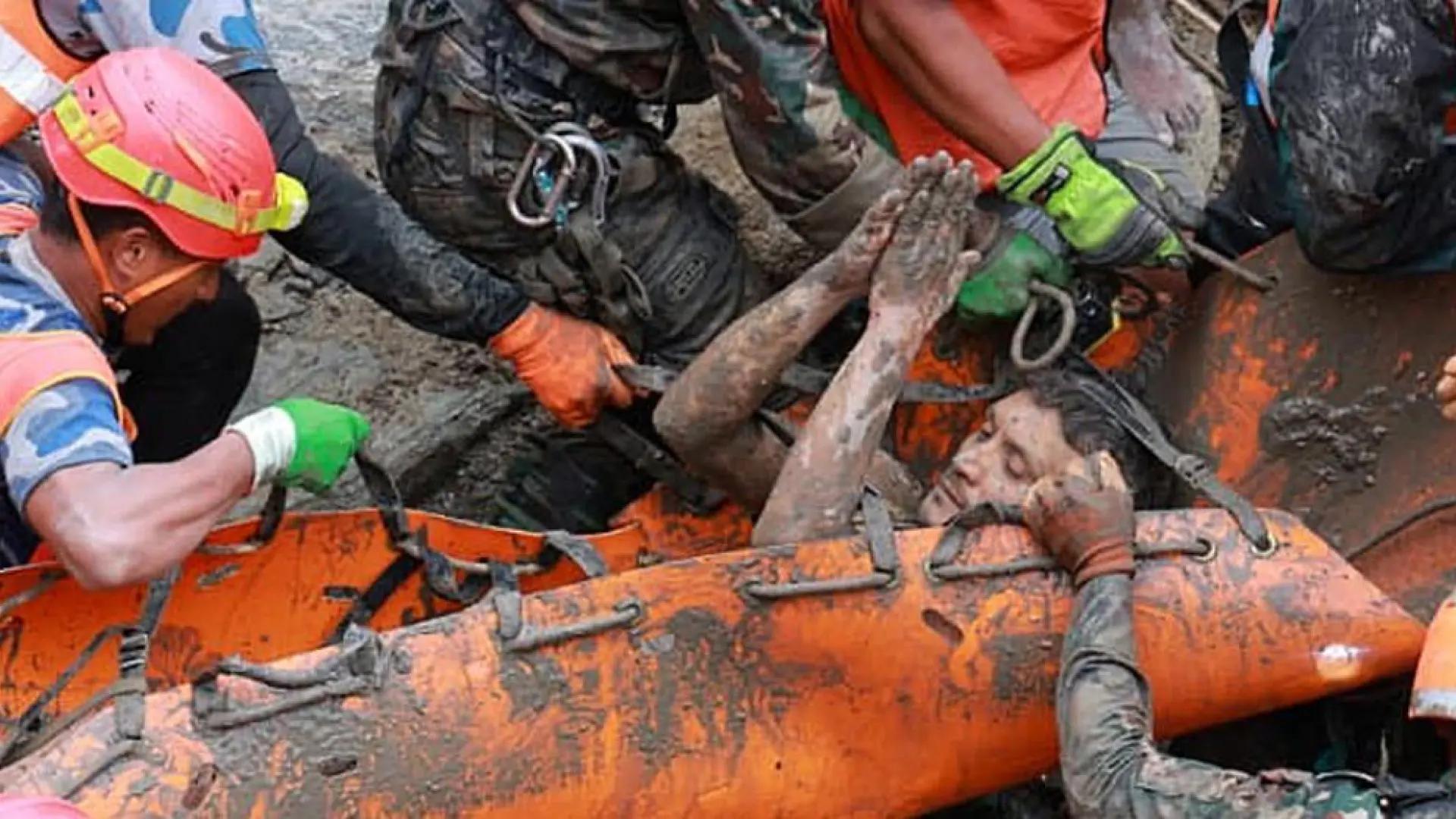
Rescue 'miracle' in Nepal of 2 workers in a tunnel ten days after the deadly flood: "I couldn’t run away alone"
 @globaltimesnews
1,118 dead, 4,858 missing after Nepal mudslide: police - Global Times
 A News
Nepal tunnel rescue revives hopes 10 days after flood
 Aajil
AajilThe number of flood fatalities in Nepal has risen to over a thousand, and rescue operations continue.
 ABC News
Nepal floods death toll climbs to 1,252 as rescue efforts continue
 ABC News
2 people rescued alive from tunnel after deadly Nepal-Tibet flash flood
 ABC News
2 people found alive 10 days after devastating Nepal-Tibet floods
 Africa For Press
After 9 days since the disaster, rescuers save two workers trapped inside tunnels in Nepal
 Akhir Khabar
Himalayan Flood Disaster: 1,500 Missing, Urgent Rescue Efforts in Nepal and Tibet
 Al Jazeera
Nepal tunnel traps hinder flood rescue: How many are dead or missing?
 Al Jazeera
Rescue efforts continue as Nepal-China flood death toll rises to 1,280
 Al Jazeera
Nepal search teams rescue two workers from hydropower tunnel
 Al-Ain Al-Akhbariyah
After 9 days underground… two workers rescued from a tunnel flooded by a Nepal flood
 Al-Arabi Al-Jadeed
Nepal floods: two workers rescued alive from a tunnel after more than a week
 Al-Bayan
Nepal.. Rescue of a Chinese citizen and a woman alive after 10 days of floods
 Al-Jazeera Net
Nepal–China floods: 626 dead, hundreds missing, and rescue challenges
 Al-Khaleej
Nepal disaster deepens: 1,050 dead and thousands missing due to floods.
 Al-Khaleej
Two workers were rescued alive after nine days following the catastrophic flood in Nepal.
 Al-Ma‘lumat
Rescuing 3 people alive from a hydroelectric station tunnel in Nepal after 10 days from a devastating flood
 Al-Sharq al-Awsat
The death toll from the Himalayas floods has exceeded one thousand.
 Al-Sharq lil-akhبار
Nepal floods… dwindling hopes of rescuing survivors and warnings of disease risks.
 Al-Tilfizyun al-Arabi
Nepal disaster: Rescue of two workers who were trapped for 9 days in a tunnel
 AlbertoNews
Rescuing Two Workers from a Tunnel in Nepal and They Say There Are More Survivors
 AlbertoNews
They consider the search exhausted in a tunnel after not finding more survivors in Nepal
 Anadolu Ajansı
Nepal floods... Two workers trapped in a tunnel for 9 days
 Anadolu Ajansı
Nepal-China flash floods death toll rises to 1,280, over 5,620 missing as search, rescue enter 2nd week
 AP News
Hundreds feared stuck in hydropower tunnels as flood deaths surpass 950 in Nepal and Tibet
 AP News
Rescuers pull 2 trapped workers from a hydropower tunnel 9 days after Nepal floods
 AP News
Why finding missing workers from Nepal’s hydropower tunnels is proving to be difficult
 Associated Press
Two people pulled alive from Nepal hydropower tunnel
 Associated Press
Rescuers in Nepal pull 2 people alive from the debris 10 days after devastating floods
 Atalayar
Nepal raises the death toll from the flood to 1,252, while more than 4,000 people remain missing
 Basniws
After 10 days of the floods... Three people rescued from inside a tunnel in Nepal.
 BBC
BBCNepal-Tibet floods: River water smashed into tunnel and chased me, hydropower engineer says
 BBC
BBCWhat is the glacier collapse that is thought to have caused the sudden and devastating avalanche in Nepal
 BBC
BBCTwo workers pulled alive from Nepal tunnel nine days after deadly flash flooding
 BBC
BBC"It is a sequence of miracles": the incredible rescue of two workers after 9 days trapped in a tunnel by the avalanche at the Nepal-Tibet border
 BBC
BBC'A rare moment of joy': Nepal tunnel rescues bring hope for more flood survivors
 BBC
BBCNepal intensifies relief and recovery efforts after deadly floods, UN says
 BBC
BBCTwo people rescued from Nepal tunnel more than a week after flash flood
 BBC
BBC'Layer upon layer of miracles': How Nepal flood survivors were rescued from tunnel
 BBC
BBC'It's like layer upon layer of miracles': How Nepal flood survivors were rescued from tunnel
 BBC
BBCTunnel rescues bring hope that more flood survivors will be found
 BBC
BBCNepal rescuers try to reach dozens trapped in tunnel after two found alive
 Blueprint Newspapers
Flash floods: Nepal rescuers pull 2 out of hydropower tunnels alive, intensify efforts
 Business Today
'Second life': Two men rescued after 9 days trapped in Nepal Hydropower tunnel amid flash floods
 Cadena 3 Argentina
Difficulties in locating missing Nepali workers in hydroelectric tunnels after floods
 CBC
CBCHundreds feared stuck in hydropower tunnels as flood deaths surpass 950 in Nepal, China
 CBC
CBC2 trapped workers rescued from hydropower tunnel 9 days after Nepal floods
 CBS News
2 trapped Nepal workers rescued from buried tunnel 9 days after devastating floods, and more voices heard
 CBS News
Third worker rescued from Nepal tunnel, woman found alive in rubble 10 days after devastating floods
 CNN
CNNDisaster and tunnel expert on efforts to save workers trapped in hydropower tunnels
 CNN
CNNLive updates: Rescues underway as two workers pulled alive more than a week after Nepal-China floods
 CNN
CNN‘Don’t panic’: How two men were rescued from a flood-stricken Nepali power plant
 CNN
CNNTwo men found alive after 9 days trapped in Nepal tunnel
 CNN
CNNAnderson Cooper speaks with Nepal’s Foreign Minister
 CNN
CNNTwo people rescued from hydropower tunnel in Nepal
 CNN
CNNTwo men pulled alive from Nepal tunnel after 8 days
 CNN
CNN‘I had to save everyone’: Nepal survivor recounts experience
 CNN
CNNCNN team witnesses ongoing rescue operation after two men found alive in tunnel
 CNN
CNNWatch as two men are pulled alive from Nepal tunnel nine days after floods
 CNN
CNNNepal-China floods latest: Rescuers in Nepal pull Chinese national alive from tunnel 10 days after floods
 Corrientes Positiva
Rescued alive: two people saved ten days after the flood in Nepal.
 Daily Sabah
2 workers pulled alive from Nepal tunnel 9 days after disaster
 Daily Sabah
3 survivors rescued 10 days after devastating Himalayan flash flood
 Deccan Herald
Two rescued alive from tunnel nine days after catastrophic floods in Nepal
 Deccan Herald
Nepal flash floods: Death toll rises to 1,344 amid desperate search for survivors
 Devdiscourse
WRAPUP 1-Nepal must rebuild thousands of homes, no let up in search for missing
 Devdiscourse
WRAPUP 3-Nine days after disaster, two pulled alive from Nepal hydropower tunnel
 Diari ARA
Milagrous rescue in Nepal: two people found alive nine days after the flood
 Diario Libre
Rescued in Nepal, two workers who were trapped for nine days by the landslide
 Diario Público
Two workers were rescued from a tunnel ten days after the flood in Nepal: 'I couldn’t run away alone'
 DW
DWNepal: Two pulled alive from tunnel nine days after floods
 DW
DWIndia news: 275 Indians still missing in Nepal floods
 Egyptian Gazette
Nepal must rebuild thousands of homes
 El Español
Rescued alive in Nepal: two workers from a tunnel more than a week after the devastating floods
 El Esquiu
Floods in Nepal and Tibet: the death toll has reached 804 and more than 3,000 are missing
 El HuffPost
And there may be more: two workers rescued alive from a tunnel ten days after the flood in Nepal
 El HuffPost
And there may be more: two workers rescued alive from a tunnel ten days after the flood in Nepal
 EL PAÍS
Rescue in Nepal after the flood advances centimeter by centimeter through tunnels blocked with mud
 EL PAÍS
The risk of a second flood threatens Nepal and Tibet after a catastrophe that leaves at least 584 dead
 El País
Nepal rescues two workers from a tunnel inside a hydroelectric plant nine days after the flood
 Emirates 24|7
Glacier collapse: Two people rescued alive from Nepal hydropower tunnel
 ETV Bharat
Nepal Floods: 60-Year-Old Woman And Chinese National, Rescued Alive After 10 Days
 Euronews
Two trapped workers rescued from hydropower tunnel nine days after Nepal floods
 Euronews
Rescue of 2 people in Nepal, 9 days after the disaster.
 Folha de S.Paulo
Nepal says it will have to rebuild 20,000 houses after floods
 Folha de S.Paulo
Rescue teams save two workers trapped in a tunnel in Nepal; watch video
 Fox News
Rescue efforts continue after Nepal floods, more rainfall expected in coming days
 Fox News
Trapped Nepal workers pulled alive from tunnel 9 days after deadly flooding, raising hope for more rescues
 France 24
Nepal and China continue rescue efforts to locate more than 3,000 missing people in the avalanche
 France 24
Two trapped workers rescued from mud-clogged tunnel 9 days after Nepal floods
 France 24
Two trapped tunnel workers rescued in Nepal 'miracle'
 France 24
Miraculous rescue: how two men were found alive nine days after the flood in Nepal
 France 24
Nepal floods: Two workers pulled alive from tunnel after nine days
 France 24
Nepal floods: Nine days after the disaster... Two workers rescued alive from a tunnel of a power station
 Gente de Salta
Floods in Nepal and Tibet: Maximum alert in the Himalayas for another likely disaster
 Hespress
Rescuing two workers after more than a week of being trapped inside a tunnel in Nepal
 Independent en Español
Why is it difficult to locate Nepalese workers missing in hydroelectric tunnels?
 Independent en Español
Rescue from floods enters its 4th day at the Nepal-China border; weather hampers flights.
 Independent en Español
"Miracle" in Nepal: rescuing two men trapped in a tunnel
 India Today
Nepal flash floods toll hits 1,344 as 5,000 remain missing
 Infobae
The search in a tunnel is considered exhausted after no more survivors are found in Nepal
 Infobae
Nepal confirms the rescue of two survivors ten days after the devastating flood
 Irish Examiner
Nepal floods: 46 workers may be alive after a week trapped inside hydropower tunnel
 Jaegyeong Ilbo
Massive floods in Nepal, about 900 people stranded in a hydroelectric plant tunnel... saving efforts with full force.
 KSL News
Major tunnel and underground rescue operations
 KSL News
9 days after disaster, 2 pulled alive from Nepal hydropower tunnel
 Kuwait Times
Two workers pulled alive from Nepal hydropower tunnel
 La Razón
Miracle rescue in Nepal of two workers from a hydro tunnel ten days after the flood: "There are more people"
 La Razón
Miracle rescue in Nepal of two hydroelectric tunnel workers ten days after the flood: “There are more people”
 Le Monde.fr
Two workers pulled alive from Nepal hydropower tunnel more than a week after floods
 Le Monde.fr
Nepal tunnel rescue of Chinese citizen revives hopes 10 days after flood
 Los Angeles Times
Rescating 2 workers from a hydroelectric plant tunnel 9 days after floods in Nepal
 Malay Mail
Nepali woman rescued alive after 10 days under flood debris
 Masrawy
From the heart of the flood catastrophe… two men were rescued alive from a tunnel in Nepal after nine days underground (video)
 Modern Diplomacy
Nepal Faces Massive Rebuilding as Search for Flood Victims Continues
 Modern Ghana
Two trapped hydropower workers rescued from mud-clogged tunnel in Nepal
 Mon(t) Carlo Al-Dawlia
More than 550 dead and 1,400 missing, including hundreds of tourists.. The death toll from the floods in Nepal and Tibet continues to rise
 Monaco International
Rescuers pull two workers alive from a tunnel in Nepal after more than a week of floods
 Moneycontrol
Chinese national trapped in hydropower tunnel rescued 10 days after Nepal floods
 naiz
naizThe survivor’s odyssey in a Nepal tunnel; safe and sound ten days later
 NBC News
Two trapped workers are pulled alive from Nepal tunnel more than a week after deadly floods
 NBC News
Smell of death hangs over rescue efforts in Nepal as deaths pass 1,100
 NDTV
NDTVThe Men Who Survived Blocked Nepal Tunnel For Nine Days
 NDTV
NDTV2 Rescued Alive From Hydropower Tunnel 9 Days After Nepal Floods
 NepalNews
Slow tunnel rescues spark outrage among families and engineering experts
 New York Post
Two trapped workers rescued from hydropower tunnel 9 days after Nepal floods
 NEWS.am
Nepal must rebuild nearly 20,000 homes after natural disaster
 NewsNation
Rescuers pull 2 trapped workers from a hydropower tunnel 9 days after Nepal floods
 NewsNation
Nepal tunnels could have flood survivors, but clock is ticking: Engineer
 Newswav
Nepal flash floods latest: Fears second flood ‘imminent’ after at least 380 dead and hundreds more missing
 Noticias de Navarra
Nepal manages to rescue two workers trapped in a tunnel ten days after the flood
 NPR
NPRA week after the deadly floods in Nepal, rescuers work to find survivors
 NPR
NPR2 trapped workers rescued from a hydropower tunnel 9 days after Nepal floods
 NTN24
NTN24Miraculous rescue after a landslide in Nepal: two people were rescued alive after being trapped in a tunnel for nine days
 Onda Cero
The dramatic rescue of an elderly woman trapped in the mud after the floods in Nepal
 Onda Cero
Nepal rescues two workers from a tunnel alive after ten days trapped by the flood
 Onlinekhabar English
2 rescued alive from Trishuli 3-A tunnel; how many remain inside?
 Organiser
Nepal Tunnel Collapse: Sanjay Sah Rescued on Janmashtami After 9 Days, Says Hare Krishna Mahamantra Kept Him Alive
 PBS
PBSNews Wrap: 2 men rescued from Nepal tunnel 9 days after catastrophic flood
 PetaPixel
Drone Photographer Accidentally Captures Devastating Nepal Mudslide
 Primicias
Nepal rescues two workers who were trapped for 10 days in a tunnel due to the landslide
 PTC News
Nepal fury: Two rescued from tunnel nine days after deadly floods, more voices heard from inside
 Radio Estación
Hindering the rescue of hundreds of workers trapped in hydroelectric tunnels in Nepal
 Ratopati
Two Rescued from Trishuli-3 'A' Hydropower Project Tunnel After Flood
 Rediff
Woman, Chinese worker pulled alive 10 days after Nepal floods
 Reuters
Nepal teams seek hundreds trapped in hydropower tunnels after deadly floods
 Reuters
In Nepal, heartbreaking scenes after deadly flash floods
 Reuters
Nepal must rebuild thousands of homes, no letup in search for missing
 Reuters
How engineers in a WhatsApp group are guiding Nepal's tunnel rescue efforts
 Reuters
Nepal rescuers race to reach any survivors trapped in tunnels a week after disaster
 Reuters
Nine days after disaster, two pulled alive from Nepal hydropower tunnel
 Reuters
Two people rescued alive from Nepal hydropower tunnel
 Reuters
Chinese national rescued from Nepal tunnel 10 days after flash flood
 RFI
RFINepal: Two workers trapped in a tunnel for nine days rescued alive
 RFI
RFIRescued in Nepal: two workers who were trapped for nine days by the landslide
 RTE.ie
Two trapped tunnel workers rescued in Nepal 'miracle'
 RTE.ie
Over 1,200 dead in Nepal floods amid tunnel rescue hunt
 RTv Noticias Morelos
Rescue in Nepal: two workers pulled alive from a tunnel after nine days trapped
 Saudi Gazette
Two workers pulled alive from mud-filled tunnel nine days after Nepal floods
 Shams TV
Rescuing two workers stranded in a Nepal hydroelectric tunnel after 9 days of flooding
 Sharjah24
Nine days after the floods, Nepal rescues two workers alive.
 SinEmbargo
Nepal rescues two workers alive nine days after the flood — VIDEOS
 Sky News
Nepal floods: Race to rescue survivors after two pulled out alive from tunnel
 Sky News Arabia
919 dead and 4,793 missing… Nepal and China flood tolls
 SMH.au
Race to free hundreds feared trapped in Nepal’s hydropower tunnels as flood deaths surpass 950
 SMH.au
Two Australians found safe in Nepal as trapped workers rescued from tunnel
 South China Morning Post
‘I couldn’t believe it’: 2 men rescued alive from flood-hit Nepal tunnel
 Straight Arrow
Two workers pulled alive from Nepal tunnel after nine days; more voices heard
 Telecinco
Rescue in Nepal: two workers pulled alive from a tunnel, 10 days after the flood
 teleSUR English
China Sends Third Batch of Aid To Nepal With Medical and Communications Equipment
 The Australian
Rescuers in Nepal save two more including tunnel worker
 The Boston Globe
Rescuers pull 2 trapped workers from a hydropower tunnel 9 days after Nepal floods
 The Daily Star
Nepal must rebuild 20,000 flood‑hit homes: authorities
 The Detroit News
Nepal flood survivor pulled from tunnel arrives at Kathmandu hospital
 The Edwardsville Intelligencer
Rescuers in Nepal pull a Chinese national alive from a hydropower tunnel 10 days after floods
 The Express Tribune
Nine days after disaster, two pulled alive from Nepal hydropower tunnel
 The Federal
Nepal floods: Woman, Chinese worker rescued after being trapped for 10 days
 The Financial Express
In flood-ravaged Nepal valley nothing is left standing
 The Financial Express
Nepal rescuers race to reach any survivors trapped in tunnels a week after disaster
 The Guardian
Nepal rescuers race to reach hundreds feared trapped in hydropower tunnels
 The Guardian
Two workers pulled alive from tunnel nine days after Nepal-Tibet floods
 The Guardian
Rescue of Nepal hydropower workers ‘triumph for humans and humanity’, tunnelling expert says
 The Guardian
Nepal-Tibet floods: millions at risk from glacial floods in Himalayas in years to come, UN warns, as death toll passes 1,000 – as it happened
 The Guardian
Rescuers in Nepal find two more people alive after flood disaster
 The Hindu
Nepal flash floods: Two more people rescued alive after being trapped for 10 days
 The Hindu
Rescuers in Nepal pull Chinese national and woman alive 10 days after devastating floods
 The Irish Times
Nepal searches for hydropower workers trapped in tunnels, must rebuild some 20,000 homes
 The Jerusalem Post
Nepal rescuers pull two workers alive from tunnel after deadly collapse
 The National
Two men rescued alive from Nepal hydropower tunnel
 The New Indian Express
Nine days after devastating floods, two trapped workers rescued alive from Nepal tunnel
 The New York Times
2 Are Found Alive in Nepal Tunnel 9 Days After Deadly Flood: Live Updates
 The New York Times
Workers Rescued From Tunnel in Nepal 9 Days After Flood
 The New York Times
Chinese Worker Rescued From Tunnel in Nepal 10 Days After Floods
 The Press Democrat
Why finding missing workers from Nepal’s hydropower tunnels is proving to be difficult
 The Rising Nepal
Bhotekoshi flood: Search and rescue continuous in Trishuli-3 'A'
 The Times of India
Watch: 2 workers make it out alive 9 days after Nepal floods hit hydropower tunnel
 The Times of India
'23 Silkyara 'rat miners' offer to join Nepal tunnel rescue
 The Times of India
WhatsApp group, engineers and a race against time: How 2 workers were rescued from Nepal tunnel
 The Washington Post
9 days after deadly Nepal floods, 2 men are rescued from tunnel
 Theaustralian
Rescuers in Nepal save two more people from tunnel 10 days after the devastating flood | The Australian
 TODAY
TODAYRescue Efforts Intensify After Catastrophic Mudslide in Nepal
 TRT World
Rescuers pull Chinese national alive from Nepal tunnel after 10 days
 TVC News
‘Miracle’ As Two Nepal Tunnel Workers Rescued Alive After Nine Days
 UA.NEWS
Chinese citizen rescued from Nepal hydropower tunnel after 10 days
 Ultima Hora
Two workers who were trapped in a tunnel, rescued alive ten days after the flood in Nepal.
 USA Today
Photos show dramatic Nepal tunnel rescue as two trapped workers are freed
 USA Today
2 pulled from Nepal hydropower tunnel alive 9 days after deadly slide
 Valley News Live
2 trapped workers found alive, rescued from tunnel 9 days after Nepal floods
 Vietnam.vn
Nepal could lose $5 billion in recovery after the sudden floods disaster.
 Vietnam.vn
Nepal and China search for more than 2,400 missing people after sudden floods.
 Vietnam.vn
Nepal needs to rebuild about 20,000 homes after the sudden floods.
 Vietnam.vn
Miracle in Nepal's hydroelectric tunnel: two people rescued nine days after a sudden flood.
 Vietnam.vn
A week after the sudden floods in Nepal and China: Rescue efforts face numerous difficulties.
 Vietnam.vn
Rescue teams saved two workers who had been trapped for nine days in a tunnel due to the flash floods in Nepal.
 Vietnam.vn
Floods in Nepal and China: Two workers rescued after being trapped for 10 days.
 Vietnam.vn
"Miracle" in a water-flooded tunnel in Nepal
 Vietnam.vn
A Vietnamese tourist recounts how delaying his departure by two hours helped him survive the deadly sudden flood in Nepal.
 Vietnam.vn
How did two Nepali workers survive nine days in a tunnel full of mud?
 Vértigo Político
Rescuing 2 workers from a tunnel 9 days after floods in Nepal
 WGY
WGYTwo Survivors Found In Aftermath Of Nepal Flood
 WION
WIONLight at the end of the tunnel: 2 rescued alive from Trishuli 3A hydropower plant days after Nepal floods
 WKMG
WKMGRescuers in Nepal pull 2 people alive from the debris 10 days after devastating floods
 WRAL
WRALRescuers pull 2 trapped workers from a hydropower tunnel 9 days after Nepal floods
 WREG
WREG2 trapped workers rescued alive from a tunnel in Nepal, officials say
 WSLS
WSLSRescuers in Nepal pull 2 people alive from the debris 10 days after devastating floods
 WWAYTV3
2 trapped Nepal workers rescued from tunnel 9 days after devastating floods
 Межа. Новини України.
Unknown Gunmen Shot a Russian Serviceman in Engels as Media Named a Suspected Bomber Commander