Iran02 September, 20263 min read
United States Targets Two Iranian Oil Tankers With Ship-To-Ship Policy in Strait of Hormuz
This article is an automated aggregation of coverage from news outlets. Our editorials offer in-depth analysis curated by the NewsCord team.
United States struck two Iranian government-owned oil tankers in Strait of Hormuz under ship-for-ship policy First direct US strikes on Iranian oil tankers in response to Hormuz attacks

55 outlets told this the same way.
The Guardian was read line by line by the Watchdog: 4.0. See the score →
Ship-to-ship strikes begin
The United States began implementing a new “ship-to-ship” policy against Iran by targeting two oil tankers belonging to the Iranian government in the Strait of Hormuz, with the strikes hitting the engine rooms after American drones launched missiles.
Aajil, citing Axios, said the Tuesday wave of attacks targeted about 100 military objectives and that President Donald Trump approved the policy to deter Tehran from attacking oil tankers and commercial ships transiting the Strait of Hormuz.
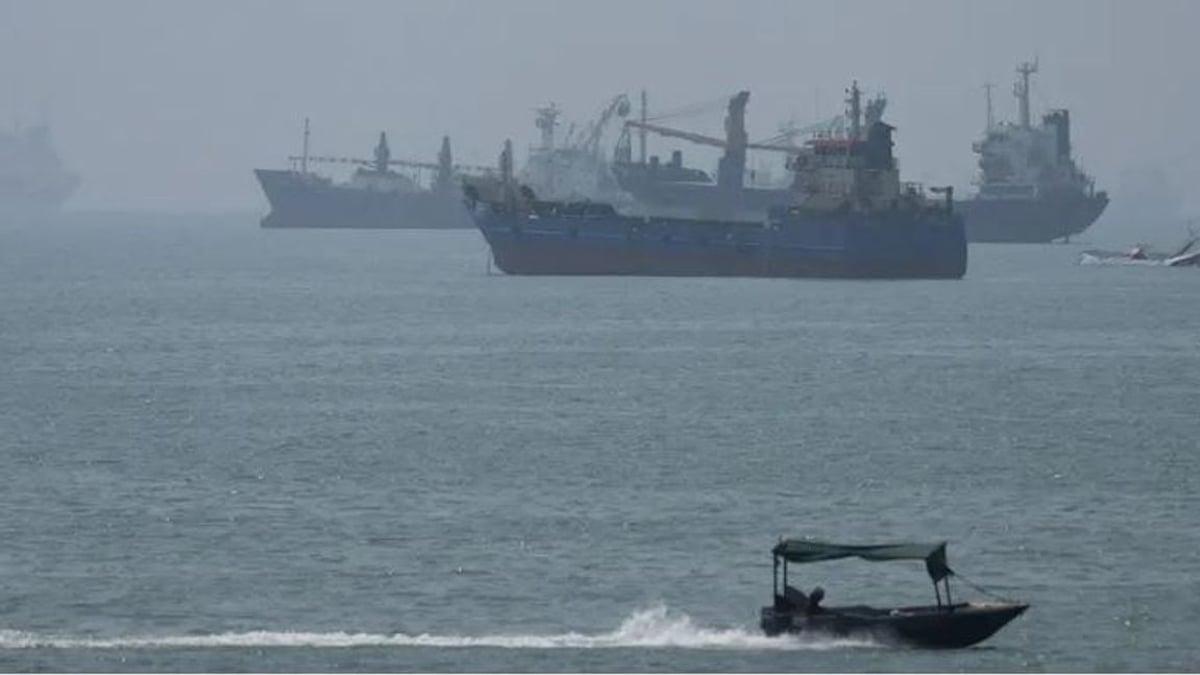
Aajil also said the two Iranian tankers were anchored off the Iranian coast, north of the line along which American forces impose their naval blockade, when they were hit.
In parallel, Aajil reported that U.S. Central Command described the broader operation as targeting sites of the IRGC, including air defenses, radar systems, facilities and sea assets, as well as capabilities for laying mines and communications sites.
Aajil added that the confrontation widened after Iran responded to the American strikes by launching ballistic missiles and drones at American sites in Jordan, Kuwait, Bahrain, and Iraq.
Restricted zone and retaliation
Al-Jazeera Net reported that Iran hardened its stance on the Strait of Hormuz by issuing a new paper through the Revolutionary Guards describing a “restricted area” outside the strait that includes parts of the Gulf of Oman and areas beyond it.
Al-Jazeera Net quoted Revolutionary Guards spokesperson Hossein Moghafi on Iranian television saying the restricted area “starts roughly from the Chabahar area, and includes part of the Sea of Oman and another part of the Arabian Sea along the route leading to the Strait of Hormuz.”

Al-Jazeera Net said the Guards announced targeting two American ships and eight oil tankers, and also mentioned targeting ten other ships in the strait while claiming they attempted to pass with the support and encouragement of the U.S. military.
The same Al-Jazeera Net account said the United States had announced yesterday that it destroyed five Iranian oil tankers and that U.S. Central Command released a video of the strikes describing them as a response to the Iranian Guards’ two missile strikes on a U.S. Navy warship.
Al-Jazeera Net also reported that initial shipping data showed six ships carrying goods through the Strait of Hormuz yesterday, down from nine ships the previous day and from an average of about 12 ships over the past 10 days.
Escalation risks and sanctions
CBC reported that the U.S. launched new air strikes on Iranian targets on Tuesday, threatening to reignite the six-month-old conflict that has driven global energy prices higher and weighed on U.S. President Donald Trump's popularity.
CBC said Tehran struck back at U.S. assets in Jordan, Bahrain and Iraq and remained defiant, warning that it would prevent oil being exported from the Gulf despite Trump’s threat to hit Iran “hard” in response to renewed Iranian strikes.
CBC also reported that five people were killed and 50 wounded at a wedding near Sirik, a coastal area on the Strait of Hormuz, with the Iranian Red Crescent reporting that a four-year-old child was among those killed.
In a separate thread of consequences, Al-Jazeera Net reported that government bond yields rose globally to their highest levels since 2008 amid concerns about rising inflation driven by higher energy costs during the ongoing Iran conflict.
Al-Jazeera Net said the Financial Times reported the yield on the 10-year British government bond rose to 5.25%, its highest since the Global Financial Crisis in 2008, while the 10-year U.S. Treasury yield rose to 4.79%.