Canada23 October, 20253 min read
PM Carney Announces Economic Sacrifices and Spending Cuts Ahead of Federal Budget
Canada aims to double non-U.S. exports within the next decade to reduce dependency. PM Carney announces federal spending cuts requiring economic sacrifices from Canadians.
13 outlets told this the same way.
Canada's Upcoming Federal Budget
Prime Minister Mark Carney set the stage for the November 4 federal budget with a stark message. He stated that economic transformation will demand sacrifices alongside spending cuts and targeted, long-horizon investments. In a live address at the University of Ottawa, he outlined plans to boost growth while warning that Canada faces a more challenging trade landscape.
“Prime Minister Mark Carney announced plans for the upcoming federal budget, emphasizing a strategy to boost Canada’s economy through unprecedented private sector investment over the next five years.”
Carney framed the coming budget as both fiscally disciplined and “generational.” He paired a call for “unprecedented private sector investment” over five years with an emphasis on the government’s fiscal capacity to act decisively.
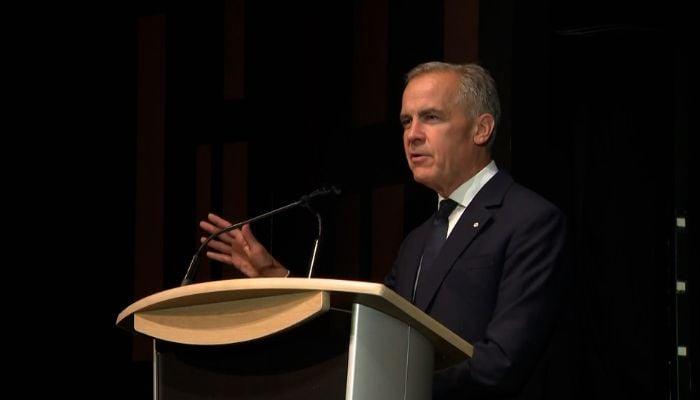
Carney acknowledged the difficulty and time required to deliver change. The address previewed a mix of restraint and ambition—responsible operating cuts coupled with capital investments—meant to stabilize public finances and rebuild productive capacity.
Canada's Trade Diversification Strategy
Carney tied the sacrifices to a strategy to diversify away from overreliance on the United States. He pledged to double non‑U.S. exports within a decade and projected roughly $300 billion in additional trade. He and his government framed recent U.S. tariffs as a sign of a “permanent shift” that requires Canada to reduce dependence on its largest trading partner.
They also emphasized the need to fast‑track “nation‑building” investments to open new markets. Yet coverage also underscores how deeply integrated Canada remains with the U.S. economy. This integration is highlighted by massive daily cross‑border trade, looming agreement reviews, and energy interdependence that complicate any rapid decoupling.

Fiscal Strategy and Investments
On the fiscal front, Carney’s plan pairs restraint with targeted investment. It addresses deficits that Global News reports are potentially the highest in 30 years while moving to balance the operating budget within three years. The government aims to maintain key social programs during this period.
“The budget, due November 4, will address rising federal deficits—potentially the highest in 30 years outside crisis periods—and outline measures to reduce operational spending and improve government efficiency.”
The package is set to reduce operational spending and improve efficiency. It will fast-track nation-building projects by the Grey Cup timeline and expand housing supply through a new Build Canada Homes agency. At the same time, the plan contemplates higher defense and infrastructure spending.
It also includes skills and apprenticeship initiatives to grow long-term capacity. Overall, the strategy blends near-term belt-tightening with growth-oriented capital outlays.
Minority Government Budget Challenges
Politically, the minority government must navigate a narrow path to pass the budget. National Post reports the Liberals need at least three opposition votes to avoid a snap election, after the Prime Minister met opposition leaders seeking support. Toronto Star details skepticism from Conservative and Bloc leaders and lists their demands on deficits, health transfers, and social programs.
The article also notes Carney’s call for collaboration and his refusal to disclose concessions. Across outlets, the stakes are clear: the government is confident but acknowledges uncertainty as it seeks to secure the numbers before the November 4 tabling.

Growth Strategy and Global Engagement
Beyond fiscal consolidation, the plan links growth to talent, infrastructure, and global re-engagement. Global News highlights a new immigration strategy aligned with housing capacity and a push for apprenticeships and skills. Toronto Star similarly cites a new immigration plan to attract global talent and investments in defense, infrastructure, and housing.
“Additional budget highlights include automatic tax filing for low-income Canadians, border security investments, a new immigration strategy aligned with housing capacity, and the creation of the Build Canada Homes agency.”
The Economic Times reports a targeted pitch to U.S. workers affected by high H-1B costs. AP, The New Indian Express, and Killeen Daily Herald emphasize Canada’s energy strength and renewed engagement with India and China. This places the talent strategy in a wider geoeconomic context of trade diversification and resource leverage.