Syriaupdated 1h ago3 min read
MapPublic Prosecution Files Public-Rights Lawsuit Against Amjad Youssef in Tadamon Massacre Case
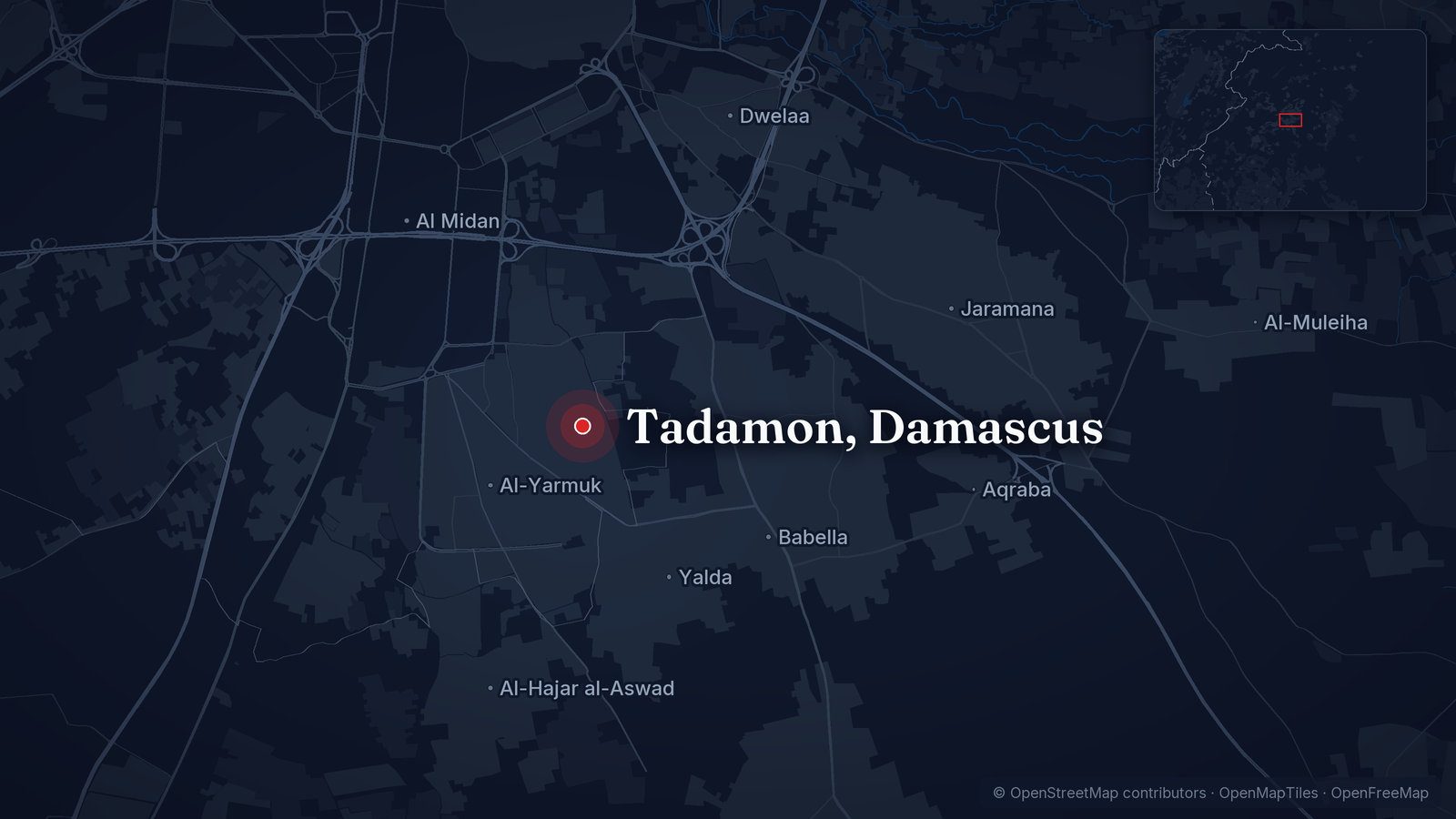
3 West Asian2 OtherMap: © OpenStreetMap contributors, ODbL · Cropped for layout
This article is an automated aggregation of coverage from news outlets. Our editorials offer in-depth analysis curated by the NewsCord team.
Public Prosecution filed a public-rights lawsuit against Amjad Youssef over Tadamon massacre. The file was referred to an investigating judge after preliminary investigations by authorities.
Save coverage image
5 outlets in this story. Read their headlines below.
Outlets did split on Syria Denies Deploying Troops to Yemen After AFP Report of 3,000 Soldiers →
Case Sent to Prosecution
The Syrian Ministry of Justice announced the referral of the file of Amjad Youssef and several of his associates in crimes to the Public Prosecution, after the Public Prosecution received the case file from the Ministry of Interior’s Anti-Terrorism Directorate. Attorney General Judge Hassan al-Tourba confirmed that "the Public Prosecution decided to initiate a public rights lawsuit against Amjad Youssef and his partners," including charges of intentional murder, murder against two or more persons, and torture leading to death. The Justice Ministry said it referred the file to the specialized examining judge to follow up on investigations and complete legal measures to issue judicial decisions.
The case centers on the 2013 Tadamon neighborhood massacre in Damascus, which sources date to April 16, 2013, when elements belonging to the ousted regime liquidated 41 civilians in cold blood and threw them into a mass grave. The Public Prosecution filing was described as a judicial step that does not mean a trial has begun or a verdict has been issued, because the file remains in the judicial investigation stage.
Mass Grave in Tadamon
Residents of the Tadamon neighborhood in southern Damascus discovered a new mass grave on Monday in the Al-Shuhada area, also known as Al-Sulaykha, bringing the number of mass graves found in the neighborhood to eight.
The Tadamon Neighborhood Coordination Committee said the newly discovered grave contained the remains of more than five victims, and it said search operations were continuing with the assistance of Civil Defense teams and the National Commission for the Missing.
A local resident told a video released by the committee that "children had discovered human bones at the site," and another resident appealed for authorities to survey the entire area and preserve evidence for families of missing people.
The Interior Ministry’s Counterterrorism Department referred the case of Amjad Youssef, described as the principal suspect in the Tadamon massacres, to the Office of the Prosecutor General for transfer to an investigating judge.
The Interior Ministry said investigations involving detainees in the Youssef case uncovered evidence indicating his involvement in the killing of the six children of Dr. Rania al-Abbasi and her husband, Dr. Abdul Rahman.
Charges, Evidence, and Trial
The Syrian Ministry of Justice said the referral followed preliminary investigations into Youssef, the main suspect in the massacres committed in 2013, and it framed the move as part of transitional justice and accountability for grave violations against the Syrian people. Judge Hassan al-Tourba said the file contains evidence and facts reached by the initial investigations, and the prosecution decided to file a public-rights case against Youssef and a number of his partners. The sources tied the case to video and audio recordings disclosed after April 2022, when The Guardian published an investigation based on video recordings leaked by a former recruit showing 41 people blindfolded and handcuffed being executed.
The Guardian-linked account in the sources described the killings as carried out by members of the regional branch of Military Intelligence in the south Damascus district on April 16, 2013, with bodies dumped in a grave before burning it. The sources also described the judicial phase as a test of turning evidence and documentation into a judicial path that determines liability of perpetrators and partners, while investigations and auditing of testimonies continue before subsequent litigation stages.