
Full story
Addis Ababa talks stall
A meeting organized by the Quintet Mechanism for the Sudanese crisis with blocs and political forces to discuss arrangements for a Sudanese dialogue ended in Addis Ababa on Sunday without progress and was abruptly cut off by political blocs, according to sources close to the mechanism.
“a similar meeting held in the Ethiopian capital Addis Ababa was concluded today, Sunday, abruptly cut off by political blocs and making no progress”
The Quintet Mechanism includes representatives from the United Nations, the African Union, the European Union, the Arab League, and IGAD, and it held separate meetings with the Democratic Bloc coalition led by Jaafar al-Mirghani, the National Movement Alliance led by Tijani al-Sisi, the Coordination of National Forces Alliance led by Mohamed Said Ahmed “Al-Jakumi,” and the Umma Party led by Mubarak al-Fadil al-Mahdi.
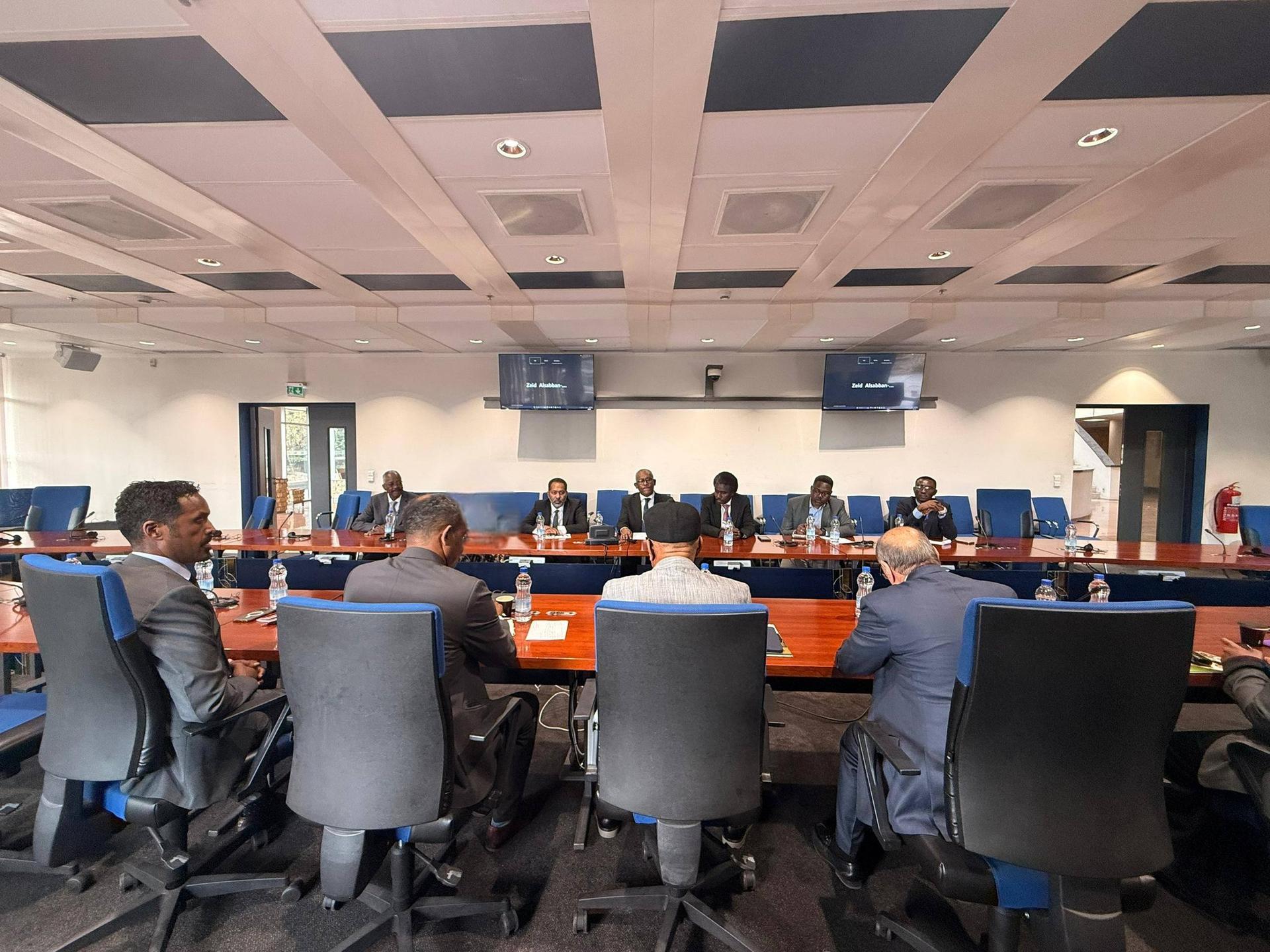
On the Quintet side, representatives included UN Special Envoy to Sudan Beeka Hafisto and EU Special Envoy to Sudan Anita Weber, while the Democratic Bloc delegation to Addis Ababa was led by Mona Arko Minawi.
The Democratic Bloc said in a statement that its meeting focused on the features of a roadmap for the political process and the mechanisms and tracks of dialogue, including ways to unify initiatives within a single political framework linking security and political tracks.
In contrast, the Civil Democratic Alliance for the Forces of the Revolution “Samood” led by Abdullah Hamdok and the Founding Sudan Alliance “Tasis” led by RSF commander Mohamed Hamdan Daglo “Hemedti” boycotted the meetings.
Boycotts and competing legitimacy
The boycotting Civil Democratic Alliance for the Forces of the Revolution “Samood” said it submitted substantive notes and reservations about the design and procedures of the political process and called for a meeting to evaluate the experience, but there was no response.
Jaafar Hassan, a leader of the Somoud alliance, told Radio Dabanga that the five-party mechanism continued preparations for a committee without addressing what he described as a fundamental failure to clearly identify the parties and issues involved.

The opposition coalition said in a communiqué that the current invitation represents a continuation of an approach that bypasses core issues that must be addressed before launching any credible political process, most notably stopping the war and agreeing on the bases of the political process and its participants.
In the same vein, the Founding Sudan Alliance “Tasis” apologized for participating in the second exploratory phase of consultations related to forming a preparatory committee, with spokesman Ahmed Taq Lisan saying the alliance did not participate for reasons related to how the Quintet Mechanism was run in the exploratory phase.
Divergence also appeared within the Democratic Bloc itself, where the meetings witnessed withdrawals and refusals by some components to participate, according to حفريات.
What’s at stake next
The Addis Ababa consultations centered on disputes over exclusion and political participation, with leaked documents confirming that the most controversial dispute centered on excluding Islamists and the National Congress Party from any future arrangements.
“the most controversial dispute centered on excluding Islamists, as certain forces sought to push for an explicit provision”
The Revolutionary Democratic Current and other forces argued that removing provisions excluding Islamists from final drafts raises questions about the credibility of the entire political process, while representatives of the Sudan Liberation Movement said their stance reflected awareness of the danger of returning the old regime.
In parallel, statements by the official spokesperson for the Sudan Liberation Movement, Mohammed Abdul Rahman al-Nayir, said Addis Ababa talks witnessed the exclusion of figures and faces linked to the Islamic movement and the National Congress Party from participating in the meetings.
The political future dilemma described by الوقائع الإخبارية framed the challenge as not only halting the war but managing political conflicts that will erupt as soon as the guns fall silent, and it said the peace battle would be far harder than the war.
Across the consultations, the discussions concluded on the need to deliver humanitarian aid and halt the deterioration of living conditions, while the success in bringing opposing strands together in Addis Ababa was described as an important procedural step but fragile in the face of ideological and political storms.