Technology and Science24 August, 20262 min read
Rajnath Singh Approves DRDO Conventional Missile Technology Transfer To Indian Defence Companies
This article is an automated aggregation of coverage from news outlets. Our editorials offer in-depth analysis curated by the NewsCord team.
Rajnath Singh approved transfer of DRDO conventional missile technologies to Indian private sector production. Transfer covers all conventional missile technologies to domestic private firms for production.

DRDO tech to private
India’s Defence Minister Rajnath Singh approved a policy to transfer Defence Research and Development Organisation (DRDO)-developed technologies for all conventional missile systems to Indian defence companies for domestic production within the country. The Ministry of Defence said the transfer is intended to enable the transition of missile-system development from DRDO to industrial production, while expanding industry participation in the defence ecosystem.
The Ministry of Defence also said the technology-transfer provision would enable qualified Indian companies to produce the missiles domestically, subject to certification and regulatory requirements. Janes reported that the MoD did not identify the missile systems covered by the approval or disclose prospective recipients, selection procedures, or any implementation timelines.

Which missiles and partners
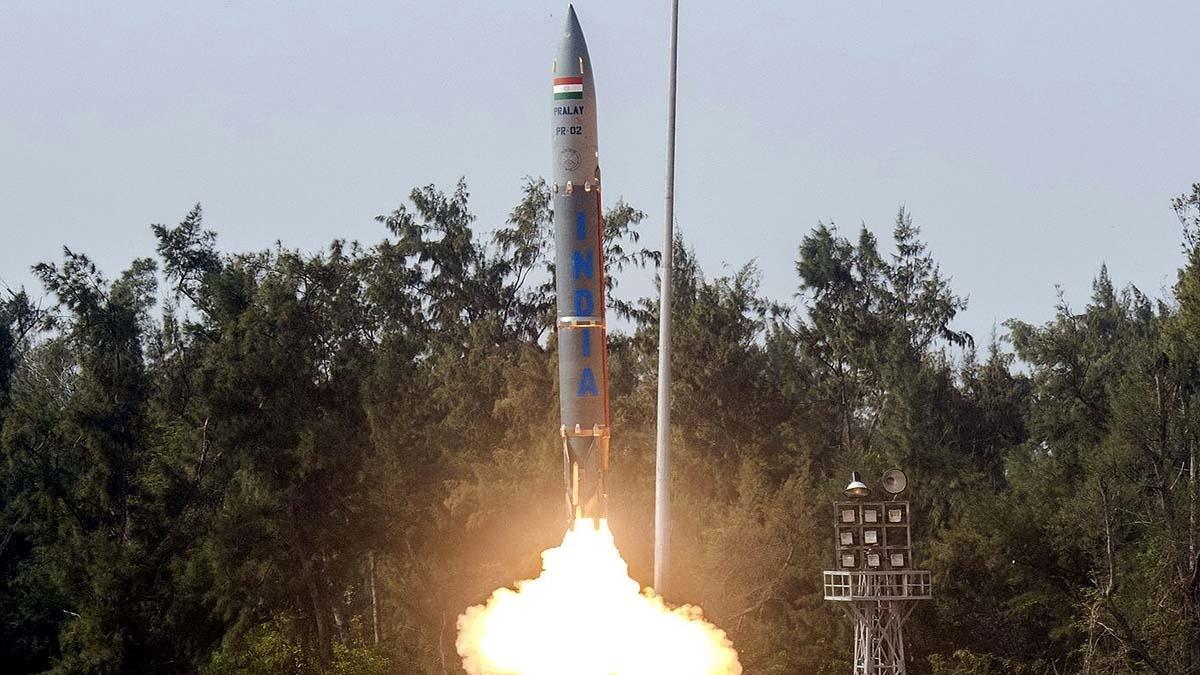
The New Indian Express said the conventional portfolio includes Akash and Akash-NG surface-to-air systems, VSHORADS, Astra air-to-air missiles, the Rudram anti-radiation family, anti-tank systems such as Nag, SANT and the man-portable ATGM, and NASM-SR anti-ship missile, along with land-attack cruise missiles and Pralay. The New Indian Express also quoted an official saying strategic missiles are a separate category and that “Agni and the K-series are not part of this transfer,” adding that “BrahMos and MRSAM involve foreign partners and are governed by separate arrangements.”
It reported that Adani Defence and Aerospace is named as a Development-cum-Production Partner (DcPP) for the Rudram anti-radiation series, including the hypersonic Rudram-II, and for NASM-SR, while Bharat Forge and ICOMM Tele and Solar Defence and Aerospace are also named as DcPPs. Pragativadi reported that Odisha Vigilance arrested Dr Basanta Kumar Naik, Ex‑In‑charge Principal and current Lecturer in Political Science at... as part of its coverage alongside the missile-production policy details.
Aatmanirbhar and next steps
The Ministry of Defence said the initiative aims to enhance domestic manufacturing capabilities, strengthen the defence industrial base, and create opportunities for the participation of Indian MSMEs and other technology partners in the supply chain. The Business Standard quoted the ministry saying the objective is to “enhance domestic manufacturing capabilities, strengthen the defence industrial base and create opportunities for the participation of Indian MSMEs and other technology partners in the supply chain.”
The New Indian Express said DRDO will retain responsibility for design certification and quality assurance, and described the move as a further shift away from the traditional model under which a DRDO missile was assigned to a nominated production agency for series manufacture. The New Indian Express also reported that the move follows the government’s earlier decision to open tactical missile production to private industry under the Development-cum-Production Partner (DcPP) model, and it cited examples including NASM-SR’s maiden salvo launch from a Navy Sea King helicopter off Odisha in April and the maiden flight trial of TARA from an IAF Jaguar in May.