Gaza Genocide27 September, 20252 min read
Reuters Investigation Finds Israel Falsely Justified Deadly Gaza Hospital Strike
This article is an automated aggregation of coverage from news outlets. Our editorials offer in-depth analysis curated by the NewsCord team.
Israeli forces falsely claimed targeting a Hamas camera in the August 25 Gaza hospital strike. The strike on Nasser Hospital killed 22 people, including five journalists.

5 outlets told this the same way.
Outlets did split on Thousands March in London Calling for Britain to Stop Arming Israel and Impose Sanctions →
Investigation of Gaza Hospital Strike
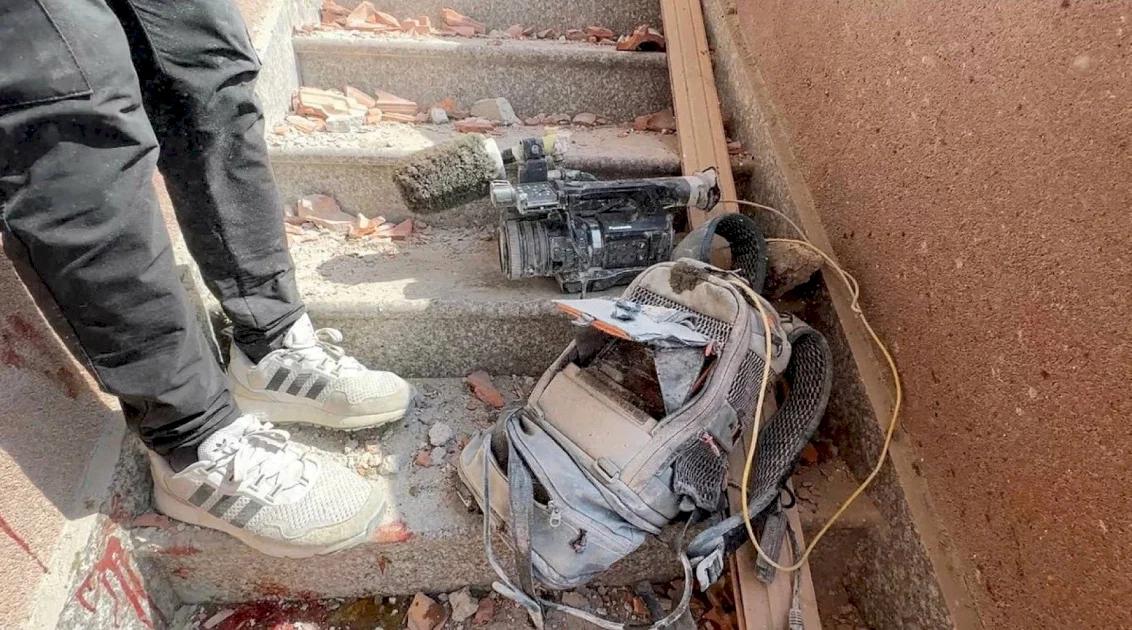
A Reuters investigation has revealed that Israel's justification for a deadly strike on Gaza's Nasser Hospital on August 25 was based on false claims. The Israeli military stated that the attack targeted a Hamas-operated camera spying on troops. However, evidence from Reuters shows that the camera actually belonged to journalist Hussam al-Masri, who had been using it for live broadcasts from the hospital stairwell.
“Israel stated the attack targeted a Hamas camera spying on troops, based on drone footage. However, analysis and Reuters reporting revealed the camera actually belonged to one of the journalists killed.”
The attack killed 22 people, including five journalists, and has been condemned by Gaza officials as a war crime. The incident highlights the ongoing danger faced by journalists in Gaza, where over 200 have been killed by Israeli attacks since the start of the conflict nearly two years ago.

Hospital Attack and Reactions
The attack on Nasser Hospital has been described as a 'double-tap' strike, a tactic where an initial attack is followed by a second strike targeting rescuers and first responders. This method has been condemned internationally as it increases civilian casualties. Witnesses and video evidence confirm that the camera was covered with a prayer rug belonging to al-Masri, not operated by the militant group.
Gaza officials have condemned Israel's justification as fabricated, accusing it of attempting to cover up a war crime against the hospital, its patients, and staff. The incident has raised serious concerns about the safety of journalists in Gaza, who are often caught in the crossfire of Israel's military actions.
IDF Strike Accountability Issues
The Israeli military admitted that the strike was carried out without the necessary approval from the senior regional commander. This admission raises questions about the chain of command and decision-making processes within the IDF. Despite this breach, the IDF has not provided a full explanation for why the hospital was attacked without warning.
“An Israeli military official admitted the attack was carried out without the necessary approval from the senior regional commander overseeing Gaza operations.”
There is also no clear information on why the stairwell was shelled twice or who authorized the strike. This lack of transparency and accountability has been a recurring issue in Israel's military operations in Gaza. Civilian infrastructure is often targeted under the justification of eliminating military threats.
Conflict and Civilian Impact
The broader context of this incident is the ongoing genocide in Gaza. Israeli military actions have resulted in significant civilian casualties and the destruction of infrastructure.
The targeting of journalists and media infrastructure is part of a pattern that has been condemned by international human rights organizations. The lack of accountability and the repeated targeting of civilian areas raise serious questions about Israel's adherence to international law and the protection of non-combatants in conflict zones.
