Africaupdated 1h ago2 min read
Archive photoRussia and United States Veto Rival Western Sahara Resolutions, Leaving MINURSO in Limbo
“paves the way for a profound change in how the international community addresses the issue.”
“leaving the UN peacekeeping mission there without a renewed mandate just a day before it expires.”
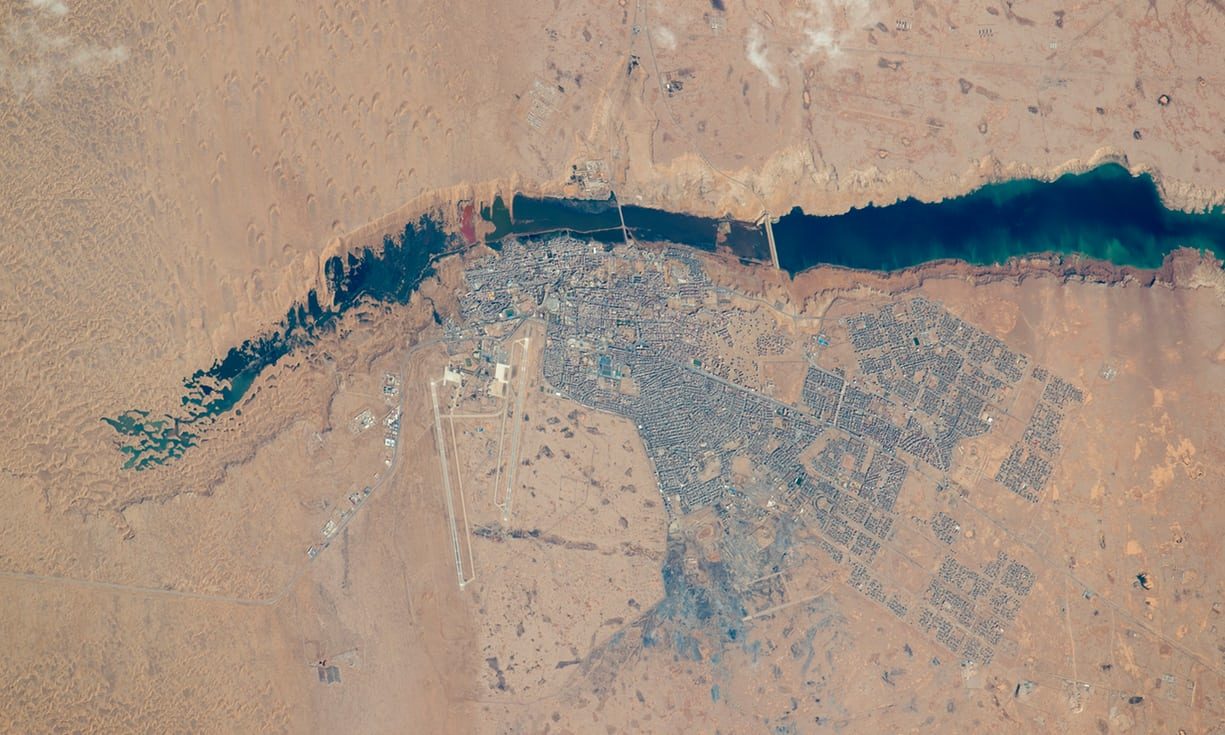
Photo: US National Aeronautics and Space Administration / ESA / International Space Station / US federal government, Public domain · Cropped for layout
This article is an automated aggregation of coverage from news outlets. Our editorials offer in-depth analysis curated by the NewsCord team.
Russia and United States vetoed rival Western Sahara resolutions, leaving MINURSO mandate in limbo. The vetoes prevent renewal of MINURSO as expiry looms, creating uncertainty over future mission.
Save coverage image
Veto leaves MINURSO in limbo
The UN Security Council left MINURSO’s fate in limbo after Russia and the United States vetoed rival resolutions on Western Sahara, with the mission due to expire on Saturday. Russia vetoed a United States resolution that would bury the option of a self-determination referendum, and Moscow’s blockage forced the U.S. resolution to stay on the drawing board despite 13 of 15 Security Council members voting in favor and China abstaining. The United States vetoed a Russian draft that would have extended MINURSO’s mandate for another year without those changes, and unless the Security Council agrees to a last-minute extension, the mandate would expire on October 31.
Oxfam warned that losing the mission could put refugees at risk, while hostilities persisting at low levels since Polisario said in November 2020 that it was resuming "armed struggle". Morocco’s royal palace welcomed the failure to renew the mission and said its personnel and equipment should leave Western Sahara in the coming days.
Debate over referendum and sovereignty
United States Ambassador Michael Waltz said a referendum had never taken place because of longstanding disagreements over voter eligibility, and he argued that UN officials had been telling the Council this reality for 30 years. "Unfortunately, some members of this Council have used their veto to preserve the letter 'R' for referendum in the mission's name," Michael Waltz said, while the United Nations has not been preparing to hold such a vote for decades. Russia’s UN envoy Vassily Nebenzia said the Security Council cannot automatically pre-determine matters relating to sovereignty, and he said, "The Security Council must not give a blessing to such a one-sided approach."
Nebenzia also called the U.S. veto "the political murder of the mission," and he said Russia was compelled to block the adoption of the draft. The Russian ambassador presented his alternative as a "technical" extension to renew the mission without changing its structure, while Mike Waltz would reject Moscow’s initiative.
Non-renewal signals closure
Atalayar said the non-renewal of MINURSO’s mandate by the UN Security Council marked a decisive milestone in managing the Western Sahara conflict, and it said the decision paved the way for a definitive closure of the Western Sahara issue within the United Nations. "The United Nations Security Council did not extend MINURSO’s mandate at its meeting today, October 30, 2026," the Royal Cabinet of the Kingdom of Morocco said, and the Mission’s presence in the southern provinces should cease in the coming days. The veto showdown threatened the future of a mission the council has routinely renewed for decades, and the unusual standoff deepened a dispute over a territory most of which is controlled by Morocco but claimed by the Algeria-backed Polisario Front.
“‘The United Nations Security Council did not extend MINURSO’s mandate at its meeting today, October 30, 2026.”
Oxfam warned that losing MINURSO’s monitoring and de-escalation functions risks undermining security and stability, with serious consequences to civilians and prospects of a peaceful resolution. Atalayar said the end of MINURSO’s presence implied the suspension of the political process at the UN related to the Sahara, and it said the Security Council would no longer address this issue on its agenda.