20Minutos
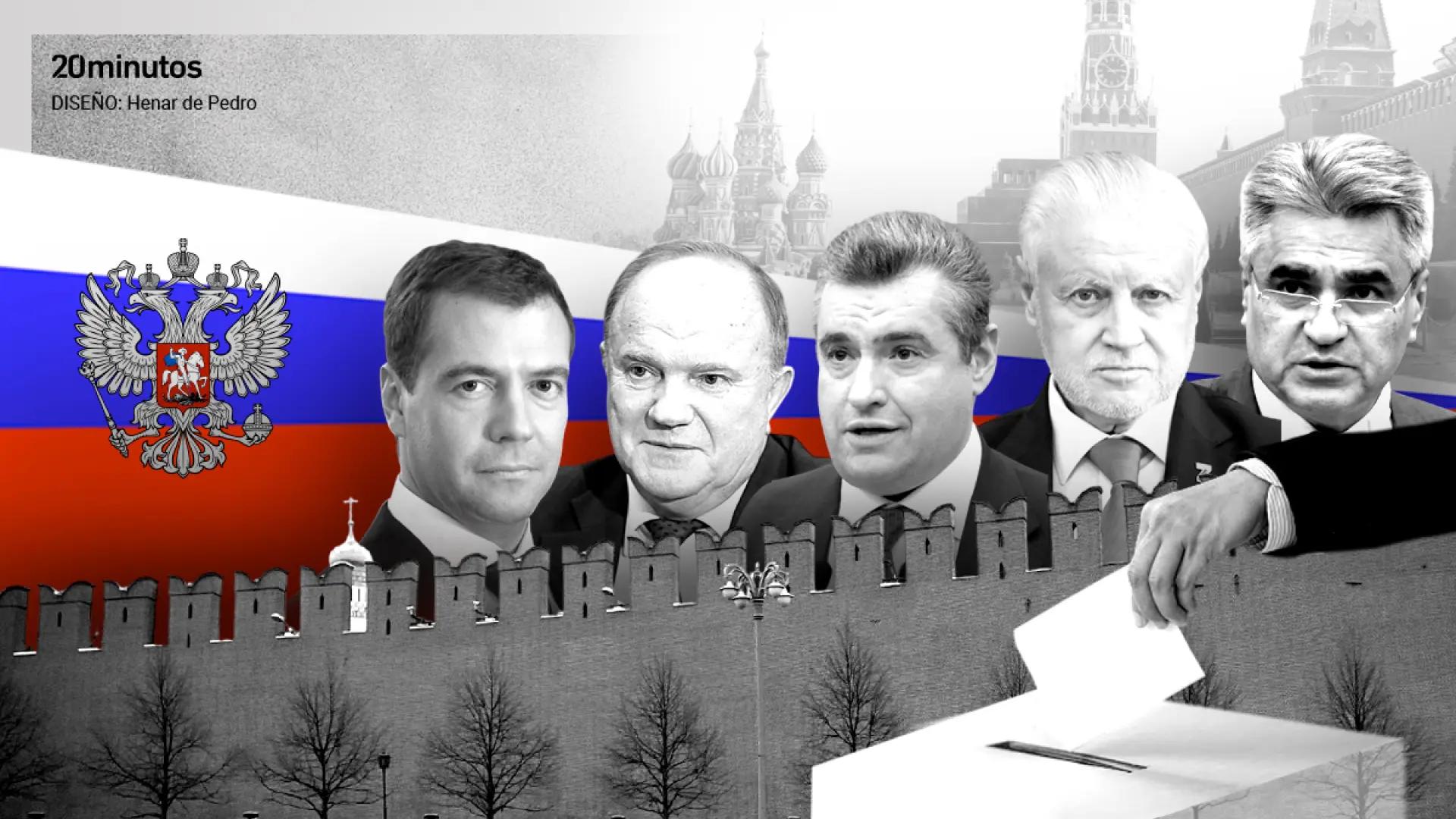
The five candidates vying to govern Russia in a sham-like election: none can criticize the war in Ukraine
 Aajil
The Central Commission announces that turnout in the Russian State Duma election exceeded 45% before the closing
 ABC
Russia votes in legislative elections with no real opposition
 ABC News
Here's what to know about Russia's parliamentary vote and its main parties
 ABC News
Russian election observer loses consciousness during arrest by police, opposition party says
 AFP
Russians vote on last day of parliamentary elections
 AFP
Ukrainian drones hit Moscow on last day of Russian elections
 Ain Al-Arabiya 21
Russia votes amid war… what is Putin looking for in the ballot boxes?
 Akhir khabar
Absent debates and unified slogans... the Ukraine War swallows Russia’s political competition
 Al Jazeera
Russia’s parliamentary election: Who’s on the ballot, and why it matters
 Al Jazeera
The view from Russia: ‘No party can be antiwar’ in parliamentary election
 Al Jazeera
Polls close in Russian wartime election with ruling party set to dominate
 Al Jazeera
At least three killed in Ukrainian drone attack on Moscow, says Russia
 Al-Arabi Al-Jadid
"United Russia" wins the parliamentary elections and cements the Kremlin’s dominance
 Al-Bawaba News
Russian parliamentary elections… why does the Kremlin still need this vote, and how does it obtain the results it wants?
 Al-Jazeera Net
Russia votes amid war... what does Putin want from the ballot boxes?
 Al-Jazira Net
Russian elections in a time of war solidify the Kremlin's grip
 Al-Jazira Net
Yabloko... why does a small party trigger so much debate in Russia’s elections?
 Al-Jazirah Net
The Duma is regenerating... How do the Russians elect their representatives?
 Al-Khaleej
United Russia party leads in the parliamentary elections
 Al-Khaleej Newspaper
Russians vote in parliamentary elections as Europe denounces the process
 Al-Khaleej newspaper
Under the pressure of drones.. Russia’s legislative election enters its final day
 Al-Masri Al-Yawm
Drone attacks by Ukrainian aircraft disrupt the first day of voting for the Russian State Duma south of the country
 Al-Wasat Portal
The European Union: The legislative elections in Russia are held under a systematic crackdown.
 Al-Watan
Expert on East European affairs: Russian parliamentary elections are almost predetermined for Putin and his party
 AP News
Russia votes in wartime parliamentary election set to secure the Kremlin’s power
 AP News
Here’s what to know about Russia’s parliamentary vote and its main parties
 AP News
Russians begin 3 days of voting in a parliamentary election set to cement the Kremlin's power
 AP News
Early results show Russia's main Kremlin party dominating tightly controlled parliamentary vote
 Araby21
"Telegraph": Putin threatens to burn Europe after the Russian parliamentary elections
 Ash-Sharq al-Awsat
Announcement that the Kremlin-aligned United Russia is the winner of the elections
 Bawabat al-Shuruq
Announcement of the Kremlin-aligned United Russia party as the winner in the parliamentary elections
 BBC
Rosenberg: Russia's elections will have few surprises, but for the Kremlin they matter
 BBC
Why Putin cares about the legislative elections in Russia, even though there won’t be surprises
 BBC
Rosenberg: Russia's elections will have few surprises, but for the Kremlin they matter
 BBC
What do we know about the Russian State Duma elections?
 BBC
Russia's elections had few surprises - but how the Kremlin uses the results will be crucial
 BBC
Russia's elections had few surprises - but how the Kremlin uses the results is far from clear
 Bhaskar English
Putin’s victory certain, yet Russia goes to polls: Voting also held in Ukraine-occupied regions; party oppo...
 BreakingNews.ie
Russia votes in wartime parliamentary election set to secure the Kremlin’s power
 Business Standard
Russia votes in wartime election as Putin seeks to reinforce political grip
 Cadena SER
Russia holds its first legislative elections since the invasion of Ukraine without the main party opposed to the war
 CBC
Russians begin voting in parliamentary election set to cement Kremlin's power
 CBC
Putin's ruling party on track to comfortably win wartime Russian election
 Channel 4
Inside Russia: Young people voting against Putin’s war in Ukraine
 CNBC
Putin braces for election stress test as Russians ‘feel the pain’ of struggling economy
 CNBC
Russia’s pro-Putin party set to win election as Ukraine exposes war’s growing reach into Moscow
 CNN
Empty podiums, prizes for e-voting, no opposition: Russians head to the polls amid intensifying war in Ukraine
 CNN
Putin casts vote online in first Russian parliamentary elections since Ukraine war
 CNN
Ruling pro-Putin party set to win Russia’s tightly controlled wartime parliamentary election
 CNN
Moscow targeted by Ukraine’s largest ever drone attack on final day of Russia’s election
 CNN en Español
Empty podiums, prizes for electronic voting, no opposition: Russians vote as the war in Ukraine intensifies
 CNN en Español
The pro-Putin party would win the Russian parliamentary elections, tightly controlled in wartime
 Cyprus Inform
Russians vote in three-day parliamentary election amid Ukraine war
 Daily Sabah
Putin’s wartime test as Russians vote in 'controlled' election
 Demócrata
Putin’s party arrives worn out to the first legislative elections in Russia since the start of the war
 Deutsche Welle
Russia votes for new parliament in controlled elections
 Devdiscourse
Parliamentary Elections: A Barometer of Support for Russia's War Effort
 DW
Russia votes in parliamentary elections marked by war with Ukraine.
 DW
A war-fatigued and anxious Russia picks a new parliament
 DW
Putin’s party wins legislative elections in Russia
 DW
Russia: Putin party retains majority in parliamentary vote
 EFE
The campaign for the war’s first parliamentary elections closes in Russia
 El Comercio Perú
How Ukraine managed to carry 450 drones to Moscow in its largest attack on Russia’s capital
 El Debate
Russia votes in the first parliamentary elections since the Ukraine war with the opposition banned
 El Debate
Russia votes in the first parliamentary elections since the Ukraine war with the opposition banned
 El HuffPost
The 5 Keys of Russia’s Legislative Elections: a Vote Under the Impact of War and Putin’s Power
 El Mundo
The Russians vote with no change in sight in their most painful legislative elections: "Moscow is unsafe and the topic cannot even be discussed"
 El Mundo
Vladimir Putin's party dominates in an election with no real opposition
 EL PAÍS
Putin turns Russia’s legislative elections into a referendum on the continuation of the war in Ukraine.
 EL PAÍS
Putin closes out elections plagued by irregularities and opens a new chapter in the war
 El Periódico
Russia goes to the polls in an atmosphere of anxiety about the uncertain course of the war and the foreseeable result favorable to Putin
 El Periódico
Putin's party wins the legislative elections with 57.3% of the votes, according to initial results
 elDiario.es
Putin's party dominates in legislative elections with the result already written.
 Euronews
Video. Russia holds Duma elections as the war in Ukraine reconfigures the vote.
 Euronews
Russians go to polls with no party against Putin or war in Ukraine
 Euronews
Putin's party wins record 355 parliament seats, election official says
 Europa Press
Russia is holding elections without opposition to Putin but turning them into a referendum on his figure
 Europa Press
Putin's party wins clearly in the Russian Parliament elections, according to the initial official results
 France 24
Russia votes in parliamentary election as war in Ukraine drags on
 France 24
Russia: Voting begins in parliamentary elections with participation of parties supporting Putin and the war in Ukraine
 France 24
Russia holds parliamentary elections while prolonging the invasion of Ukraine
 France 24
Russia's ruling party on track to win election after Ukraine's drone attacks on Moscow
 Global Banking & Finance Review
Putin casts parliamentary election as barometer of support for wa
 Hungarian Conservative
Putin’s Party Set to Keep Supermajority in Russia’s Deadliest Post-Soviet Election
 i24NEWS
Russians Begin Three Days Of Voting In Wartime Parliamentary Election
 India Today
Russia begins three-day Duma vote with Kremlin set to tighten grip
 India Today
Russia votes in wartime parliamentary poll with Kremlin grip set to tighten
 India Today
Russia's ruling pro-Putin party on track for easy win in wartime elections
 IOL
Russia votes as Putin’s party dominates election amid Ukraine war
 Jaridat Al-Riyadh
"More than a thousand" cyberattacks targeted the Russian Duma elections
 Kuwait Times
Putins party heads for big win after drone-hit Russian vote
 La Nación
Russia's wartime parliamentary election is set to secure the Kremlin's power
 La Tercera
Ukraine attacks Moscow with the largest drone assault in its history on the last day of Russia’s parliamentary elections
 LBC
Polls open in Russia as first elections since Putin invaded Ukraine kicks off
 Los Angeles Times
Russia’s wartime parliamentary election is set to secure the Kremlin’s power
 Los Ángeles Press
Russia Holds Elections with Vetod Opposition and Occupied Ukraine
 Meduza
Russia’s first parliamentary election since the full-scale invasion of Ukraine begins tomorrow, with its only anti-war party barred and genuine competition all but eliminated
 Meduza
Russia’s State Duma elections begin with record online turnout, a million votes in occupied Donetsk, and attempts to bribe observers
 Meduza
Russia’s election commission says five parties are on track to enter the State Duma. Ruling United Russia had 57.19% with results in from more than a third of precincts.
 Meduza
Russia held its first State Duma election since the full-scale invasion of Ukraine. Officials say the same five parties are set to return, with the ruling party on track to retain its majority.
 Mehr News Agency
Polls open in Russian parliamentary elections
 MetroWest Daily News
Pro-Putin party looks to win Russian election without real opposition
 MinutoYA
Ukraine attacked Moscow with hundreds of drones on the eve of the Russian election day.
 MONCLOA.COM
Russia limits gasoline in Moscow to 30 liters: the pressure that makes the energy bill more expensive in Spain.
 Mont Karlo Adawiya
Russia organizes the first elections since its invasion of Ukraine
 Montecarl o al-Duwliya
Russian State Duma Elections... "A Thousand Tricks and Tricks" to Exclude Annoying Candidates and a 'Peace' Rhetoric Outside the Ballot
 MUNDIARIO
Ukraine Collapses Moscow with Drones on the Final Day of Russian Elections
 News4JAX
Russia votes in wartime parliamentary election set to secure the Kremlin's power
 Newsweek
Putin faces growing discontent before Russia's Duma election
 Okaz
Russia is holding its first parliamentary elections in the Ukrainian regions it announced it had annexed
 Ottumwa Courier
Polls open in Russia’s tightly controlled parliamentary vote, with the Kremlin expected to keep its grip on power
 PBS
Russia begins 3 days of voting in a parliamentary election set to cement the Kremlin's power
 Ra'i al-Yawm
Moscow vows to intensify strikes on Kyiv in response to the attacks on election day and Zelenskiy says he has agreed with Trump to hold a meeting in New York
 Radio Free Europe/Radio Liberty
Russians Vote In First Parliamentary Election Since 2022 Ukraine Invasion
 Radio Mitre
Russia: Legislative elections begin after a very discreet campaign
 Ratopati
Russia Begins Three-Day Parliamentary Elections Amid Ukraine War
 RBC-Ukraine
Trump, mobilization and war: What Russia's election means for Putin's next move
 RBC-Ukraine
Russia's Duma elections begin with fraud, coercion, and communication blackouts
 Reuters
Voting begins in Russian parliamentary election which Putin has cast as barometer of support for war
 Reuters
Explainer: How Putin may leverage predictable outcome of Russia's elections
 Reuters
Russia's ruling pro-Putin party wins wartime election with over 57% of vote, near complete results show
 RFI
Russia: A legislative campaign in almost total silence, for a result that is already decided
 Robert Lansing Institute
Elections as an Instrument of Annexation: Why the Kremlin Needs State Duma Voting in the Occupied Territories of Ukraine
 RTE.ie
Putin's party wins record majority in Russian election
 RTVE.es
Russia holds legislative elections amid war and without opposition
 RTVE.es
Russia holds legislative elections in war and without opposition
 RTVE.es
The Kremlin party wins the legislative elections in Russia
 Shabakat Tawāṣul al-Akhbārīyah
Launch of the Russian State Duma election.. and Putin: the most important political event this year
 Shams TV
Putin urges Russians to vote and describes parliamentary elections as a measure of support for the war
 Sight Magazine
Russia’s ruling pro-Putin party on track to win wartime election after drones strike Moscow
 Sky News
Why Russia's election matters to Putin
 Sky News Arabia
Moscow opens the ballot boxes for the Russian State Duma election
 Sky News Arabia
The United Russia party is on track to win the legislative elections.
 South China Morning Post
Russians begin voting in parliamentary election in shadow of war
 South China Morning Post
Russia vows revenge for Ukraine’s election-day attacks as poll shows win for ruling party
 SWI swissinfo.ch
Russia votes in parliamentary elections marked by the war in Ukraine
 SWI swissinfo.ch
Continuation of voting in the Russian legislative elections and European condemnation of the 'suppression' of opponents
 The Conversation
Putin’s United Russia will win – but vote tally, turnout and level of coercion will tell the real story of Russia’s wartime elections
 The Conversation
Russia’s parliamentary elections will not be a referendum on the Ukraine war – or anything, really
 The Guardian
Russians go to polls against backdrop of Ukraine war and Putin’s tightening grip
 The Hindu
Russia says destroyed dozens of Ukrainian drones as polling stations open
 The i Paper
I’m a Russian dissident in London. Putin’s ‘election’ is exposing his greatest fear
 The Moscow Times
United Russia Set for Record Parliament Majority in First Wartime Elections
 The New Voice of Ukraine
Russia begins Duma vote to pave way for draft — The Guardian
 The New York Times
Why Russia Holds Elections, and How the Kremlin Gets the Results It Wants
 The New York Times
They Have Almost No Chance in Russia’s Elections. Why Are They Running?
 The Seattle Times
Russians begin 3 days of voting in a parliamentary election set to cement the Kremlin’s power
 The Times of India
Russia kicks off voting in first parliamentary election since Ukraine war began
 Toronto Star
Early returns in Russia’s parliamentary election show the main Kremlin party leading
 UA.NEWS
Video: Putin voted online in the State Duma elections and thanked himself
 USA Today
Pro-Putin party set to win Russian election without real opposition
 Vietnam.vn
Russia has begun the ninth State Duma elections.
 Vietnam.vn
Russia is holding parliamentary elections.
 W Radio México
Moscow refinery attacked by Ukraine: Trump urged to halt energy offensive.
 Washingtonpost
In Russia, the election result is easy to guess. Much else there is uncertain. - The Washington Post
 Washingtonpost
Putin wins parliamentary election, but Ukraine hits Moscow refinery - The Washington Post
 Wikālat al-Anbāʼ al-Urduniyya
Russia: The voting process has begun to elect members of the parliament
 WION
Russia votes amid Ukraine war: Which are the main parties on the ballot?
 Президент России
Vladimir Putin voted in the election
 Українські Національні Новини
State Duma elections, half of the protocols processed: results and the first reactions from party leaders
 الجزيرة نت
Russian elections in a time of war cement the Kremlin’s grip
 الشرق للأخبار
Duma Elections 2026: Details of the voting, competition, and Russia’s warnings about Western interference
 العربية
Election of Parliament in Russia... amid ongoing war in Ukraine
 العين الإخبارية
First Russian parliamentary election after the war... Vote under the roar of Ukrainian drones
 برلمانى
First Duma elections since the start of the war in Ukraine... and Putin describes the vote as decisive.
 صوت بيروت إنترناشونال
Voting begins in parliamentary elections in Russia, which Putin regards as a gauge of support for the war