Business20 April, 20267 min read
Saudi Arabia Reassesses Vision 2030, Cancels and Scales Back Grand Projects Amid Fiscal Strains
This article is an automated aggregation of coverage from news outlets. Our editorials offer in-depth analysis curated by the NewsCord team.
Saudi Arabia reassesses Vision 2030, prioritizing pragmatic fiscal strategies over grand projects. Mukaab cube skyscraper construction suspended as part of cost-cutting and recalibration.

Vision 2030’s pivot
Ten years after Mohammed bin Salman unveiled “Vision 2030” to transform Saudi Arabia’s oil-dependent economy, the kingdom is reassessing its trajectory as financial strains force a pivot toward pragmatism. The New York Times frames the shift around the gap between the pace of Mohammed bin Salman’s ambitions and the state’s financial capacity, describing “a cascade of changes” since he announced that he would end Saudi Arabia’s “addiction” to oil. The New York Times also links the kingdom’s current position to the “U.S.-Israeli war with Iran,” saying it “stymied oil exports through the Strait of Hormuz” and brought “a slew of missiles and drone attacks on the kingdom.”
“Ten years ago, a 30-year-old prince named Mohammed bin Salman announced sweeping plans to transform Saudi Arabia, declaring that he would end its ‘addiction’ to oil.”
When oil prices surged in 2021 and 2022, the Times says, Saudi Arabia launched “splashy project launches” including “a mountain skiing town,” “a cube-shaped skyscraper,” and “a breakaway golf league.” When oil prices fell, the Times says officials began searching for savings by “canceling, delaying and scaling back plans that turned out to be too grand.”
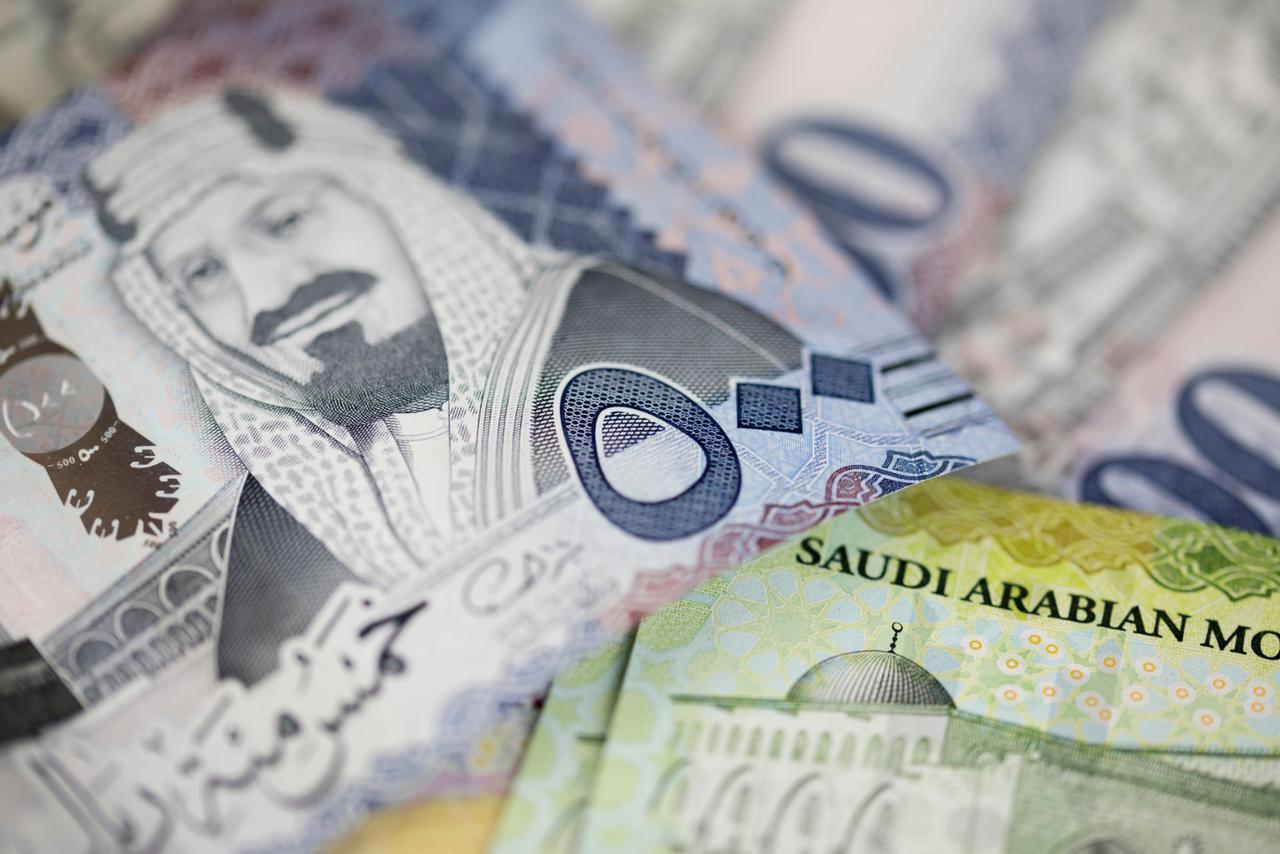
In parallel, Futura describes the same broad turning point as a move “between grand ambitions and the need for austerity,” tying it to “the drop in oil prices” and “the challenges of diversifying its economy.” Mix Vale similarly describes a “significant pivot towards pragmatism,” saying the kingdom is navigating “considerable fiscal pressures” and reassessing “the feasibility of its most grandiose projects.”
Spending strain and oil
The sources connect Saudi Arabia’s recalibration to the volatility of oil revenues and the resulting pressure on government finances. Futura says oil dependence remains pronounced, adding that it “account[s] for nearly two-thirds of the government budget and more than 70% of export revenues,” while also describing “volatility in oil prices, with a Brent barrel hovering around $70.” It further states that the Saudi Ministry of Finance “has already announced a 5% cut in spending for next year,” and that “GDP growth [is] estimated at only 0.8% for the current year, well short of the 4.4% initially hoped for.”
The New York Times similarly describes how oil price swings shaped the kingdom’s spending cycle, saying that when oil prices surged in 2021 and 2022, “a flurry of splashy project launches followed,” and that when oil prices subsequently fell, officials began “searching for savings — canceling, delaying and scaling back plans.” Mix Vale echoes the same mechanism, describing “considerable fiscal pressures” and a need to reassess “the feasibility of its most grandiose projects,” while also emphasizing that the original blueprint required “the sheer scale of the undertakings” and “financial outlay.”
Génération NT adds another layer by describing budgetary pressures “in the face of oil prices that struggle to finance the entirety of these futuristic projects,” and it places the Public Investment Fund at the center of the cost-control effort. Génération NT says the Public Investment Fund “is endowed with $925 billion” and seeks to “prioritize its investments and to control costs,” while also tying the shift to “abandoning some futuristic projects in favor of initiatives deemed more profitable or urgent.”
Mukaab suspended
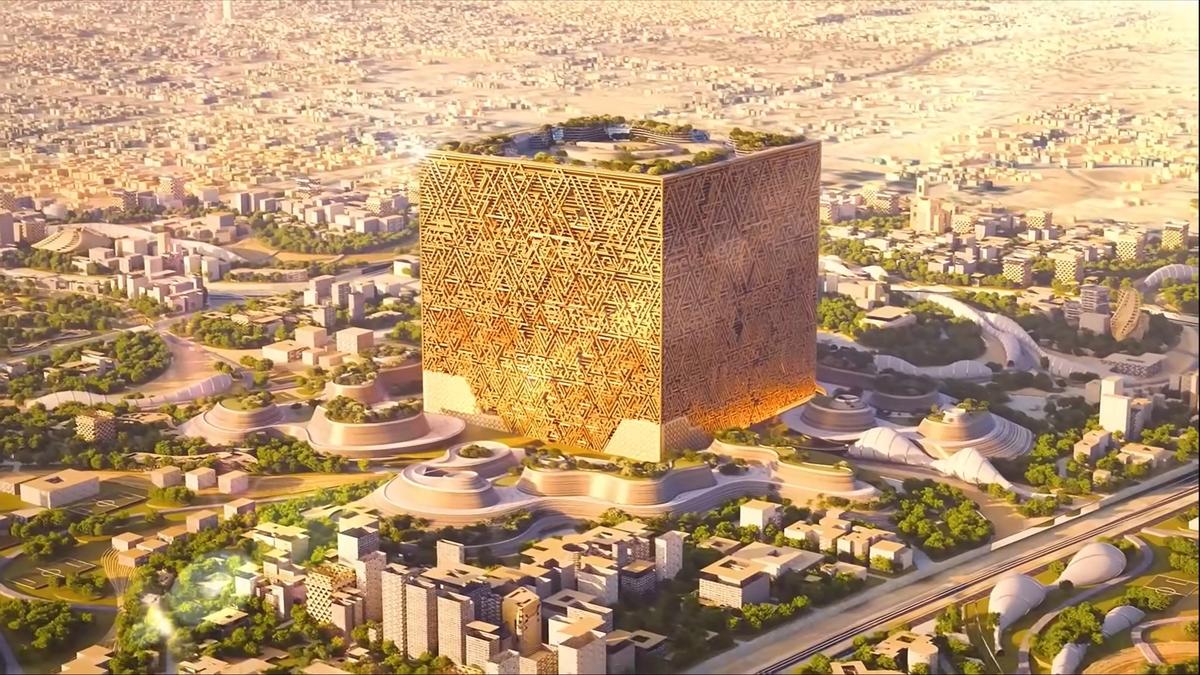
One of the clearest examples of the recalibration described across the sources is Saudi Arabia’s suspension of the cube-shaped Mukaab skyscraper project. Génération NT says the Mukaab was announced in February 2023 as the centerpiece of Riyadh’s New Murabba downtown area, describing it as “a cube 400 meters tall with width and length” and saying it was to house “an internal dome projecting holographic images with the aid of artificial intelligence.” The same source reports that Saudi Arabia “has suspended the construction of the Mukaab,” describing the decision as “motivated by a financial reevaluation” and as part of Vision 2030 “abandoning some futuristic projects in favor of initiatives deemed more profitable or urgent, such as Expo 2030 and the 2034 World Cup.”
Génération NT adds that “Several sources close to the matter reported by Reuters confirm that the project is under reevaluation regarding feasibility and, above all, funding,” and it portrays the pause as part of “a broader rationalization of spending tied to Vision 2030.” Xpert.Digital provides additional detail, saying that “In January 2026, Saudi Arabia unexpectedly announced a temporary halt to construction on this $50 billion project, even as foundations and excavation work were already underway.”
It also characterizes the Mukaab as “a gigantic 400-meter-edged cubic skyscraper” and links the stoppage to “the collapse in oil prices” and “the surge in budget deficits,” while stating that after “the drastic reduction of the mirror city 'The Line', the Mukaab is the next casualty of a financial realignment.” Génération NT also situates the decision within a broader reshaping of the PIF’s priorities, saying the fund is directing strategy toward sectors “such as logistics, mining, and artificial intelligence,” and it ties the shift to “firm deadlines” and “more immediate economic impact.”
Officials and project tradeoffs
The sources portray Saudi officials as signaling that project modifications, delays, and resizing are part of the new approach to Vision 2030. Génération NT quotes Saudi Minister of Economy Faisal al-Ibrahim saying that the government is “very transparent and will not hesitate to say that they had to modify this project, delay it, and resize it.” It describes the Mukaab suspension as “the first official reevaluation of a megaproject in the capital itself,” while also stating that the surrounding neighborhood’s real estate development, New Murabba, is expected to continue.
Génération NT says New Murabba has an “estimated cost of $50 billion by Knight Frank” and aims to create “104,000 homes and 334,000 jobs by 2040,” while noting that the deadline was “already pushed back from the initial 2030 target.” Futura adds that Saudi megaprojects include “Neom: a futuristic city estimated at $500 billion” and “Diriyah Gate: a commercial and residential complex at the gates of Riyadh,” and it says the kingdom also planned “major sporting events such as the AFC Asian Cup in 2027 and the Asian Winter Games in 2029.”
It also states that the “Line” will offer “only a fraction of the 170 kilometers originally planned to its first inhabitants in 2030,” and it says “Consulting expenses for Neom are said to have fallen 20-30% in recent months, according to internal sources.” Mix Vale describes the recalibration as “not a retreat but rather a sophisticated adjustment” and says the government is focusing on “optimizing existing projects” and ensuring new endeavors align with “immediate economic needs and achievable benchmarks.”
What comes next
Looking ahead, the sources frame Saudi Arabia’s next phase as a continuation of Vision 2030’s diversification push under tighter financial constraints, with specific events and sectors receiving priority. Génération NT says Saudi Arabia is focusing its resources on initiatives with “firm deadlines and a more immediate economic impact,” naming “Expo 2030 and the 2034 World Cup,” and it adds that “Diriyah's cultural zone and the Qiddiya mega-tourism project also continue to receive priority support.” Xpert.Digital similarly states that “the sovereign wealth fund PIF now prioritizes concrete objectives: the FIFA World Cup 2034, Expo 2030, and the development of artificial intelligence,” and it describes the Mukaab halt as part of a broader shift away from “architectural feats still uncertain.”
Futura describes the kingdom’s challenge as balancing “grand dreams of grandeur and economic reality” while continuing its diversification quest, and it emphasizes that “Pragmatism now guides the management of pharaonic projects.” The New York Times ties the immediate context to the “10-year anniversary of his program, called “Vision 2030,”” and it says Mohammed bin Salman is “now 40 and the de facto ruler of Saudi Arabia,” placing the reassessment in the context of the program’s milestone.
Mix Vale says the government is moving away from an “all-or-nothing” approach toward “an incremental and sustainable development model,” and it describes the aim as ensuring “long-term viability and success of the overarching economic diversification goals.” Even the Mukaab’s uncertain future is presented as a decision point: Génération NT says the structure’s “future… remains uncertain, awaiting a decision that will determine whether this architectural dream will ever become a reality,” while also noting that New Murabba’s neighborhood development is expected to continue.