Full story
Mecca pact signed Aug 7
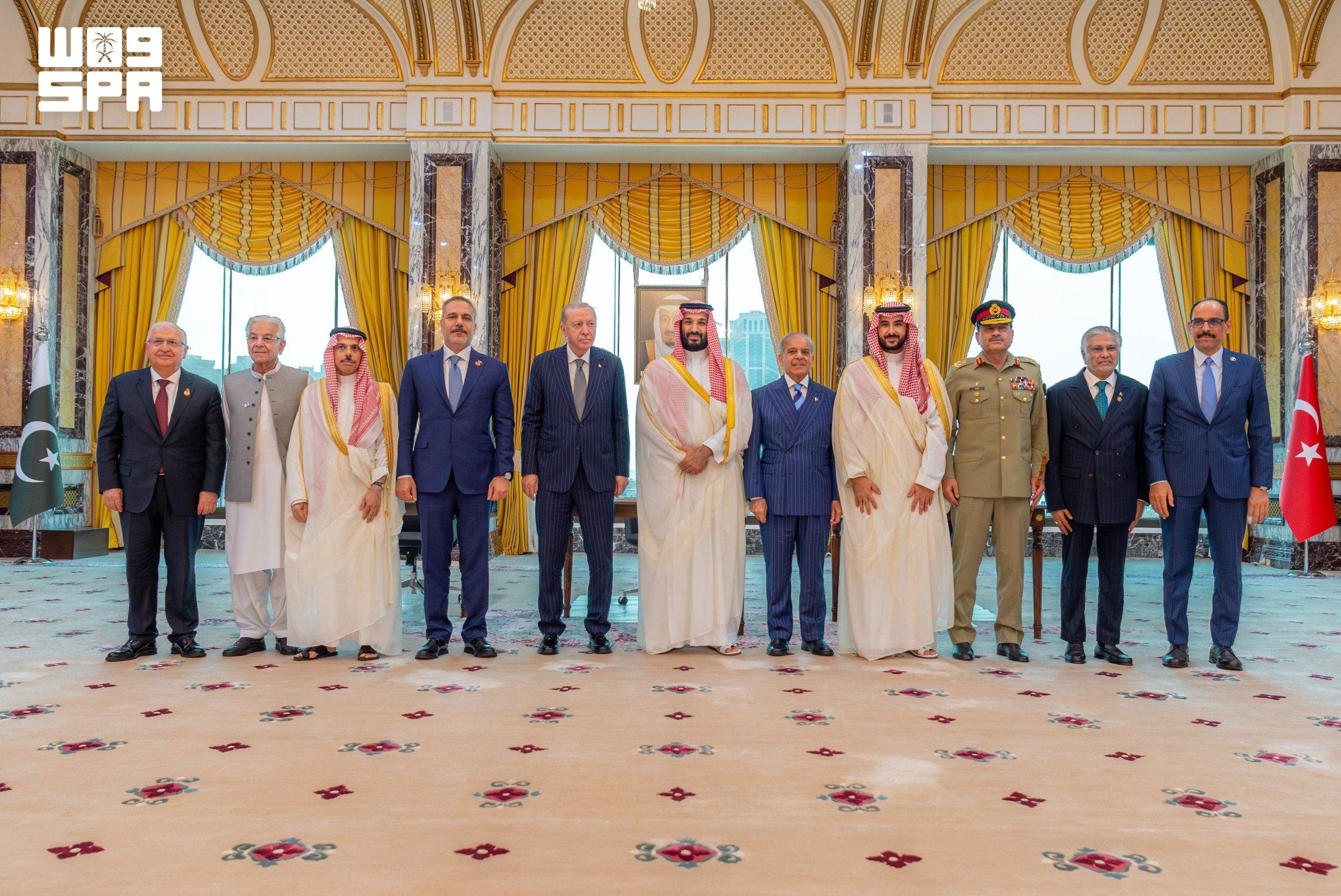
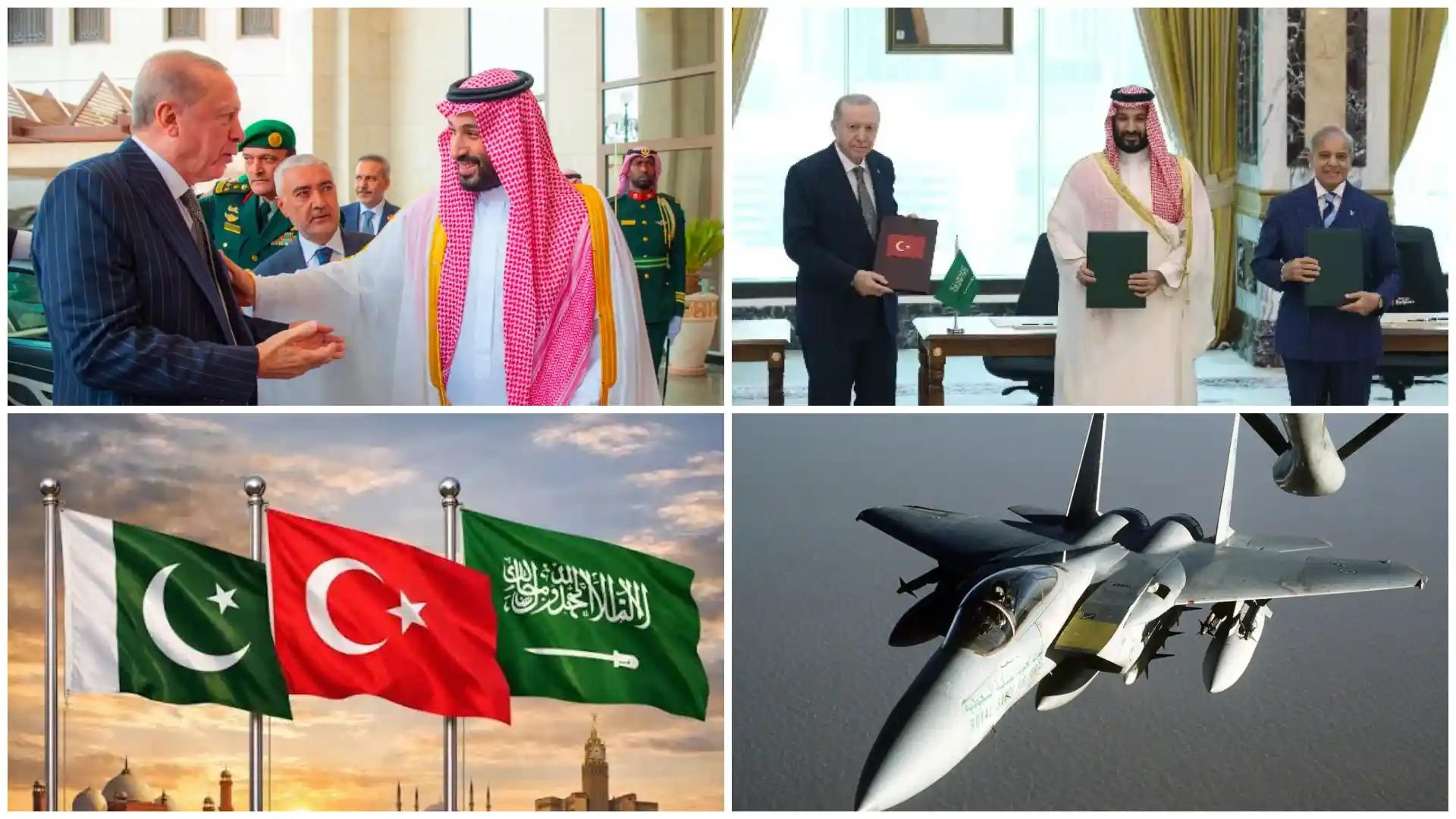
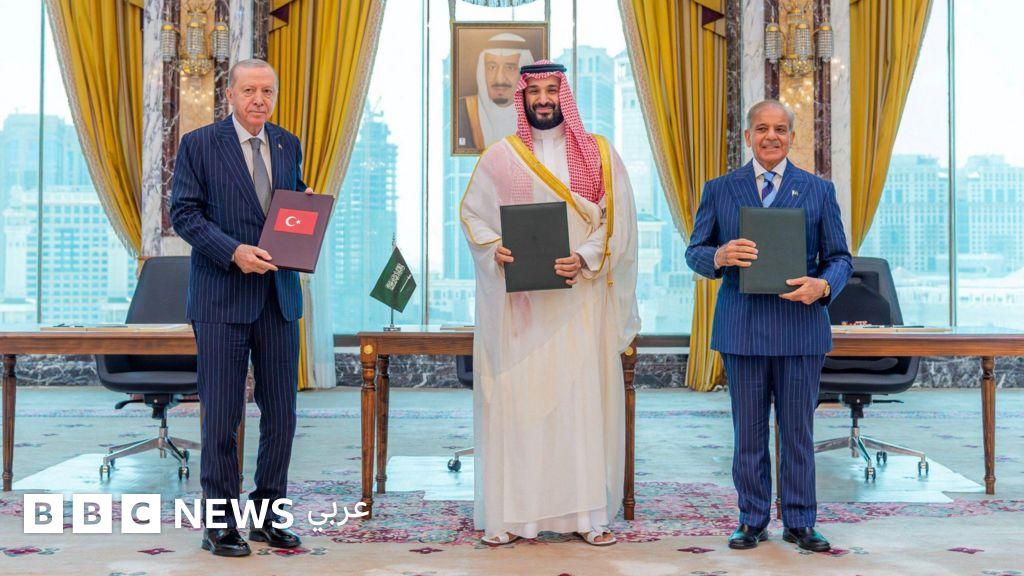
Saudi Arabia, Pakistan and Turkey signed the “Mecca Joint Defence Agreement” in Mecca on Friday, with the pact intended to strengthen collective deterrence and stipulating that an armed attack against any of the three would be regarded as an attack on all, they said in a joint statement.
“signed a joint defence agreement in Mecca on Friday”
Reuters reported that Turkish Vice President Cevdet Yilmaz said the agreement was not aimed at any specific country, and a Turkish official added that it was purely defensive and did not abrogate any existing agreements the countries had with other states.

The Reuters account tied the signing to regional turmoil in which Iranian missile fire reached Gulf oil exporters, and said Iran and its allies have been firing on Saudi Arabia and other Gulf states and blockading their energy shipments since the U.S. and Israel attacked it on February 28.
Reuters also described the political symbolism, quoting Abdulaziz Sager, chairman of the Gulf Research Center, saying, “Three of the Muslim world's most influential states are convening at a moment of heightened uncertainty.”
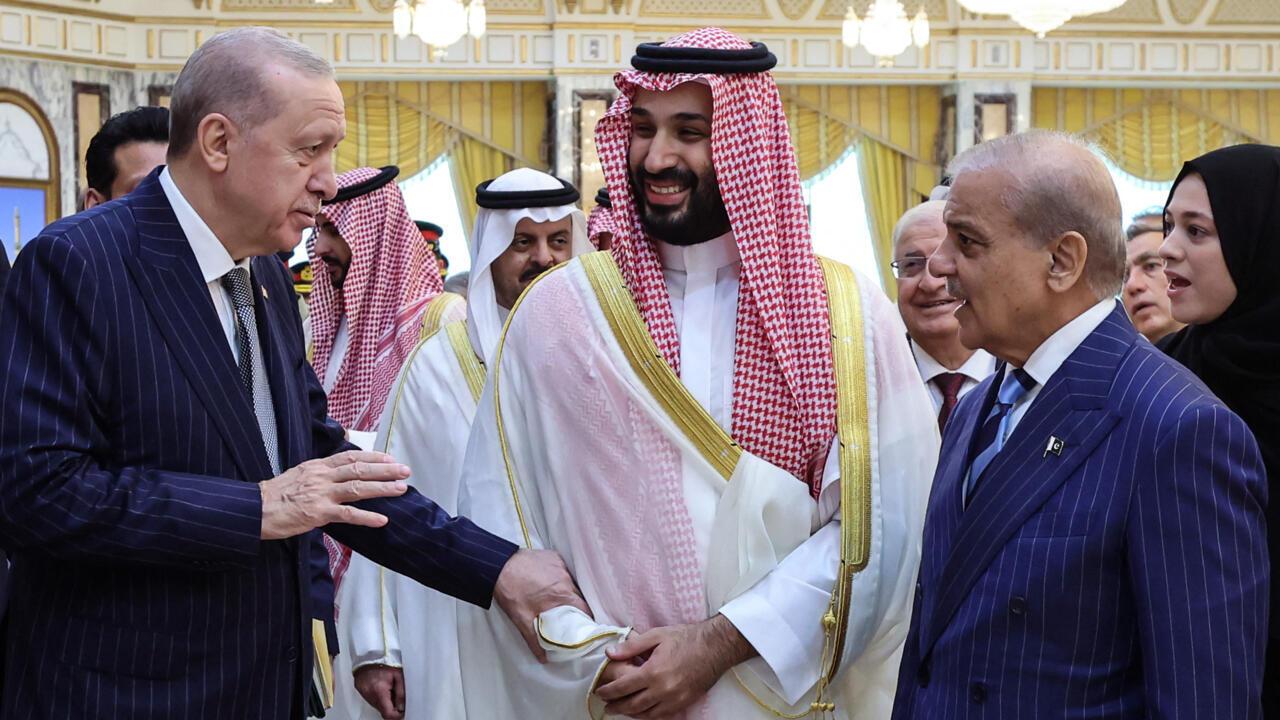
The same Reuters report said the agreement followed nearly a year of negotiations and was signed by Saudi Crown Prince Mohammed bin Salman, Turkish President Tayyip Erdogan and Pakistani Prime Minister Shehbaz Sharif.
Debates over aims and limits
While Reuters said the joint statement did not give specifics on the commitments each had accepted, it also reported that the statement did not specify how far their agreement would bind them to any particular military action in each other's defence.
In a separate framing, WANA News Agency said a Turkish official told it the agreement is defensive in nature, is not directed against any specific country, and remains open to the participation of other regional states.
WANA News Agency also argued that details released so far do not indicate that legal mechanisms, joint command structures, intelligence coordination, and logistical infrastructure have been clearly established.
Reuters reported that Rayed Krimly, Saudi deputy minister for public diplomacy, said in a social media post that the accord does not represent an effort to establish a military axis or a sectarian bloc, adding, “Nor is it linked to any nuclear ambitions or arms race.”
WANA News Agency warned that collective defense is presented as the central element of the Mecca Agreement, but it remains unclear how this principle would be implemented in a real crisis and whether an automatic mechanism for a joint military response exists.
Regional security stakes rise
Reuters said the Middle East has been in flames for nearly three years since the October 7, 2023 Hamas attack on Israel, and described Israel’s war in Gaza, invasion of southern Lebanon, seizure of territory in Syria, and two air campaigns against Iran.
“imperiled its oil exports and ambitious development plans”
In that context, Reuters reported that Tehran has fired on Saudi Arabia, Kuwait, Bahrain, Qatar, the United Arab Emirates, Oman, Jordan and Israel, while Turkey and Pakistan have avoided significant direct attacks but are anxious to calm conflicts that threaten their own security and economies.
Reuters also said for Saudi Arabia, three years of Middle East conflicts have imperiled its oil exports and ambitious development plans and drawn big questions over the reliability of its longstanding U.S. security umbrella.
WANA News Agency linked the signing to renewed tensions along Saudi Arabia’s southern front and developments related to Yemen, and said Riyadh appears to be seeking to shift from unilateral actions toward broader frameworks of political and security cooperation.
Reuters quoted Abdulaziz Sager again, saying the trilateral framework could strengthen the three countries' collective diplomatic and defense weight while contributing to the emergence of a more regionally driven security architecture.