
Middle East · 08 August, 2026 · 2 min read
Saudi Arabia, Pakistan, and Turkiye Sign Joint Defense Pact in Mecca
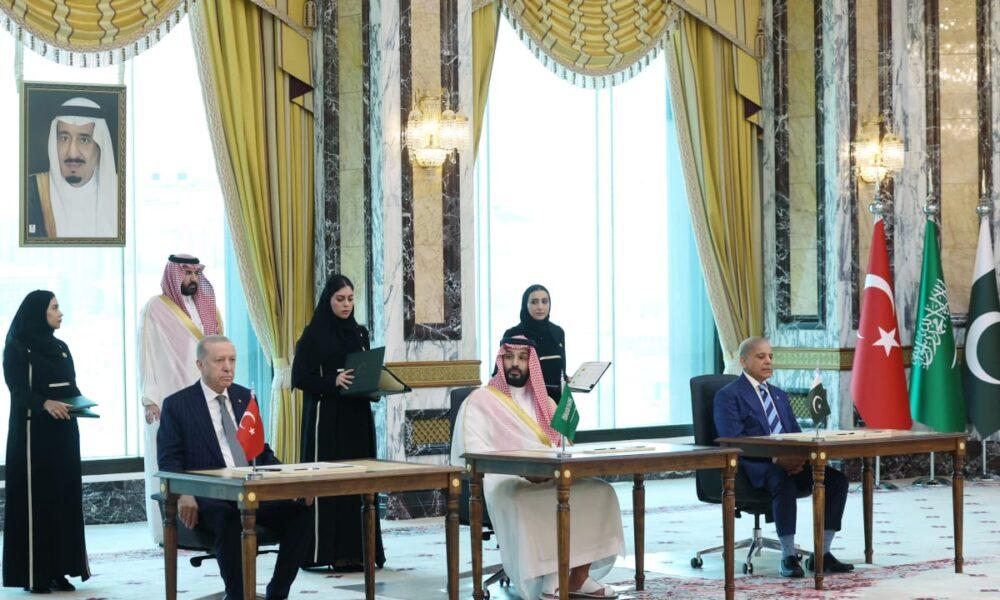
Saudi Arabia, Pakistan, and Turkey signed a Mecca Joint Defense Agreement in Mecca. Armed attack on any member is considered an attack on all three.
Turkey-led explanations add detailed institutional mechanisms.
2 of 3 outlets skipped it: plans include joint drills plus drone/AI and industry cooperation.
The Jerusalem Post was read line by line by the Watchdog: 3.4. See the score →
206outlets compared
Same story, two versions
tap a side to read it in full
Al Arabiya English
“Under the accord, strategic political and military mechanisms plan to be established”Read the original ↗
Al Jazeera
“It further provides for the enhancement of all aspects of defence cooperation among the three states.”Read the original ↗
26 September Net frames the pact as an American-Zionist plot; Al Jazeera leans on official denials.
Mecca defense pact signed
Saudi Arabia, Pakistan and Turkiye signed a joint defence agreement in Mecca on Friday, with the pact intended to strengthen collective deterrence against any act of aggression.
The agreement stipulates that an armed attack against any of the three would be regarded as an attack on all, according to a joint statement described in the coverage.
A Turkish official said, "The pact includes a collective defence clause. It is purely defensive in nature, pledging mutual support only for defence," while Reuters’ reporting cited the agreement’s defensive framing and its lack of targeting of any specific actor.
The deal was signed as Iran and its allies were described as firing on Saudi Arabia and other Gulf states and blockading their energy shipments since the U.S. and Israel attacked on February 28, and the pact was presented as a response to that regional turmoil.
Voices split on intent
Turkish Defense Ministry briefings in Ankara said the pact sets out mechanisms for coordination among Defense Ministers, Foreign Ministers, and Chiefs of General Staff/Armed Forces Commanders, and it planned joint military exercises involving land, naval, and air forces. At the same time, a critic in the region argued the agreement was not wise, writing, "It is a great folly for major regional powers like Turkey and Pakistan to engage in signing joint security treaties" with Saudi Arabia.
In Al Jazeera’s account, Saudi Arabia’s Deputy Minister for Public Diplomacy, Rayed Krimly, said the pact is not a threat to any country in the region, posting on X that "The agreement does not represent any intention to build a military axis or a sectarian/religious bloc." AAl Jazeera also included a warning from Iranian MP Ebrahim Rezaei, who said, "Saudis must know that a paper agreement with Turkiye and Pakistan will not bring them security" and urged policy reform rather than reliance on the pact.A

What the pact could change
Coverage tied the Mecca agreement to broader questions about the durability of U.S. security guarantees, with Al Jazeera quoting Kristian Coates Ulrichsen saying regional doubts have intensified and accelerated efforts to diversify security and defence relations. Ulrichsen said, "Both the decision to begin military operations against Iran and the subsequent conduct of the war" intensified concerns, while Al Jazeera reported that analysts viewed the pact as adding options rather than replacing the United States.A
Another Al Jazeera report framed the pact as potentially shifting the geopolitical landscape, noting that it was signed in the Saudi city of Mecca on Friday and that it aims to strengthen collective deterrence and enhance defence cooperation. AThe same Al Jazeera coverage described the wider context as Iran’s decision to close the Strait of Hormuz, a key conduit for energy exports, and said the resulting cost imposed a steep burden on local economies as the pact was being announced.A