Full story
Operation Economic Outcast
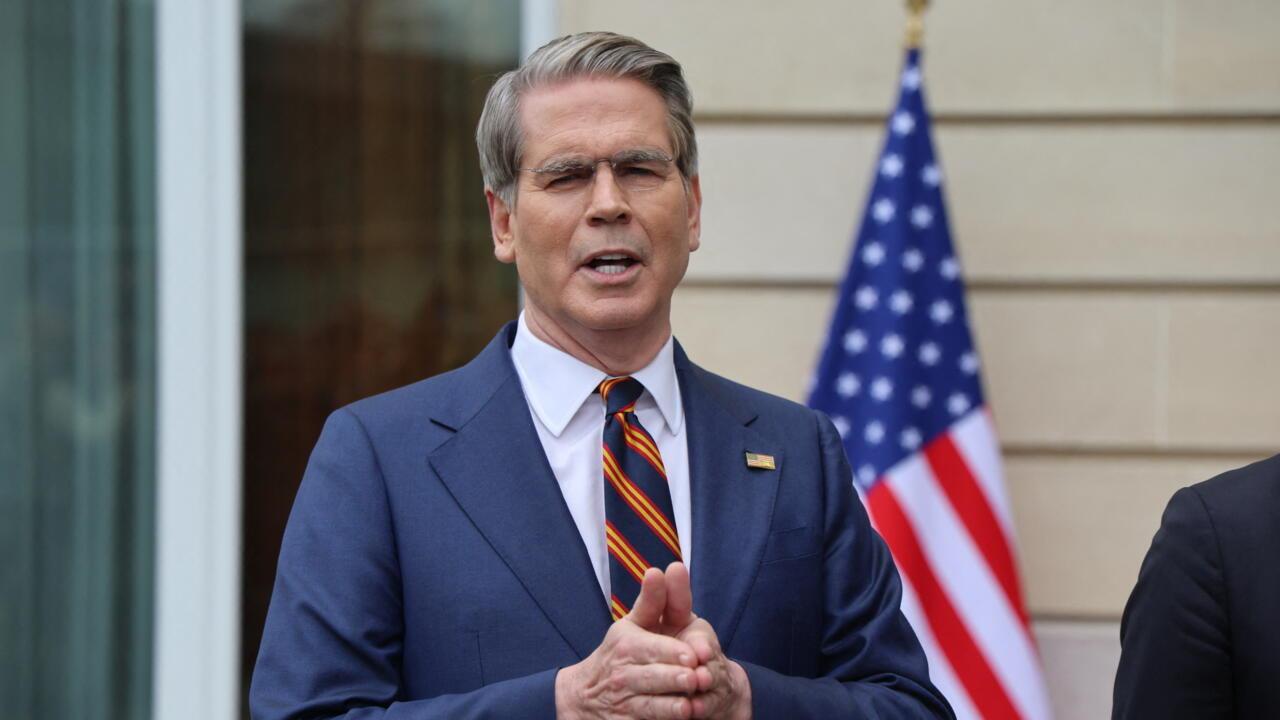
U.S. Treasury Secretary Scott Bessent announced “Operation Economic Outcast,” describing it as an unprecedented economic campaign against Iran that targets the country’s financial lifelines and warns global shipping companies, banks and other companies they risk American sanctions if they continue doing business with Tehran.
“the Treasury had begun “Operation Economic Outcast,” a campaign designed to sever Iran’s economic connections worldwide”
Bessent said the Treasury had begun “Operation Economic Outcast,” a campaign designed to sever Iran’s economic connections worldwide and prevent the regime from generating revenue that supports its military and other activities.

The sanctions expand secondary sanctions across five sectors—digital assets, technology, gold, aviation and shipping—and the Treasury’s Office of Foreign Assets Control sanctioned more than 60 new entities, individuals and vessels accused of helping Iran procure nuclear and missile technology, conduct cyber operations and generate oil revenue.
The U.S. has also constricted Iran’s ability to move oil and other exports by sea, imposing a naval blockade against the country’s ports and coastline since April, and U.S. Central Command said 71 commercial ships have been redirected as part of the blockade.
Bessent warned that the U.S. “does not have infinite patience,” saying the administration is giving countries a “cure period” but that it “will move very quickly and that we are serious.”
China, UAE, and retaliation
China publicly criticized the sanctions ahead of Bessent’s press conference, with Chinese foreign ministry spokesperson Lin Jian saying, “They will only exacerbate tensions and escalate the situation, which is in no one’s interest,” while Bessent said the U.S. “does not have infinite patience” and warned that no one is above U.S. sanctions.
Bessent said the United Arab Emirates’ recent decision to halt business dealings with Iran was “likely causal,” and he predicted other countries would follow as the U.S. targets the ecosystem that turns Iranian oil into money into repression.

Iran denounced the campaign as an “economic war,” and Mohsen Rezaei, secretary of Iran’s Supreme National Security Council, wrote on X that if the U.S. campaign continues, “not a single drop of oil” would be exported through the Strait of Hormuz or elsewhere in the Persian Gulf.
The Guardian reported that Tehran vowed retaliation against any country that took part in the U.S.-led isolation campaign, and it quoted Maj Gen Ali Abdollahi, the armed forces’ chief of staff, saying the retaliation could take the form of land, sea or air operations or cyber-attacks.
Bessent also said President Donald Trump is calling foreign leaders directly while Treasury and State Department officials follow up with governments and entities to lay out U.S. expectations, warning that if people do not meet them “then they should expect that they will leave the dollar system.”
What’s at stake next
The U.S. Treasury’s campaign is framed as part of a broader effort to revive traffic in the Strait of Hormuz back to pre-conflict transit levels, while the economic operation expands secondary sanctions categories across digital assets, technology, gold, aviation and shipping.
““The clock just started ticking.””
The Guardian said the U.S. threatened severe sanctions against any country or entity maintaining economic ties with Iran, and it reported that Bessent called the effort an unprecedented campaign compared with the D-day Normandy landings.
Bessent warned that any entity facilitating money laundering for Iran will be removed from the U.S. dollar system, and he said “The clock just started ticking,” as the U.S. identified those that continued to deal with Iran and gave violators a deadline to cut ties or face sanctions.
Fox News reported that Bessent’s Monday announcement could set off a series of events leading to the dissolution of the nearly 47-year-old dictatorship in Tehran, and it quoted Bessent comparing the effort to World War II D-Day by saying, “Today, in that same spirit, we are launching an economic onslaught against Iran's financial connections around the globe.”
In the same reporting, Fox News said the rial plunged to an all-time low of 2.02 million to the U.S. dollar hours before Bessent spoke, and it quoted Jonathan Harounoff warning that “this pressure campaign will likely continue to cripple the regime and set the stage for perhaps yet another domestic uprising.”