USA25 August, 20263 min read
U.S. Prepares to Return Diplomats to Embassies in Lebanon, Israel, Jordan, and Oman
Diplomats to return to Middle East embassies evacuated before and during the Iran war. Return could begin as early as this week, suggesting no expected full-scale fighting.
Haaretz was read line by line by the Watchdog: 5.8. See the score →
Diplomats to Return
The U.S. State Department is preparing to return diplomats to Middle East embassies that were evacuated before and during the war with Iran, with Foreign Service officers and emergency measures scaling back possibly beginning "as early as this week," according to an internal State Department document cited by the New York Times.
Reuters reported that the first diplomats to return would be assigned to the U.S. Embassy in Lebanon, though staffing there would remain below full levels.
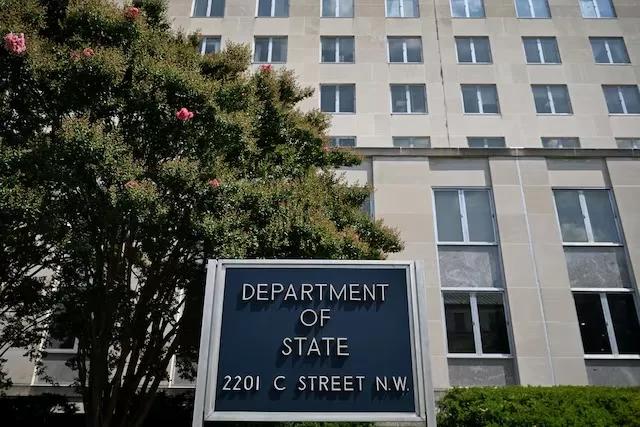
The document says staff would ultimately return completely to the U.S. embassies in Israel, Jordan and Oman, while posts in the United Arab Emirates, Saudi Arabia, Qatar and Lebanon would initially be capped at 85% staffing and missions in Iraq, Kuwait and Bahrain limited to 75%.
The State Department said it "continuously reviews the security posture at our diplomatic missions around the world," and that it is adjusting staffing to protect the safety and security of personnel while advancing U.S. foreign policy objectives.
Reuters added that the staff reductions began in February, when Washington authorized voluntary departures of non-emergency personnel and family members from Israel amid tensions with Iran.
Officials, Sanctions, Risk
The New York Times said the changes were described by three U.S. officials who spoke on the condition of anonymity because they were not authorized to talk with the press.
Reuters reported that the restaffing is set to proceed even though talks between the United States and Iran have floundered, leaving the Trump administration to threaten new economic sanctions.

The Times of India framed the move as a sign that Washington does not expect a return to full-scale fighting in the immediate future, while also noting that the planned redeployment comes despite stalled U.S.-Iran talks.
In the same Reuters account, the State Department statement quoted by the New York Times said it was adjusting staffing "to ensure we can continue advancing U.S. foreign policy objectives while protecting the safety and security of our personnel."
The Jerusalem Post added that the drawdown began after the US and Israel launched their military campaign against Iran on February 28, and that U.S. Defense Secretary Pete Hegseth said Washington had not ruled out further military strikes around Iran or the Strait of Hormuz.
What Changes Next
The document cited by the New York Times and Reuters lays out a staged return across embassies in Israel, Lebanon, Saudi Arabia, Qatar, Jordan, Oman, Iraq and Kuwait, with Lebanon first and full staffing ultimately in Israel, Jordan and Oman.
Reuters said posts in the United Arab Emirates, Saudi Arabia, Qatar and Lebanon would initially be capped at 85% staffing, while missions in Iraq, Kuwait and Bahrain would be limited to 75%, and it also said the State Department would enforce restrictions on bringing family members in the six Gulf countries and Lebanon.
The Egyptian Gazette described the plan as a scaling back of emergency measures at U.S. missions in the Middle East and said the return could begin this week, while also quoting the State Department that it is adjusting staffing posture "to ensure we can continue advancing US foreign policy objectives while protecting the safety and security of our personnel".
The Times of India reported that the U.S. announced a fresh round of sanctions on August 24 targeting Iranian military activities, procurement networks, cyber operations and petroleum trade, even as diplomats were set to redeploy.
Haaretz characterized the redeployment as signaling that renewed fighting is unlikely, while Reuters noted it was not immediately able to verify the report and that the U.S. Department of State could not immediately be reached for comment outside regular business hours.