Technology and Scienceupdated 2h ago3 min read
MapSpaceX Captures Starship in First-Ever Midair Recovery at Starbase Texas
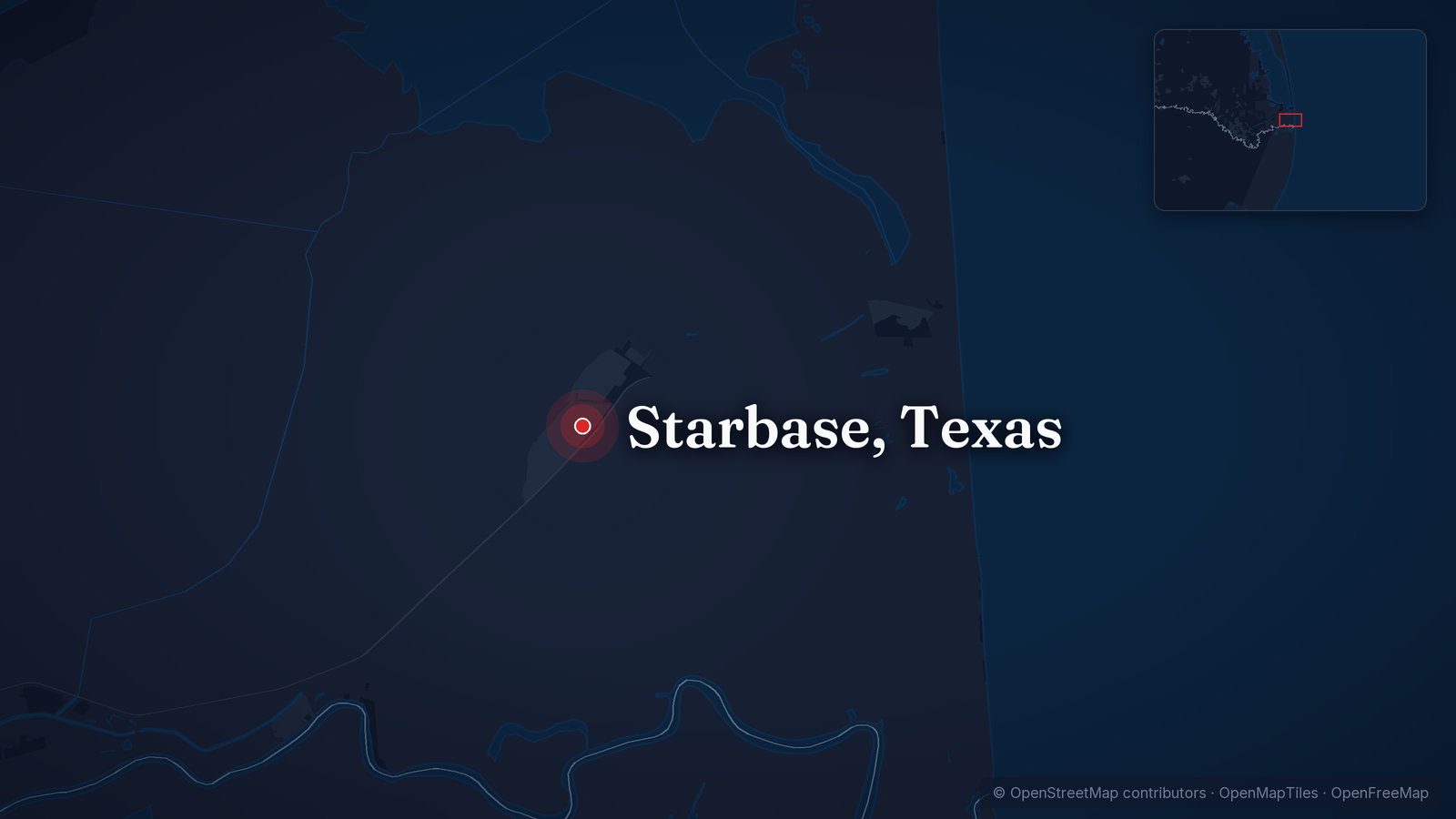
5 West Asian5 Western Mainstream4 Western Alternative6 Other source typesMap: © OpenStreetMap contributors, ODbL · Cropped for layout
This article is an automated aggregation of coverage from news outlets. Our editorials offer in-depth analysis curated by the NewsCord team.
SpaceX caught Starship with the launch tower's mechanical arms after an orbital flight. First-ever spacecraft recovery from orbit returning to its Texas launch site.
Save coverage image
20 outlets in this story. Read their headlines below.
Outlets did split on El Niño’s “Risk Multiplier” Warning Looms Over COP31 as Climate Funding Lags →
Starship caught in Texas
SpaceX achieved the first recovery of a spacecraft in history by capturing its Starship vehicle on Saturday (11/14/2026) after the spacecraft spent a day in orbit and returned to its launch platform. SpaceX launched the 124-meter-tall rocket on Friday at 16:47 (22:47 GMT) from its platform at Starbase, Texas, for its fifteenth test flight, and the Starship spacecraft reached Earth orbit where it successfully deployed 26 satellites aimed at expanding the Starlink satellite internet constellation. SpaceX guided Starship through a controlled descent and glided it between the “mechanical whisker arms” on Launch Platform 2, with the arms nicknamed “chopsticks” holding the vehicle above the ground.
SpaceX senior engineer Lars Blackmore said, “If you want to return to the East Coast of Texas, you have to fly over the entire continent,” describing how the team determined a safe return path over land. SpaceX spokesperson Dan Huot said, “We have captured a Starship, and now everything changes,” as the recovery marked a milestone in the decades-long pursuit of fully reusable rocket systems.
Booster recovery fails
SpaceX’s capture succeeded for the Starship upper stage, but the mission did not recover the Super Heavy booster, which had to divert to the Gulf of Mexico and self-destruct before hitting the water. SpaceX senior engineer Lars Blackmore said the return path required flying over the entire continent, while the booster’s descent on Friday experienced a technical problem that forced it to divert to the Gulf of Mexico right in front of the launch site. SpaceX senior engineer Lars Blackmore said, “So, inevitably, you are flying over land,” as the company worked through the complex return profile for the spacecraft it ultimately caught.
SpaceX said the booster recovery failed because the boostback burn ended earlier than expected, leaving the booster incorrectly positioned for a tower catch, and the guidance system initiated an automated abort toward an offshore landing area in the Gulf of Mexico. SpaceX commentator Jessie Anderson said, “One of the most incredible and historic engineering feats of all time has just happened right in front of our eyes,” while the booster loss remained a setback for the overall reusable system.
Next steps for reuse
SpaceX’s recovery of Starship advanced the company’s goal of fully reusable rocket systems, and the sources tied the milestone to the ability to enable more frequent launches and reduce mission costs. SpaceX’s mission extended for more than 22 hours in orbit, and Infodefensa said the upper stage completed about 14 orbits around Earth and reached an altitude of roughly 275 kilometers while deploying 26 simulated satellites of the next-generation Starlink V3. SpaceX reignited three of its Raptor engines after reentry, oriented vertically, and guided itself toward the launch tower where the mechanical arms held it aloft, closing out Starship’s integrated flight number 15.
CBS News said SpaceX will need to successfully launch and recover a large number of Super Heavy-Starships to demonstrate the statistical reliability needed for crewed flights, and it will also need to demonstrate autonomous refueling of Starships in Earth orbit. CBS News reported that NASA wants to use a variant of the Starship to carry astronauts to the lunar surface in 2028, and it said multiple Super Heavy-tanker flights will be needed to refuel the lander in Earth orbit before it can head for the moon.