Climateupdated 3h ago2 min read
Archive photo · 27 October 2026El Niño’s “Risk Multiplier” Warning Looms Over COP31 as Climate Funding Lags
4 Western Mainstream2 Local Western1 OtherPhoto: NASA's Scientific Visualization Studio - Science and Technology Corporation/Kel Elkins / US federal government, Public domain · Cropped for layout
This article is an automated aggregation of coverage from news outlets. Our editorials offer in-depth analysis curated by the NewsCord team.
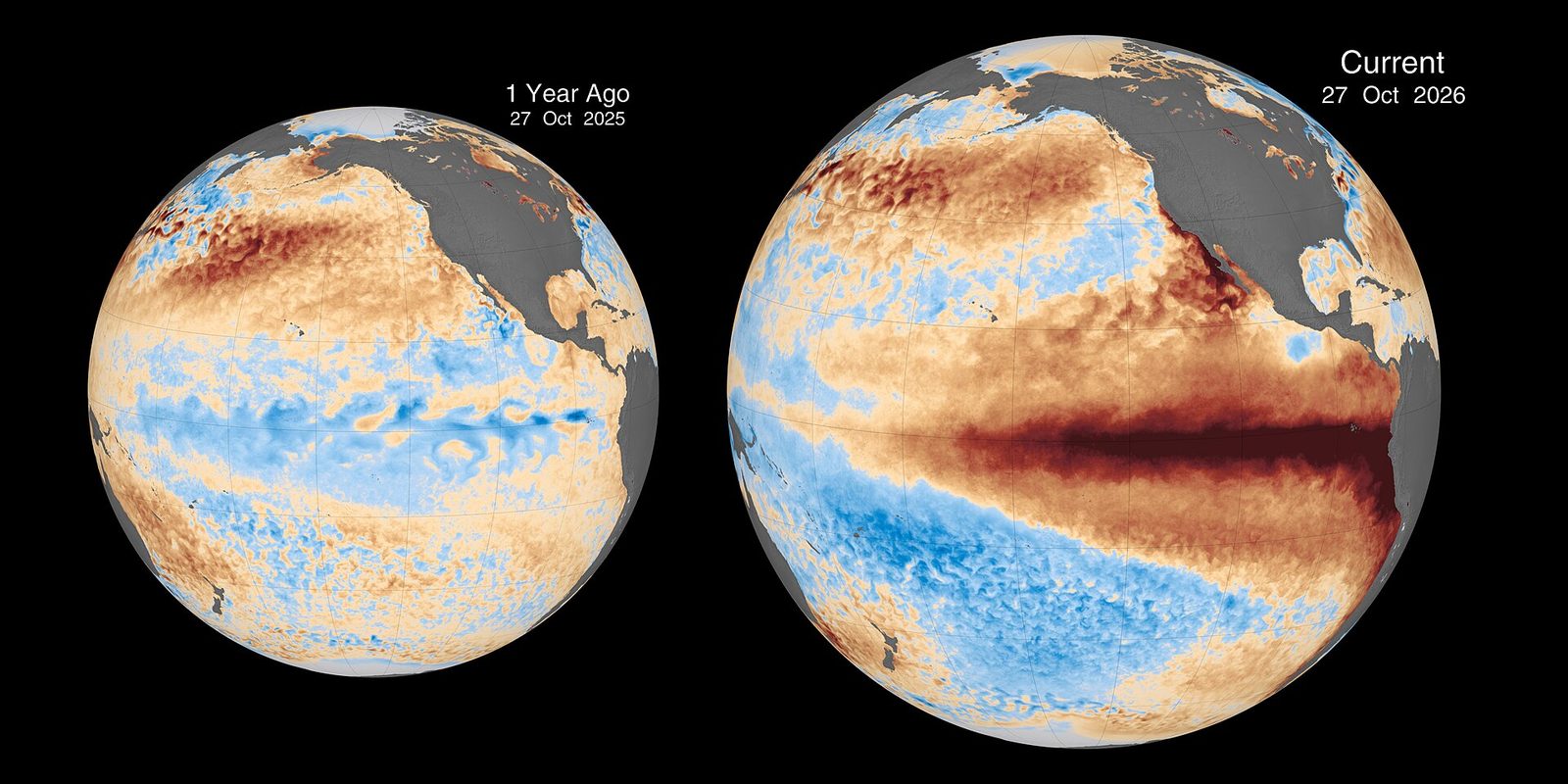
El Niño is among the strongest on record, shaping North American winter. The Guardian calls it a 'risk multiplier' looming over COP31.
Save coverage image
7 outlets in this story. Read their headlines below.
Outlets did split on UN Special Rapporteur Francesca Albanese Urges Humanitarian Vessels to Break Gaza Siege →
Newsweek was read line by line by the Watchdog: 0.0. See the score →
COP31 and El Niño
The strongest El Niño event in at least 1,000 years is looming over COP31 in Turkey, with the climate pattern described as a “risk multiplier” for global disasters. Celeste Saulo, secretary-general of the World Meteorological Organization, said, “We are supercharging our weather and El Niño will be a risk multiplier,” as countries wrangle over climate funding for vulnerable states.
Kathy Jetn̄il-Kijiner, climate envoy for the Marshall Islands, said the drought is “a compounding crisis,” adding that it is “on top of having to deal with rising seas that threaten our homes and drinking water.” Just a fraction of the $305bn a year needed by 2035 is being delivered, with wealthy countries having agreed to triple adaptation finance to poorer countries but rich nations lagging on climate finance.
Forecasts and displacement
UNHCR predicts “as many as 3m displacements across just four countries” due to El Niño, naming Kenya, Somalia, South Sudan and Uganda. Antón Leis García, assistant high commissioner of UNHCR, said, “We are very concerned as the forecast for El Niño this year is the worst one ever,” and he added that the eastern horn of Africa is where forced displacement is prevalent.
The current El Niño has reached the top of the scale for intensity and is now considered “very strong,” the highest of the CPC’s four El Niño intensity categories. NOAA’s CPC estimated chances for a historic event exceeding previous El Niños are “about 60%,” and the event is projected to peak later in 2026 or early in 2027, according to Michelle L'Heureux.
Winter impacts and uncertainty
El Niño could have profound effects on weather across North America this autumn and winter, with the naturally occurring phenomenon releasing heat into the atmosphere by weakening or reversing trade winds over the Pacific. The BBC reported that the latest three month forecast from the US National Weather Service suggests a likely outcome for winter 2026-2027, including wetter winters in the southern USA and above-average rainfall in south-eastern states such as Florida, Georgia and the Carolinas.
USA Today said the “very strong” El Niño is expected to increase the risk of extreme heat, drought and heavy rainfall well into 2027, and it said the event is expected to raise global temperatures to near-record levels. No two El Niños are the same and the impacts are not guaranteed, while it described how El Niño can increase the likelihood of disruption to the stratospheric polar vortex, which can bring snowfall later in winter.