Climateupdated 25m ago2 min read
MapHeavy Rains Kill At Least Six Palestinians in Gaza After Sand Slope Collapses
2 Other2 Western MainstreamMap: © OpenStreetMap contributors, ODbL · Cropped for layout
This article is an automated aggregation of coverage from news outlets. Our editorials offer in-depth analysis curated by the NewsCord team.
Heavy rains triggered a sand slope collapse onto tents of displaced families in Gaza. Five people were killed in the central Gaza incident, including children and women.
Save coverage image
4 outlets in this story. Read their headlines below.
Outlets did split on UN Special Rapporteur Francesca Albanese Urges Humanitarian Vessels to Break Gaza Siege →
Rains, collapses, deaths
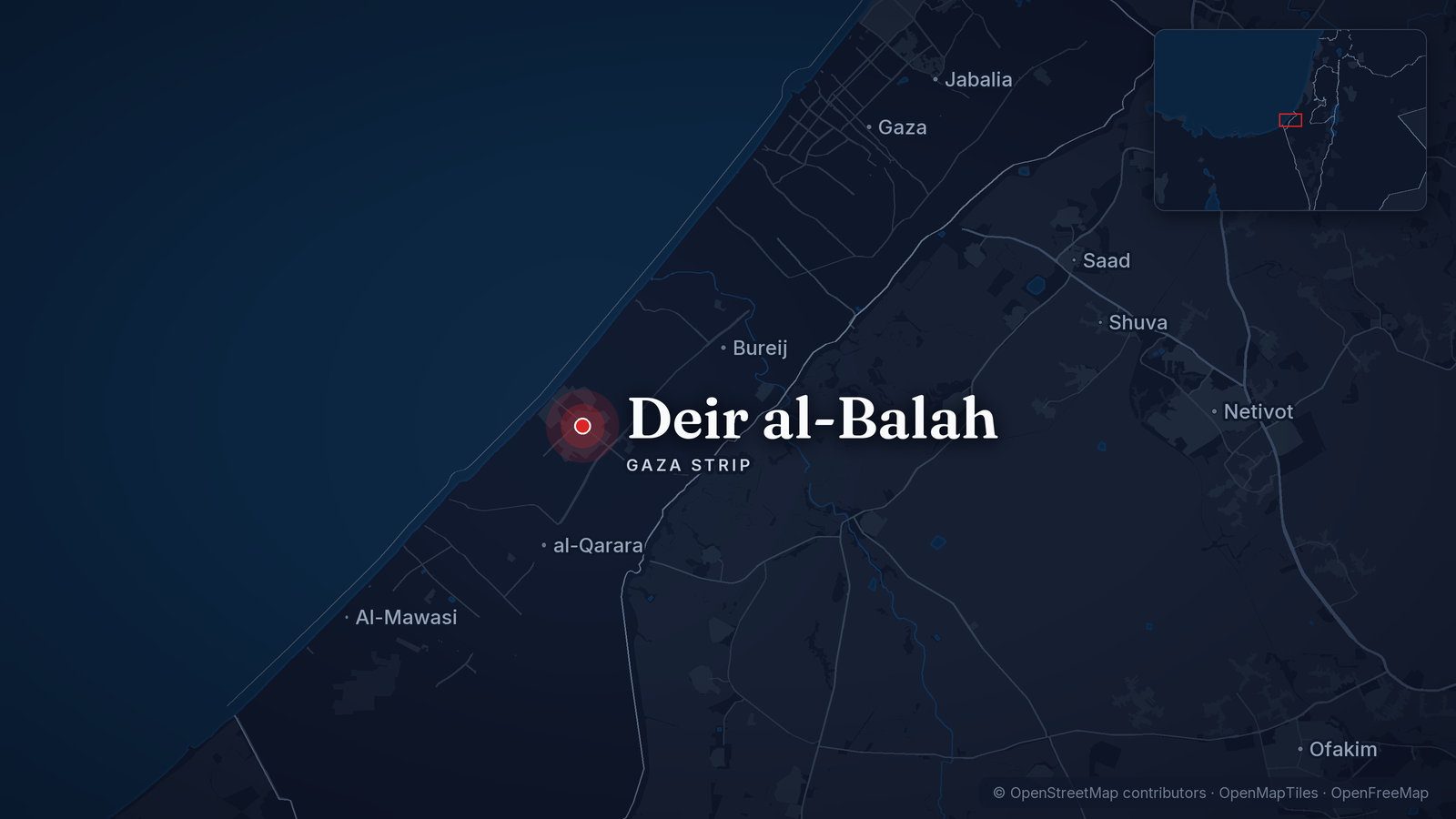
Heavy rains in Gaza killed at least six Palestinians after a dune of sand and earth collapsed on tents in the Al Berka reservoir area, west of Deir al-Balah, leaving two still missing, according to UN News cited in Prensa Obrera. A mother and her three children aged four, five and eight died last weekend when a landslide collapsed onto their tent in Deir al-Balah, in central Gaza, as a result of heavy rains. Gaza rescue service deaths included three children and two women after a sand slope collapsed onto tents housing displaced people at a reception center south of Deir al-Balah, in the central Gaza Strip.
UNICEF said the rains have directly affected more than 106,000 people by damaging or destroying their shelters, latrines and belongings, and it estimated that about 950,000 displaced people live in flood-prone areas. Euronews added that “Hundreds flee the camps after 70,000 tents were flooded,” linking the displacement to Saturday’s heavy rains.
Blockade and infrastructure
Prensa Obrera argued that the floods were “not the rain, it is the genocidal blockade,” and it said Israel does not allow the entry of construction or repair materials. Prensa Obrera said water rose around 70,000 tents where about 350,000 displaced people survive, including 210,000 children, after storms and strong winds began last Friday. Gaza has “no functioning wastewater treatment plant,” and it warned that in Gaza City rainwater mixed with sewage could overflow the Sheikh Radwan rainwater reservoir, where only two of six drainage pumps are operating.
UNICEF said it has been seeking approval from Israeli authorities for more than a year to provide the equipment needed to repair the installation, and it called for the immediate entry of drainage pumps, generators, spare parts and other materials. Prensa Obrera said the Gaza Civil Defense received 2,166 emergency calls but could only respond to 218, and it tied the limited response to the absence of drainage pumps or fuel.
Winter response and warnings
UNICEF said its emergency response includes distributing tarpaulins, warm clothing, blankets and hygiene supplies, and it reported that just last week it provided warm clothing and thermal blankets to more than 10,000 children. UNICEF also said it distributed tarps to families whose tents had been flooded and cleaned sewage and rainwater at more than 50 locations, while warning that tents and tarpaulins offer little protection against the fiercest storms. UNICEF warned that last winter 11 children died from hypothermia, and it said the worsening conditions with the arrival of winter could put more children at risk.
Mahmud Bassal, spokesperson for the Gaza Civil Defense, said, “Rescue teams continue to search for people missing,” after the slope collapse. UNICEF urged Israeli authorities to allow the immediate entry of drainage pumps, generators, spare parts and other materials needed to repair water and sanitation infrastructure, and it valued its winter response in Gaza at 97.5 million dollars.