Technology and Scienceupdated 52m ago3 min read
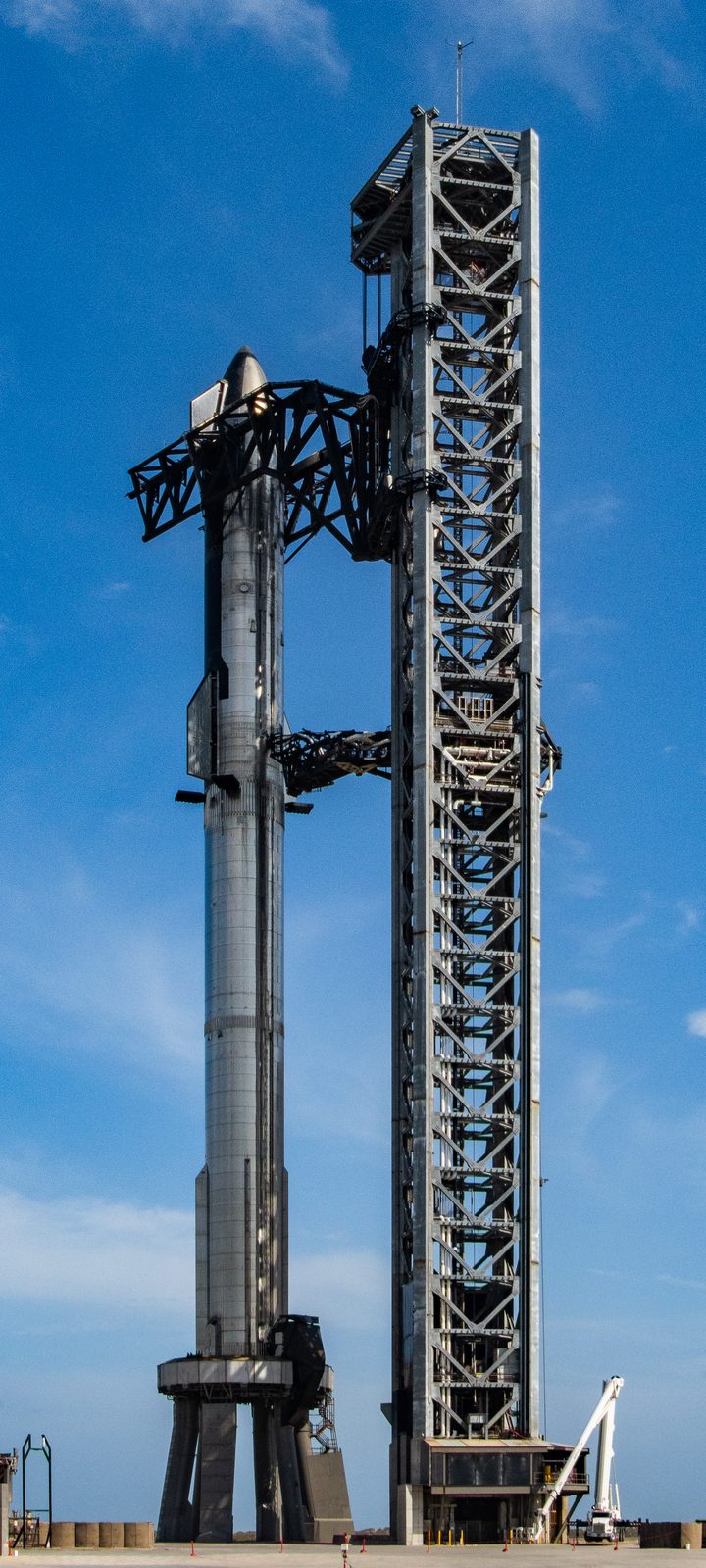
Archive photo · 16 April 2023SpaceX Prepares Starship Flight 15 Double Catch Using Texas “Chopsticks” Arms
6 Western Mainstream5 Other3 West Asian1 Western AlternativePhoto: Jenny Hautmann, CC BY-SA 4.0 · Cropped for layout
This article is an automated aggregation of coverage from news outlets. Our editorials offer in-depth analysis curated by the NewsCord team.
SpaceX Flight 15 aims to recover both booster and upper stage at Starbase. First full on-site 'double catch' tests reusability by returning both stages to the launch site.
Save coverage image
Starship Flight 15 double catch
SpaceX is preparing to attempt a double catch of its Starship rocket, using the launch tower’s mechanical arms nicknamed “chopsticks” to grab both parts mid-air as they return to Earth. SpaceX plans to launch from the Starbase launchpad in Texas at 1645 local time (2245 GMT) with a 75-minute-long launch window, and it will attempt the first catch about six and a half minutes after liftoff when the Super Heavy booster returns to the launch tower. SpaceX will then deploy 26 satellites after the Ship reaches space, and the Ship is due to complete 14 orbits around Earth before returning for the second catch attempt about 22 and a half hours after taking off.
SpaceX has managed to catch the Super Heavy booster on three earlier test flights, but it has never been grabbed by the chopsticks for the upper stage, which has instead been splashed down in the ocean. Prof Malcolm Macdonald, President of Royal Aeronautical Society, said, “One successful flight will not prove that model, but it could mark an important transition: from demonstrating that Starship can fly, to demonstrating how Starship could operate.”
Orbits, satellites, and timing
SpaceX’s Flight 15 mission will test whether the company can return an entire orbital launch system to its launch site rather than discard the spacecraft in the ocean, with the Super Heavy booster expected to return approximately 10 minutes after liftoff.
Ship 42 is expected to remain in orbit for about 22.5 hours, complete 14 revolutions around Earth, and attempt a landing on November 14, with the upper-stage return scheduled for around 2:45 p.m. CST on November 14 subject to flight performance and operational conditions.
SpaceX will deploy 26 next-generation Starlink V3 satellites into low Earth orbit, and the mission description frames the deployment as part of SpaceX’s operational satellite business as well as an experimental vehicle test.
SpaceX’s plan includes contingency splashdowns if conditions do not support a safe recovery, and Spaceflight Now said SpaceX has options to end the mission early with splashdowns off Hawaii and Chile if there is any doubt about the safety of a landing attempt at Starbase.
SpaceX said on its website that would be “a breakthrough moment in making Starship a reliable, rapidly reusable rocket.”
Artemis stakes and regulators
NASA is closely watching Starship’s progress because the rocket is set to play a vital part in its Artemis programme, which aims to land astronauts on the Moon, and the BBC said the progress of Starship has direct implications for NASA's attempt to land humans on the Moon in 2028.
SpaceX has been given a NASA contract to configure the Ship into a lander that will eventually take astronauts down to the lunar surface, and the BBC also said Blue Origin has a contract to use its New Glenn rocket and lander for the Moon touch down.
SpaceX’s Flight 15 schedule has been shaped by regulatory status, with the BBC saying Nasa will be closely watching the flight and with Beinsure reporting that as of Friday morning the U.S. Federal Aviation Administration had not issued the required launch licence.
The New York Times said SpaceX had hoped to execute a milestone “double-catch” maneuver during the flight that launched on Friday from South Texas, and it added that any failures would make it even more unlikely that NASA could meet its goal of landing astronauts on the moon in 2028.
Clayton Swope, a space affairs expert at the Center for Strategic and International Studies, said developing a fully reusable spacecraft represents the “highest goal” for the space sector, and he added, “No one has actually achieved it yet.”