Crime21 September, 20263 min read
Sri Lankan Court To Deliver Verdict In Trial Of 24 Men Accused Of 2019 Easter Bombings
This article is an automated aggregation of coverage from news outlets. Our editorials offer in-depth analysis curated by the NewsCord team.
Sri Lankan High Court to deliver verdict in Easter bombing trial of 24 defendants. The attacks killed about 270-279 people and injured hundreds; mastermind Naufer Moulavi named by authorities.
Verdict Nears in Colombo
A Sri Lankan court is set to deliver its verdict on Tuesday in the trial of 24 men accused of plotting the 2019 Easter Sunday bombings, with the hearing due to open at 9:30 am (0400 GMT) at the High Court of Colombo. Police said extraordinary security measures would be in place around the court complex, and police stated, "Considering the interest in this case, we are making special security arrangements," ahead of the first sentencing over direct involvement in the attack. Investigators blamed the bombings on a homegrown Islamist extremist group, and the trial has already made legal history in Sri Lanka with prosecutors filing 23,270 charges.
“The hearing is due to open at 9:30 am (0400 GMT) at the High Court of Colombo.”
Prosecutors identified Mohamed Naufar as the alleged ringleader who provided support to the eight-member suicide squad, and all defendants denied involvement. The trial has unfolded alongside a separate investigation into allegations that elements within the Sri Lankan state may have had links to those responsible for the attacks, with former intelligence chief Suresh Sallay in custody facing accusations he orchestrated the bombings.

Mastermind Allegations and Evidence
Public Security Minister Ananda Wijepala told parliament in June that investigators believed Sallay was the “mastermind” behind the attacks and had worked with Islamist extremists before the bombings were carried out. The BBC said the case against Naufer Moulavi, named as the main mastermind of the attacks, and 23 others had dragged on for years, and the prosecution had named Moulavi as the main organiser of the attacks. The BBC reported that the court accepted a voluntary confession to the court where he had admitted his role, but Moulavi later told the three-judge bench hearing the case that he was not shown what he was signing and rejected the allegations against him.
The Newswire account said the Attorney General filed 23,270 charges against 24 accused, including Naufer Maulavi, for aiding, abetting, and conspiring with Zahran Hashim and seven other suicide bombers. The Newswire account also said the court accepted 10 confessions as evidence and marked 2,076 productions, including hidden bomb-making materials, chemicals, and firearms to swords and explosives.

Death Penalty Stakes and State Scrutiny
Local media said that if convicted, some defendants could face the death penalty, even though Sri Lanka has not carried out an execution since 1976 and capital punishment is typically commuted to life imprisonment. The BBC said death sentences are usually commuted to life in Sri Lanka due to a decades-old moratorium on executions, and the verdict on Tuesday comes as a separate investigation on former intelligence chief Suresh Sallay is under way. The BBC reported that in 2023 the Supreme Court ordered former president Maithripala Sirisena to pay millions in compensation to the victims of the bombings, after finding him responsible for national security failures that led to the attacks.
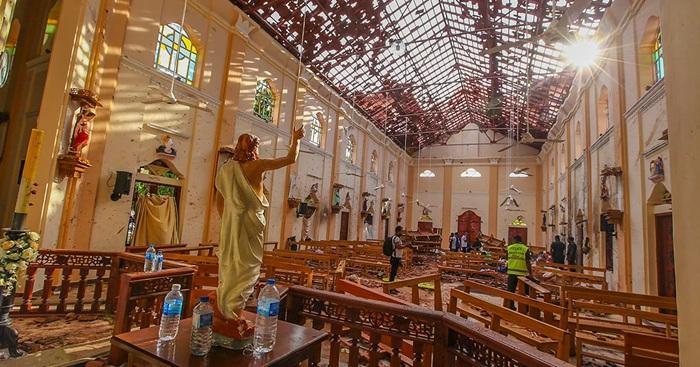
The Herald Malaysia Online account said the trial was set to deliver its verdict Tuesday as authorities pursued a separate investigation into allegations that elements of the state had links to those behind the attacks, and it described the coordinated suicide bombings on April 21, 2019 striking three churches and three luxury hotels. The Arab News account said investigators alleged the network was cultivated to manufacture a security threat that would bolster political support for the Rajapaksa family, which returned to power several months after the attack with Gotabaya Rajapaksa’s election as president, while the Rajapaksa camp rejected allegations of state involvement.