Iran30 July, 20262 min read
Strait of Hormuz Blockade Could Spread Invasive Species From Stuck Cargo Ships Worldwide
This article is an automated aggregation of coverage from news outlets. Our editorials offer in-depth analysis curated by the NewsCord team.
Over 1,500 commercial vessels stranded in the Strait due to its closure. Idle ships risk global biofouling spreading invasive species when they resume routes.

Stranded ships, bioinvasion risk
Researchers warn that the blockade in the Strait of Hormuz could create a “super-spreader” event for invasive species as cargo ships remain waiting for weeks to continue their journey. The Guardian reports that more than 1,500 commercial vessels have been stuck in the Gulf since the strategic waterway closed on 28 February after the outbreak of the US-Israel war on Iran.
The study described by heise online says ships anchored for a long time could pick up invasive species and transport them worldwide into foreign waters, posing a massive threat to biodiversity. The Guardian adds that with stranded ships remaining motionless, their hulls were becoming encrusted with marine life—from microbes and algae to barnacles and other invertebrates—that could hitchhike to ports around the world when trade resumed.
Scientists’ warnings and quotes
Prof Mario Tamburri, of the University of Maryland Center for Environmental Science and the study’s lead author, said, “If you had to design the worst-case scenario, I don’t know if you could have done it differently. It is a perfect storm.”
The Guardian frames the research as a potential marine “bio-invasion super-spreader event,” arguing that no previous shipping disruption has involved so many vessels remaining idle for so long.
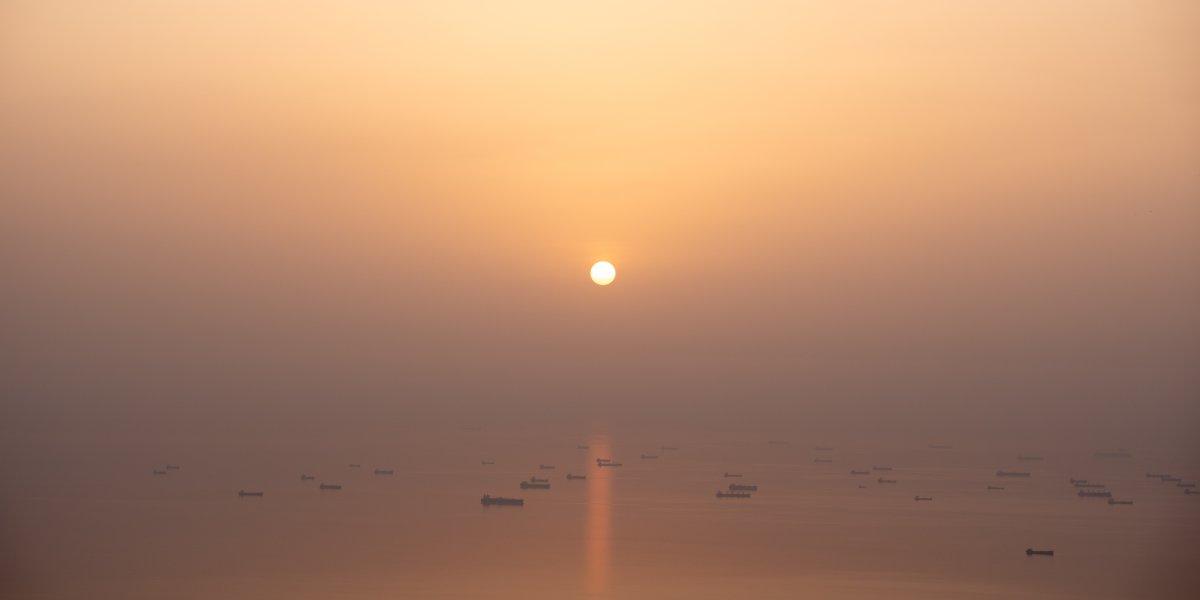
In heise online’s account of the study “Closure of the Strait of Hormuz may trigger a bioinvasion super-spreader event,” biologists warn that the long anchoring times favor the settlement and proliferation of marine microorganisms, algae species, and invertebrates on ship hull surfaces.
The Washington Post similarly warns that thousands of ships stranded for months by the ongoing war with Iran and the closed Strait of Hormuz could result in “a massive marine invasive species event.”
What’s at stake next
The Guardian says invasive species could introduce invasive wildlife that outcompete native species, spread disease, and permanently alter marine ecosystems, and it adds that invasive species can devastate fisheries, clog the cooling systems of power plants, and cost billions of dollars a year to manage. The Guardian also warns that individual ships may have already released millions of larvae into Gulf waters during the months-long lay-up, and it says organisms in ballast water and in “biofouling communities” could spread rapidly through the global shipping network as shipping resumes.
The Guardian reports that Tamburri urged governments and shipping companies to inspect and clean ships before they leave the Gulf wherever possible, while ports expecting arrivals should increase monitoring for invasive species and establish rapid-response plans. In the heise online account, scientists propose removing biofouling from stationary ships in the Strait of Hormuz and the Persian Gulf by In-Water Cleaning (IWC) before the ships embark on a journey to other regions of the world, and they say residues generated during cleaning should then be collected and safely disposed of.