Iran04 November, 20263 min read
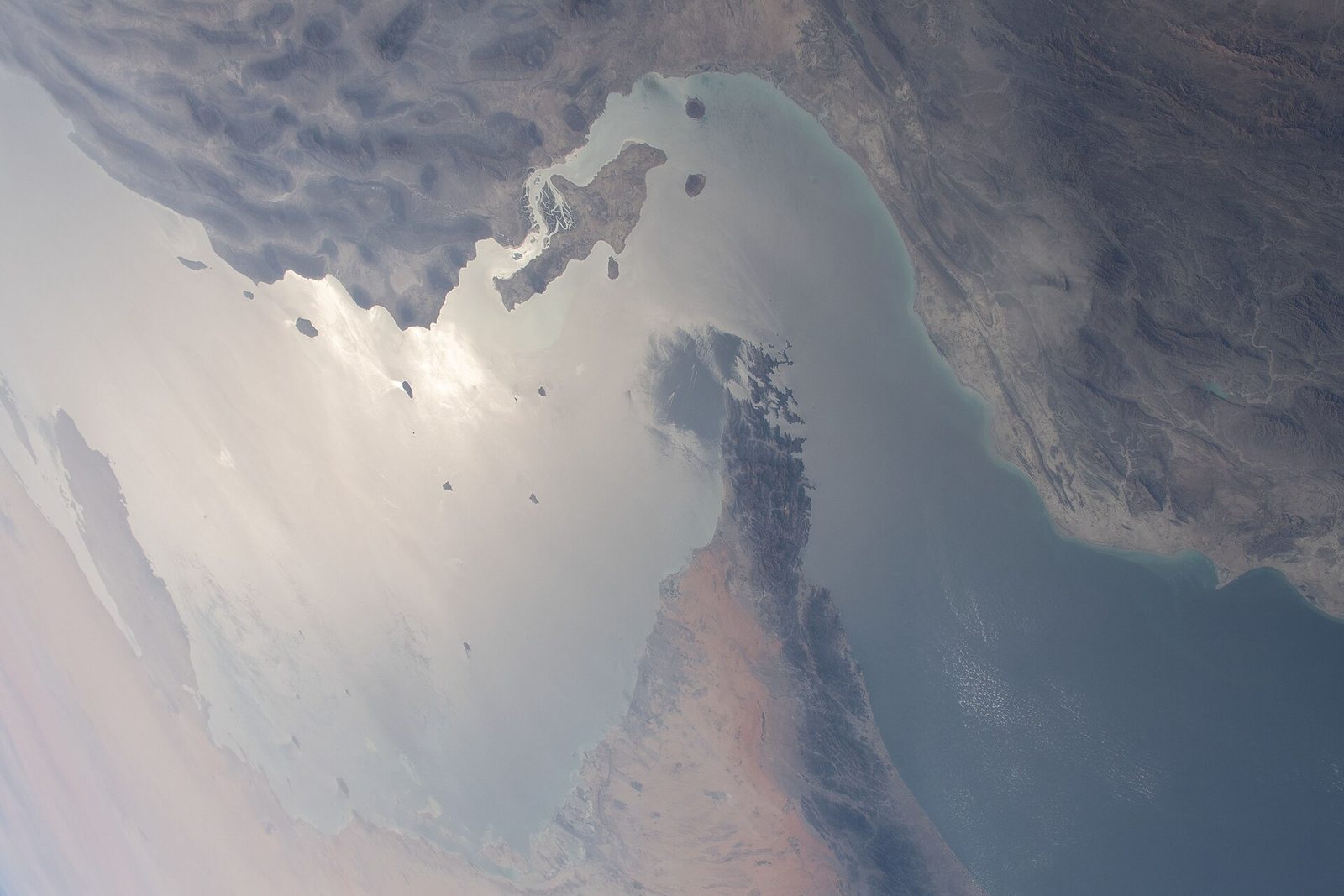
Archive photo · 24 March 2021Strait Of Hormuz Tensions Rise After U.S. Midterm Elections, Trump Netanyahu Discuss Iran
3 Other1 Latin American1 West AsianPhoto: NASA Johnson Space Center / US federal government, Public domain · Cropped for layout
This article is an automated aggregation of coverage from news outlets. Our editorials offer in-depth analysis curated by the NewsCord team.
Strait of Hormuz at center of US-Israel-Iran tensions amid warnings of new escalation. Trump and Netanyahu discussed Iran following US midterm elections, signaling high-level coordination.
Save coverage image
5 outlets in this story. Read their headlines below.
Shared framing
The collection splits between threat-focused headlines warning of escalation and a smaller set stressing choices about whether to keep fighting. Market coverage separately treats any easing of war risk as economically consequential.
4 of 9 outlets · 4 of 10 headlines analysed
Includes analysis, reporting.
- teleSUR
warns about the military escalation
- France 24
una nueva escalada militar
- Identidad Correntina
on edge due to the tension
See the headlines
Escalation risk foregrounded
Several headlines emphasise the danger of military escalation or continuing war rather than resolution, framing the situation as a mounting or persistent threat.
- teleSURReporting · OngoingOTSC warns about the military escalation by the United States and Israel against Iran
Translated headline (es).
OTSC advierte sobre escalada militar de EE.UU. e Israel contra Irán
- France 24Analysis · OngoingExpreso de Oriente - Irán y Estados Unidos: ¿acuerdo diplomático o una nueva escalada militar?
- Identidad CorrentinaAnalysis · OngoingMiddle East, on edge due to the tension between the U.S., Israel, and Iran
Translated headline (es).
Medio Oriente, en vilo por la tensión entre EE.UU., Israel e Irán
- L'Orient TodayReporting · OngoingWar in Iran: ‘We are closer to managing the conflict than to resolving it,’ says Chatham House researcher
Attributed to Chatham House researcher.
Other angles in this collection
Pressure to keep fighting
2 outlets · 2 headlines
Some coverage highlights advocacy for continuation or possible intensification of the war, treating further military action as the key political choice under discussion.
- Informat.roReporting · OngoingIsrael intenta convencer a EE. UU. de continuar la guerra con Irán
- ReutersAnalysis · ReactionBeaten at home, Trump faces stark choice on Iran: deal or escalation
Reduced escalation fears reflected in oil market
2 outlets · 2 headlines
Market headlines tie oil price movement to expectations that the risk of a wider Iran war may be easing, foregrounding de-escalation expectations rather than battlefield developments.
- InvestingReporting · OngoingOil rises as investors weigh risk of Iran war escalation By Reuters
- CNBCReporting · ReactionOil falls for a fourth day on expectations for lower risk of Iran war escalation
All 10 analysed headlines
- L'Orient TodayReporting · OngoingWar in Iran: ‘We are closer to managing the conflict than to resolving it,’ says Chatham House researcher
- InvestingReporting · OngoingOil rises as investors weigh risk of Iran war escalation By Reuters
- www.jpost › middle-east › iran-newsType unclear · Stage unclearIran News: Latest stories and updates | The Jerusalem Post
- teleSURReporting · OngoingOTSC warns about the military escalation by the United States and Israel against Iran
Translated headline (es).
OTSC advierte sobre escalada militar de EE.UU. e Israel contra Irán
- Informat.roReporting · OngoingIsrael intenta convencer a EE. UU. de continuar la guerra con Irán
- France 24Analysis · OngoingExpreso de Oriente - Irán y Estados Unidos: ¿acuerdo diplomático o una nueva escalada militar?
- ReutersAnalysis · ReactionBeaten at home, Trump faces stark choice on Iran: deal or escalation
- Identidad CorrentinaAnalysis · OngoingMiddle East, on edge due to the tension between the U.S., Israel, and Iran
Translated headline (es).
Medio Oriente, en vilo por la tensión entre EE.UU., Israel e Irán
- www.jpost › podcast › audio › jpost-headlinesType unclear · Stage unclearJPost Headlines - The Jerusalem Post Podcasts
- CNBCReporting · ReactionOil falls for a fourth day on expectations for lower risk of Iran war escalation
Counts describe this collection. One headline may support more than one angle.
Exclusions: Unclear event match (2).
Analysed 5 Nov 2026.
Reviewed by Codex validator (AI) · 5 Nov 2026
Hormuz, elections, and warnings
The Strait of Hormuz returned to the center of geopolitical tension as the Middle East faced the possibility of a new escalation between the United States, Israel, and Iran after Tuesday’s midterm elections in the United States. Trump said he had had a “very good” phone conversation with Israeli Prime Minister Benjamin Netanyahu during Saturday’s events, and the two leaders spoke about the situation in Iran without Trump providing details about the exchange. Qatar continued acting as mediator as two Iranian officials said a delegation from their country left Qatar after several days of negotiations, while both sides continued exchanging messages through the mediator.
Iran’s Foreign Minister Abbas Araghchi said Tehran hopes Washington will choose “diplomacy over other paths” and maintained that Iran is prepared both to negotiate and to defend itself depending on the American response. The dispute also fed fears for sea security in the Persian Gulf, with the October period recording new attacks on merchant vessels in the Strait of Hormuz area and Iran warning about transiting the strait without its authorization.
Iran’s hard line, CSTO alarm
Iran’s supreme leader, Ayatollah Mojtaba Khamenei, asked military commandos for an immediate response with no “geographical limits” to any threat from the United States or Israel.
Iran’s security chief, Mohsen Rezaei, warned on X that any attack would bring “devastating blows to the aggressor using new weapons.”
Rezaei told state television that “the tone has completely changed” on the part of the United States and called it a “very good sign,” while he did not provide details about a letter from U.S. Vice President JD Vance that Iran acknowledged last week.
Taalatbek Masadikov, Secretary General of the Collective Security Treaty Organization, warned in Minsk about military escalation by the United States and Israel against Iran, pointing to threats regarding possible use of extreme strategic weapons against Iranian nuclear facilities protected by the International Atomic Energy Agency.
Masadikov raised the regional alert from the IV International Conference on Eurasian Security held in Minsk, and he warned that the escalation undermines Tehran’s sovereignty and stimulates institutional self-defense responses.
What is at stake next
The diplomatic track centered on a proposal Iran publicly discussed to fully open the Strait of Hormuz to maritime transport within two days if Washington met conditions including lifting its blockade of Iranian ports. Andreas Krieg, professor at King’s College London, said on X that “The pulse in the Gulf between the United States and Iran is really between Qatar and Israel,” framing Qatar as working toward a diplomatic exit while Israel sought military avenues. The stakes extended beyond diplomacy as the CSTO’s reading treated an attack on IAEA-protected plants as opening “a phase of unpredictable consequences for all of the Middle East.”
teleSUR said Masadikov cited a bill evaluating Iran’s possible withdrawal from the Nuclear Non-Proliferation Treaty, and participants treated that and the continuity of strategic bombings as variables that would determine the depth of the conflict in the Persian Gulf. In parallel, the Jerusalem Post reported that US Vice President JD Vance said on Sunday there had been “a number of good conversations with the Iranians” after officials from the Islamic regime met with Qatari mediators in Doha.