Britain22 March, 20263 min read
Sun's CME debris triggers Northern Lights across UK
This article is an automated aggregation of coverage from news outlets. Our editorials offer in-depth analysis curated by the NewsCord team.
CME debris and solar activity drive aurora across much of the UK. Visible as far south as Norfolk, with broader UK sightings forecast.
UK Aurora Visibility
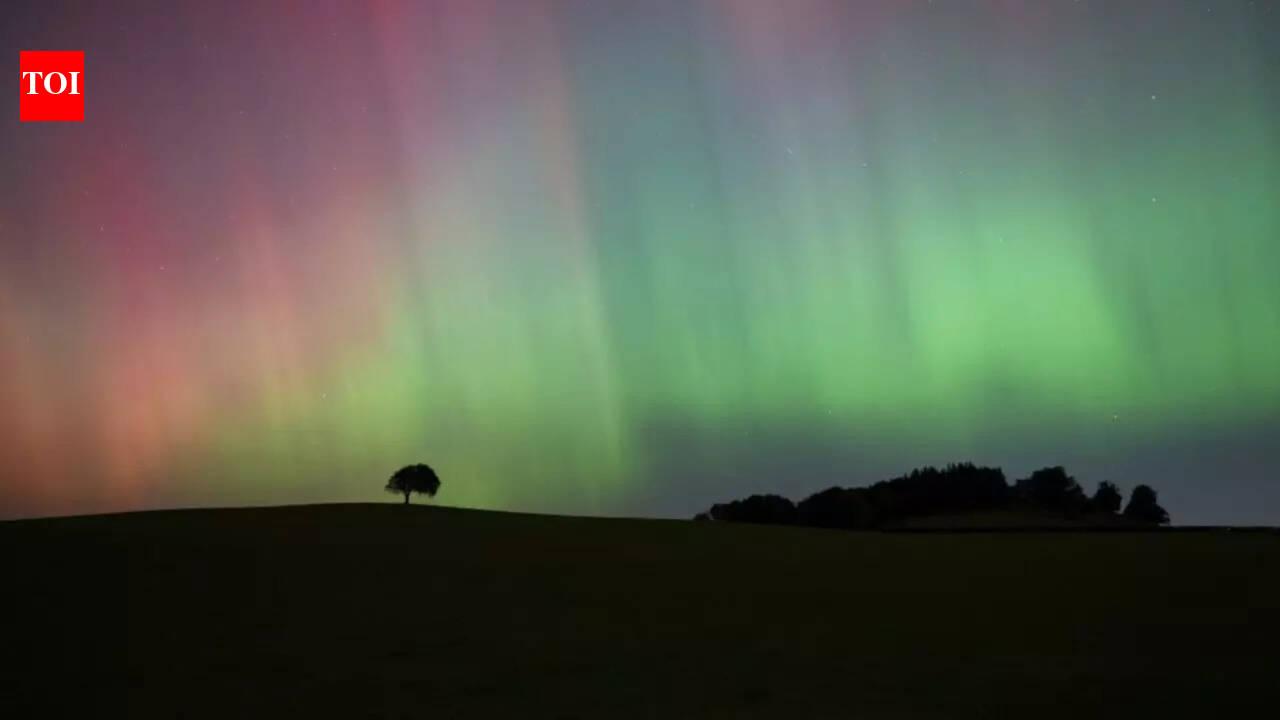
The Northern Lights illuminated skies across the UK in a spectacular display, with aurora borealis visible as far south as Norfolk on Friday night. This was an unusual phenomenon given that the UK is typically too far south to witness the natural light show with the naked eye. Multiple sources confirm the widespread visibility, with Aurora Watch UK issuing a red alert between midnight and 3am indicating it was 'likely that aurora will be visible by eye and camera from anywhere in the UK'.
“A SPECTACULAR Northern Lights display is set to light up the skies over much of the UK tonight. Forecasts suggest there is a chance of further sightings even in the south of England overnight.”
The solar storms and winds striking Earth's atmosphere caused the southernmost reach of the lights to extend much further than normal. This created rare viewing opportunities across Scotland, Northern Ireland, and even parts of southern England. Forecasters suggest there remains another chance to see the display again tonight as conditions remain favorable for continued auroral activity.

Solar Activity Science
The dazzling Northern Lights phenomenon is being driven by intense solar activity, specifically from a Coronal Mass Ejection (CME) that reached Earth this weekend. A CME is described as a massive burst of charged particles from the Sun that causes geomagnetic storms when these particles interact with Earth's magnetic field and collide with gases in the upper atmosphere. According to scientific explanations, these collisions produce the glowing colors we see, with oxygen typically emitting green hues while nitrogen can create reds, pinks and purples.
Multiple waves of particles and fast-moving solar winds continue to impact Earth, keeping conditions primed for auroral displays. The Met Office's Space Weather Forecast explains that 'Solar winds will be between slightly elevated and elevated at first, following the arrival of the second of the anticipated CMEs' with several further arrivals forecast through March 21.
Equinox Effect
The timing of the Northern Lights display was significantly influenced by the recent spring equinox. The equinox increases the likelihood of stronger auroral displays due to the alignment between Earth's magnetic field and incoming solar winds. This phenomenon, known as the Russell-McPherron effect, can make the Northern Lights stronger around the equinoxes.
“The timing also plays a role. The recent spring equinox increases the likelihood of stronger auroras due to the alignment between Earth's magnetic field and incoming solar winds, a phenomenon known to amplify geomagnetic activity.”
The Earth's alignment with the Sun means it is more exposed to solar wind activity during this time. This equinox effect amplifies geomagnetic activity, creating ideal conditions for more intense auroral displays. The Earth's magnetic field becomes better aligned with incoming solar winds during equinoxes, allowing charged particles to penetrate deeper into the atmosphere.
Forecast & Viewing Tips
Forecasters predict that the Northern Lights could be widely seen again tonight as solar activity remains high. Several factors contribute to continued favorable viewing conditions. The Met Office's Space Weather Forecast indicates that 'Several further CME arrivals are forecast to potentially arrive at or near to Earth through March 21, likely increasing solar winds to become elevated to strong at times.'
A coronal hole fast wind is expected from March 21 which could maintain elevated to strong solar wind through the period. Experts provide key tips for viewing: finding a dark location away from city lights, looking northwards, and using a camera to capture colors not visible to the naked eye. Cloud cover could obstruct views in some regions, particularly northern areas, so clear skies are essential.

Solar Storm Impact
The current spell of intense solar activity represents a significant space weather event. It has pushed the Northern Lights much further south than usual, offering rare viewing opportunities across the UK. Normally confined to regions near the Arctic Circle, the aurora borealis can extend much further south during strong solar storms.
“The stunning spectacle is taking place as the solar particles from a Coronal Mass Ejection (CME) which burst out of the Sun on Monday finally reaches the Earth. When the disruption from the CME reaches Earth, interactions with our planet's magnetic field cause the iconic lights in the upper atmosphere.”
This was demonstrated by the visibility in Norfolk and potentially other southern regions. The phenomenon occurs when charged solar particles interact with Earth's atmosphere at high altitudes, typically between 80 and 250 km above the surface. Multiple sources emphasize that while the UK is generally too far south for naked-eye aurora viewing, the combination of intense solar activity, equinox effects, and favorable atmospheric conditions has created exceptional circumstances.
