USAupdated 1h ago3 min read
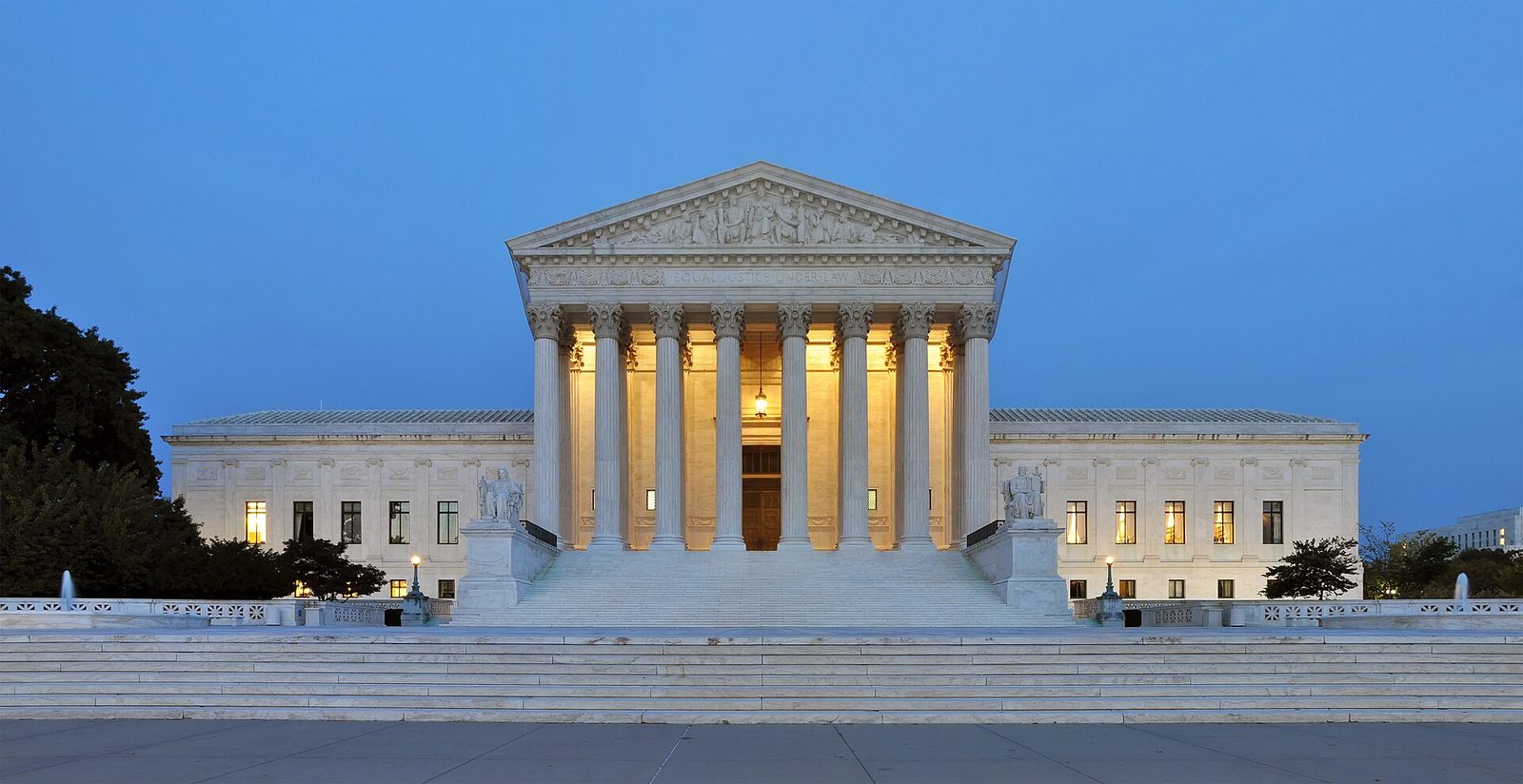
Archive photo · 10 October 2011Supreme Court Leaves Trump Administration Deal In Place, Blocks Judges From Closing Deportation Cases
“Supreme Court blocks immigration judges from pausing deportation cases”
“Supreme Court on Tuesday declined to unfreeze a Biden-era policy”
Photo: Joe Ravi, CC BY-SA 3.0 · Cropped for layout
This article is an automated aggregation of coverage from news outlets. Our editorials offer in-depth analysis curated by the NewsCord team.
Supreme Court declined to restore Biden-era policy enabling judges to suspend deportation proceedings. Ruling leaves in place a Texas-DOJ agreement that bars pausing deportation cases.
Supreme Court keeps deal
The U.S. Supreme Court on Tuesday declined to unfreeze a Biden-era policy that allowed immigration judges to use their discretion to temporarily close deportation cases, leaving in force a deal between the Trump administration and Texas while litigation continues.
The court rejected an emergency request from three cities with large migrant populations, Baltimore, Columbus, Ohio, and New Haven, Connecticut, along with a legal services provider, and the order was unsigned with no noted dissents.
The disputed regulation, described as “administrative closure,” gives immigration judges discretion to temporarily pause deportation proceedings for migrants while they seek humanitarian protections or other forms of legal status.
The regulation was adopted by the Executive Office for Immigration Review in 2024, and Texas sued in 2026 to challenge it in federal court in Wichita Falls, Texas, where Chief U.S. District Judge Reed O’Connor handles a large percentage of cases.
The Justice Department immediately said it agreed that a judge should set aside the rule and bar future administrations from adopting anything similar unless Congress first changed the law.
Collusion dispute and arguments
Democracy Forward and the cities argued that the agreement between Texas and the Trump administration was “egregious collusion,” and they said the Supreme Court’s refusal to intervene would allow the policy to be dismantled through a backdoor agreement. Skye Perryman, president and CEO of Democracy Forward, said the Department of Justice “colluded with Texas to erase longstanding immigration procedures in a single day, putting families, survivors of violence, and entire communities at risk.” The Justice Department urged the justices to deny the appeal, arguing the cities lacked legal standing and had not shown immediate harm, and it told the court that “This Court should not allow applicants to put the cart before the horse.”
The cities and Centro Legal de la Raza said the administrative-closure process was intended to “promote efficiency or protect due process rights,” while Texas and the Trump administration argued the practice effectively allowed people to stay in the country indefinitely. The Supreme Court issued a one-sentence order with no explanation, and it did not include any reasoning as it responded to the emergency request.
What remains at stake
The Supreme Court’s decision keeps the Texas ruling in effect that permanently blocked the Biden-era administrative-closure regulation nationwide after a federal district judge, Reed O’Connor, granted requests from the DOJ and Texas on June 22.
The dispute centers on whether immigration judges can suspend deportation proceedings in situations such as when a crime victim or witness seeks relief like asylum from U.S. Citizenship and Immigration Services, which is a separate agency.
The regulation’s supporters said administrative closure had been used for decades and that it helped crime victims and neglected juveniles, while critics said it functioned as a form of covert amnesty.
Diario Público said administrative closure had been granted to about 360,000 migrants since 1990, and Univision said the practice had benefited about 360,000 migrants.
The Supreme Court’s refusal to restore the rule means immigration judges cannot currently use administrative closure to pause deportation cases while the broader dispute continues in court.