Iranupdated 13m ago3 min read
Archive photo · 14 December 2023Iran’s Foreign Ministry Says Strait Of Hormuz Won’t Reopen Until US Ends Naval Blockade
“Hormuz shipping still faces major risks”
“the Strait of Hormuz cannot be opened or secured unless the US naval blockade is ended”
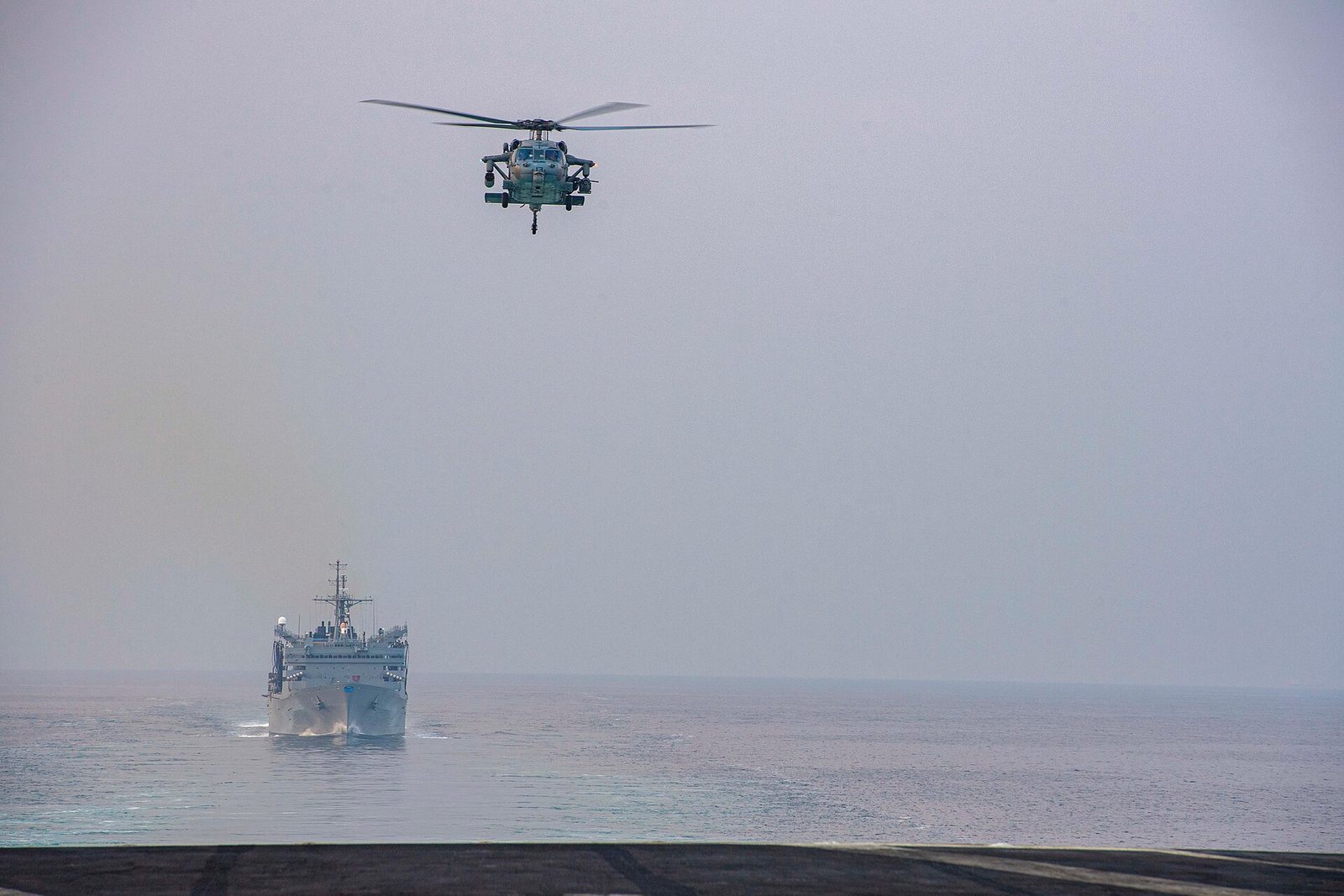
Photo: U.S. Navy photo by Petty Officer 3rd Class Janae Chambers / US federal government, Public domain · Cropped for layout
This article is an automated aggregation of coverage from news outlets. Our editorials offer in-depth analysis curated by the NewsCord team.
Strait of Hormuz cannot reopen until the US ends its naval blockade and Iran's demands are met. Iran says the burden lies with Washington to move negotiations and guarantee regional security.
Save coverage image
Hormuz, Two-Day Condition
Iran’s Foreign Ministry spokesperson Esmaeil Baqaei said the Strait of Hormuz cannot reopen unless the United States ends its naval blockade against Iran and meets Tehran’s demands, adding that “the ball is in America’s court.” Baqaei said Iran is studying a plan to reopen the strait within two days if Washington accepts its conditions, and he described the two-day timeline as “further evidence of Iran’s goodwill.” Baqaei tied the reopening to a diplomatic track, saying “the whole matter” depends on the American side accepting Iran’s demands, and he said only then can the parties discuss the continuation of the diplomatic process.
Iran’s Foreign Ministry spokesperson also said the exchange of messages with the United States remains via intermediaries, and he said negotiations are based on Iran’s seven-stage proposal that has been condensed into a format that could be implemented within two days. Iran’s Foreign Minister Abbas Araghchi said Washington must accept a new route agreed between Iran and Oman for transit through the strait, and he said the United States must also remove sanctions imposed in recent months and reduce the number of American troops in the region.
Trump Threats, Iran Replies
President Donald Trump hinted at resuming military strikes on Iran, saying Washington “may have to launch a crushing strike on Tehran at some point,” while he spoke at a rally in Iowa on Monday ahead of the midterm elections due on November 3, 2026. Iran’s Foreign Ministry spokesperson Saeed Khatibzadeh said the possibility of implementing Iran’s plan within two days is “further proof of Iran’s good faith,” and he said “the exchange of messages between Washington and Tehran remains ongoing” through intermediaries. Trump said he has not yet finished dealing with Iran because he wants, in his words, “to be nice” and to try to save lives, and he added, “At some point, we will have to strike them with a crushing blow.”
Iran’s Revolutionary Guard Corps Navy said two oil tankers were hit by explosions after colliding with mines in the Strait of Hormuz, while the BBC also reported that independent verification of the Iranian account was not possible. Iran’s state television quoted Army spokesman Mohammad Akerimi Nia saying that “any future war may last longer than the previous conflict,” and that the American president “will not be in a position to determine its end time or terms.”
Shipping Risks and Next Steps
Analyst Trita Parsi said Iran continues to exert control over passage in the Strait of Hormuz, and he said a deal to reopen the waterway is a key part of efforts to end the war. El País described the Strait of Hormuz as “closed and open at the same time, depending on who you ask,” and it said the volume of crude oil, natural gas, and derivatives leaving the Persian Gulf has grown exponentially while attacks on oil tankers and LNG carriers have also increased. El País reported that October had been the worst month since records began for ships crossing the area, and it said 33 merchant ships have been hit or attacked in the strait itself or in the wider Persian Gulf, according to UKMTO.
Euronews said oil prices fell as talks to reopen the Strait of Hormuz resumed, while it reported that Trump kept the threat of new strikes on the table and that reports said Benjamin Netanyahu urged him to strike Iran immediately after Tuesday’s midterm elections. Iran’s position remained that security in the strait depends on conditions being met, and Baqaei said “You cannot speak of security while maintaining a blockade against Iran,” while he warned that continuing the blockade would be a unilateral deal that “will simply not be sustainable.”