Tourism22 October, 20252 min read
Thousands of Sea Cucumbers Wash Ashore on Oregon Beach Due to Heavy Surf and Low Tide
This article is an automated aggregation of coverage from news outlets. Our editorials offer in-depth analysis curated by the NewsCord team.
Thousands of skin breathing sea cucumbers washed ashore on Seaside Beach, Oregon. Heavy surf combined with low tide caused sea cucumbers to be displaced onto shore.
7 outlets told this the same way.
Outlets did split on Houthis Strike Riyadh’s King Khalid International Airport, Injuring Terminal 3 and 4 →
Sea Cucumbers Wash Ashore
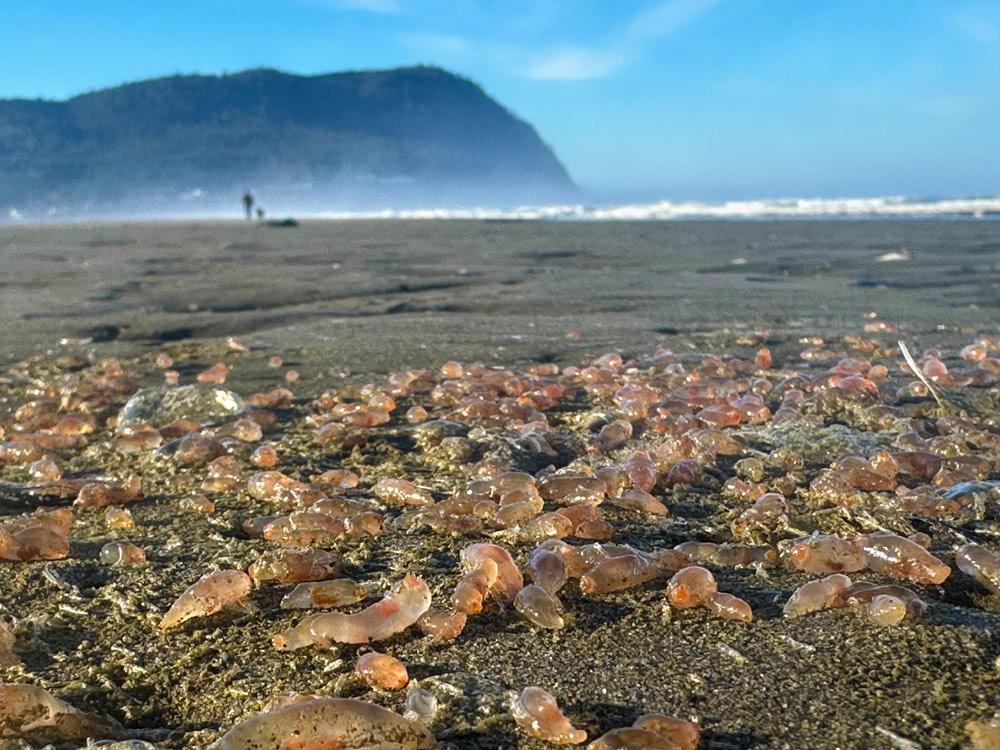
Thousands of small, worm-like sea cucumbers washed ashore on the beach in Seaside, Oregon. This occurred after heavy surf coincided with low tides, leaving a carpet of invertebrates over roughly two miles of shoreline. Local observers and the Seaside Aquarium documented the event.
“Meanwhile, in Seaside, Oregon, thousands of sea cucumbers have also washed up, covering over two miles of beach in a rare natural event.”
They noted that the animals cannot return to the sea on their own and are expected to dry out and die. Coverage links the strandings to the surf and tide combination.

Seaside is located about 80 miles northwest of Portland. The aquarium highlighted the unusual scale of the event in a social media post.
Characteristics of Sea Cucumbers
The animals are described as translucent, worm-like sea cucumbers that lack tube feet. They typically burrow just beyond the surf and, at least in this event, are about half an inch long though they can grow to six inches. Sources note they feed on seafloor debris, plankton, algae, and waste.
They filter water and sediment and breathe via a distinctive system often described as skin- or respiratory-tree based. Some reports emphasize their ability to reproduce asexually and live 5 to 10 years.
Cause and Impact of Strandings
The reason many invertebrates ended up stranded on the sand simultaneously is due to energetic surf combined with low tides. This combination dislodged the burrowing invertebrates and deposited them above the waterline. Once stranded, these creatures cannot return to the sea and most will dry out and die.
“However, certain ocean conditions like heavy surf combined with low tides can dislodge them, causing mass strandings.”
Some of the stranded invertebrates become food for small beach scavengers. Several reports emphasize that these die-offs also help recycle nutrients into the beach ecosystem.
Mass Stranding Event Reports
Reports differ in how unusual this mass stranding is. One account calls mass strandings seasonal but says the sheer number left onshore now is unusual. Another labels the incident a rare natural event occurring over more than two miles of beach.
Yet another describes a broader-scale phenomenon not seen in years across the Pacific coast. Local documentation notes the Seaside Aquarium’s role in flagging and photographing the event on October 21, 2025.

Media Coverage of Marine Strandings
Coverage also differs in scope and framing beyond Oregon. Fox News pairs the Seaside die-off with "unprecedented" pink meanie jellyfish washing up in Texas, implying multiple unusual marine events. Other reports stick to the Oregon strandings and local context such as the aquarium’s Facebook post and Seaside’s location relative to Portland.
“Unprecedented numbers of pink meanie jellyfish are washing ashore along the Texas coast, surprising researchers and beachgoers.”
Meanwhile, broader regional context emphasizes strandings reported all the way from northern California to the Gulf of Alaska. This is contrasted with localized descriptions of a two-mile Oregon stretch.
