Iran03 May, 20266 min read
Trump Administration Bypasses Congress, Approves $8.6 Billion Arms Sales to Israel, Qatar, Kuwait, UAE
This article is an automated aggregation of coverage from news outlets. Our editorials offer in-depth analysis curated by the NewsCord team.
Arms sales totaling over $8.6 billion approved to Israel, Qatar, Kuwait, and UAE. Congressional review bypassed by invoking emergency powers.

Arms sales bypass Congress
The Trump administration approved more than $8.6 billion in military sales to Middle East allies—Israel, Qatar, Kuwait, and the United Arab Emirates—by bypassing the usual congressional review process, according to multiple reports.
The State Department announced the approvals on Friday, and the Washington Examiner said the Secretary of State Marco Rubio “determined and provided detailed justification that an emergency exists” that allows the sale to each ally.
The Jerusalem Post similarly reported that Rubio “determined that an emergency existed that required immediate sales to those countries and waived the congressional review requirements for the sales.”
The approvals came as the U.S. and Israel’s war against Iran marked nine weeks since its start, and the Jerusalem Post said the announcements came “more than three weeks since a fragile ceasefire came into effect.”
The Washington Examiner added that President Donald Trump sent a letter to Congress saying that hostilities with Iran had been ‘terminated’ amid a pending 60-day War Powers Act deadline.
The Diplomatic Insight described the same move as invoking emergency powers to proceed “without the standard legislative oversight,” and it said the administration approved “more than $8.6 billion” in military sales.
In parallel, the U.S. State Department said the deals support U.S. foreign policy and national security objectives amid the ongoing war in the Middle East, as described by قناة الغد.
Deal sizes and systems
The reported arms packages included specific dollar amounts and named systems for each country, with several outlets listing overlapping figures. The Jerusalem Post said the announcements included approving military sales to Qatar of Patriot air and missile defense replenishment services costing $4.01 billion and Advanced Precision Kill Weapon Systems (APKWS) costing $992.4 million. It also said Kuwait received an integrated battle command system costing $2.5 billion and Israel received APKWS costing $992.4 million, while the State Department approved the sale to the UAE of APKWS for $147.6 million.
قناة الغد repeated the same set of values, stating the department approved military sales to Qatar including renewal services for the Patriot air and missile defense system valued at $4.01 billion and Advanced Precision Kill Weapon Systems deals valued at $992.4 million. It further said the department approved the sale of an Integrated Battle Command System for Kuwait worth $2.5 billion and the sale of Advanced Precision Kill Weapon Systems to Israel valued at $992.4 million, and it approved Advanced Precision Kill Weapon Systems to the United Arab Emirates for $147.6 million.
The Diplomatic Insight likewise listed a $4.01 billion deal with Qatar for Patriot air and missile defense system support and an additional $992.4 million for APKWS, while also valuing Kuwait’s integrated battle command system at $2.5 billion and Israel’s and the UAE’s APKWS at $992.4 million and $147.6 million respectively. For contractors, قناة الغد said the prime contractor in the APKWS deals with Qatar, Israel, and the UAE is BAE Systems, and it added that RTX and Lockheed Martin are the main contractors in the Kuwait Integrated Battle Command System deal and in the Qatar Patriot renewal deal, with Northrop Grumman also a major contractor in the Kuwait deal.
Timeline of the Iran war
Several outlets tied the arms approvals to a specific escalation timeline in the U.S.-Iran conflict. The Washington Examiner said the global conflict started on February 28 and described the approvals as for Middle East allies “engaged in the Iran war.” The Jerusalem Post likewise stated “The US and Israel attacked Iran on February 28,” and it described Iran responding with strikes on Israel and Gulf states that host US bases.
قناة الغد also said “The war began with American and Israeli airstrikes on February 28,” and it added that Iranian missiles and drones struck targets in several countries including the UAE and Saudi Arabia, killing and wounding dozens and damaging infrastructure. The Jerusalem Post said the State Department announcements on Friday came as the war against Iran marked nine weeks since its start and “more than three weeks since a fragile ceasefire came into effect.”
The Washington Examiner said the conflict stretched into its ninth week and described the approvals as coming “the same day” that Trump sent a letter to Congress. That letter, according to the Washington Examiner, said hostilities with Iran had been ‘terminated’ amid a pending 60-day War Powers Act deadline.
Iran response and U.S. posture
While the arms approvals moved forward, the sources also described Iranian and U.S. messaging about the possibility of renewed conflict. قناة الغد reported that Trump said he may order a new military action against Iran if it misbehaves, and it quoted Trump as stressing that he does not envision it being acceptable and signaling the possibility of resuming attacks on Tehran. The same outlet said Tasnim News Agency reported that Iran handed Pakistan a 14-point response to an American proposal for a cease-fire.
The خبر فوری outlet framed the situation as Iran seeking a deal with the United States and said that after Tehran’s latest offer was rejected by Trump, “there is a possibility of returning to conflict.” It also stated that “Iran’s naval blockade is friendly!” and that “There is a possibility we will attack again,” while adding “Iranians have not paid enough of a price yet!” and “Probably” the Iran war could resume.

The Washington Examiner included a passage quoting Trump’s view that the U.S. “might be better off without a deal” and that the U.S. will not leave Iran until the job is finished. In addition, the Washington Examiner described Iran’s economic pressure from the blockade of the Strait of Hormuz and said it was “all-time low on April 30.”
Stockpiles, delays, and scrutiny
Beyond the approvals themselves, the sources described concerns about weapon stockpiles and potential delivery delays, alongside scrutiny of the bypassing of congressional review. قناة الغد said that in mid-April, five sources familiar with the matter told Reuters that American officials informed some European counterparts that delivery of part of the weapons shipments contracted for earlier is likely to be delayed, as the war in Iran continues to drain weapons stockpiles. It added that these delays highlight the extent of the impact of the Iran war, which has drained U.S. supplies of some vital weapons and munitions.
The outlet further said several European countries would be affected, including the Baltic states and the Nordic countries, and that European countries purchased some of the weapons involved under the Foreign Military Sales program but have not yet received them. It also reported that the defense ministries of Estonia and Lithuania told Reuters that the United States had informed the two countries of possible delays in delivering American military equipment due to the war on Iran.
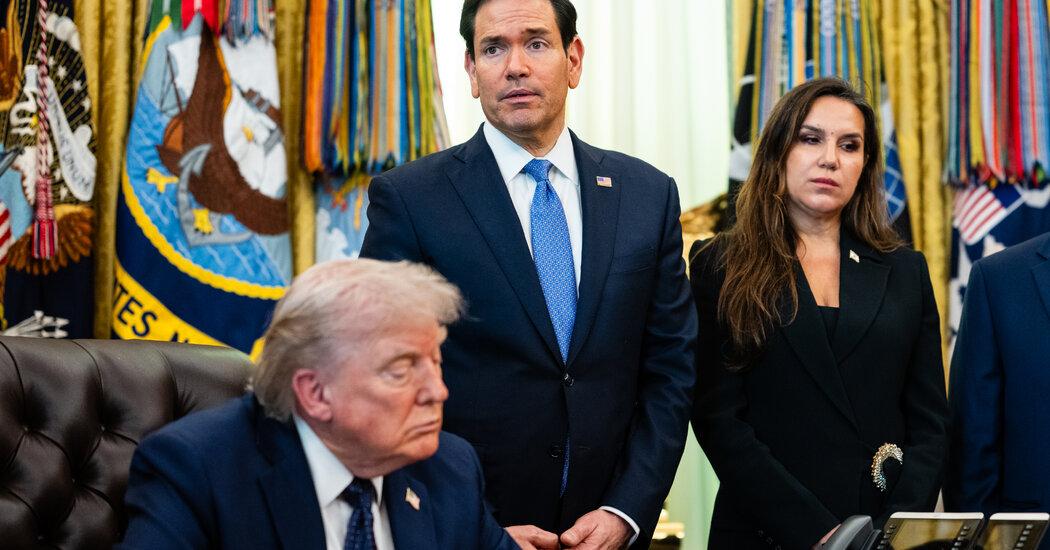
In a separate thread, the Washington Examiner said the approvals waived congressional review requirements under Section 36(b) of the Arms Export Control Act, as amended, and it described the emergency determination by Rubio. Finally, the Washington Examiner and other outlets described market and policy implications, with Crypto Briefing framing the fast-tracking as bypassing Congress and using emergency authorities, and it tied the decision to scenarios affecting oil prices and the likelihood of a US-Iran permanent peace deal by May 31, 2026.