Iran16 June, 20263 min read
Trump Announces US-Iran Deal, Halting Military Operations and Reopening Strait of Hormuz in Geneva
US-Iran agreement envisions immediate, permanent halt to military operations on all fronts. Widespread international backing welcomed for the US-Iran deal.

Deal to halt war
The United States and Iran are close to signing an agreement aimed at ending their war, with three regional officials telling The Associated Press on Friday that the tentative deal includes terms for removing and destroying nuclear material from Iran.
U.S. President Donald Trump said the agreement is complete and successful, announcing an immediate and permanent halt to military operations on all fronts, the reopening of the Strait of Hormuz to international navigation, and the lifting of the naval blockade on Iran.
The memorandum of understanding is expected to be officially signed in the Swiss city of Geneva on Friday, June 19, after mediation efforts led by Qatar and Pakistan.
In Tehran, Iranian Deputy Foreign Minister Kazem Gharibabadi said the text of the memorandum of understanding had become final and confirmed that the official signing would take place on Friday in Geneva, Switzerland.
The Iranian official said his country would publish details of the memorandum after the official signing, adding that there are special mechanisms to monitor how closely the United States is adhering to its commitments under the agreement.
Qatar’s role and Lebanon
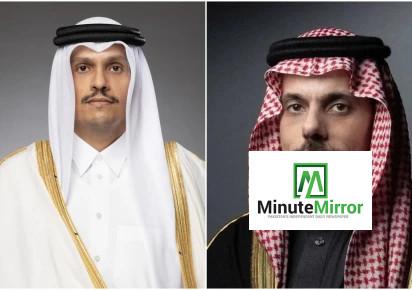
Qatar’s Majid Al-Ansari, spokesman for the Qatari Foreign Ministry, said the current agreement between Iran and the United States is only a first step toward achieving a broader agreement at the regional level. Al-Ansari said Qatar helped in the process of bringing the views of Tehran and Washington closer together, and he described the ultimate goal as ensuring stability and restoring regional security. He also said Qatar’s efforts were focused on reaching an understanding, returning shipping in the Strait of Hormuz, and continuing the ceasefire.
On Lebanon, Al-Ansari condemned Israeli attacks, saying, "There is no justification for Israel’s attacks on Lebanon, and we consider them a violation of the country’s national sovereignty." He added that efforts are currently focused on the full implementation of the Gaza ceasefire agreement, while he said Qatar is working to prevent the re-ignition of war across Gaza, Lebanon, and Syria.
Implementation, assets, and monitoring
The agreement’s implications extend beyond ending the war, with the understanding described as covering navigation in the Strait of Hormuz, economic sanctions, and the Iranian nuclear program, alongside arrangements connected to the Lebanese arena. Tasnim News Agency quoted a knowledgeable source saying that under "Clause 13" of the memorandum of understanding, negotiations on the final agreement would begin after verification of the lifting of the sanctions, including proceeding to open the Strait of Hormuz. Mehr News Agency quoted a text it said represents the 14th clause, stating that "the release of $24 billion of Iranian funds frozen during the final negotiation period, which lasts 60 days" begins after the memorandum of understanding is signed.
Axios cited a senior U.S. official denying Tehran’s claims about frozen funds, stressing that talk of unconditional release is "merely media manipulation" and that any potential agreement would be based on the principle of "pay for performance." The New York Times also quoted President Donald Trump saying that if no final nuclear deal with Iran is reached, military strikes on Tehran would resume, or Washington would be held responsible for Middle East security in exchange for 20% of the region’s revenue.