Europeupdated 51m ago3 min read
Archive photo · 5 July 2014Tusk Presses On as Police Surround Constitutional Tribunal in Warsaw Protest Standoff
5 Asian3 Local Western1 Other2 Other source typesPhoto: Adrian Grycuk, CC BY-SA 3.0 pl · Cropped for layout
This article is an automated aggregation of coverage from news outlets. Our editorials offer in-depth analysis curated by the NewsCord team.
Police surround Warsaw’s Constitutional Tribunal as protests over its leadership crisis unfold. President Nawrocki and PM Tusk hold crisis talks amid escalating stalemate.
Save coverage image
Poland court standoff
Polish Prime Minister Donald Tusk said his government would press ahead with efforts to restore the independence of Poland's Constitutional Tribunal as hundreds of protesters gathered for a second night against the suspension of the court's president.
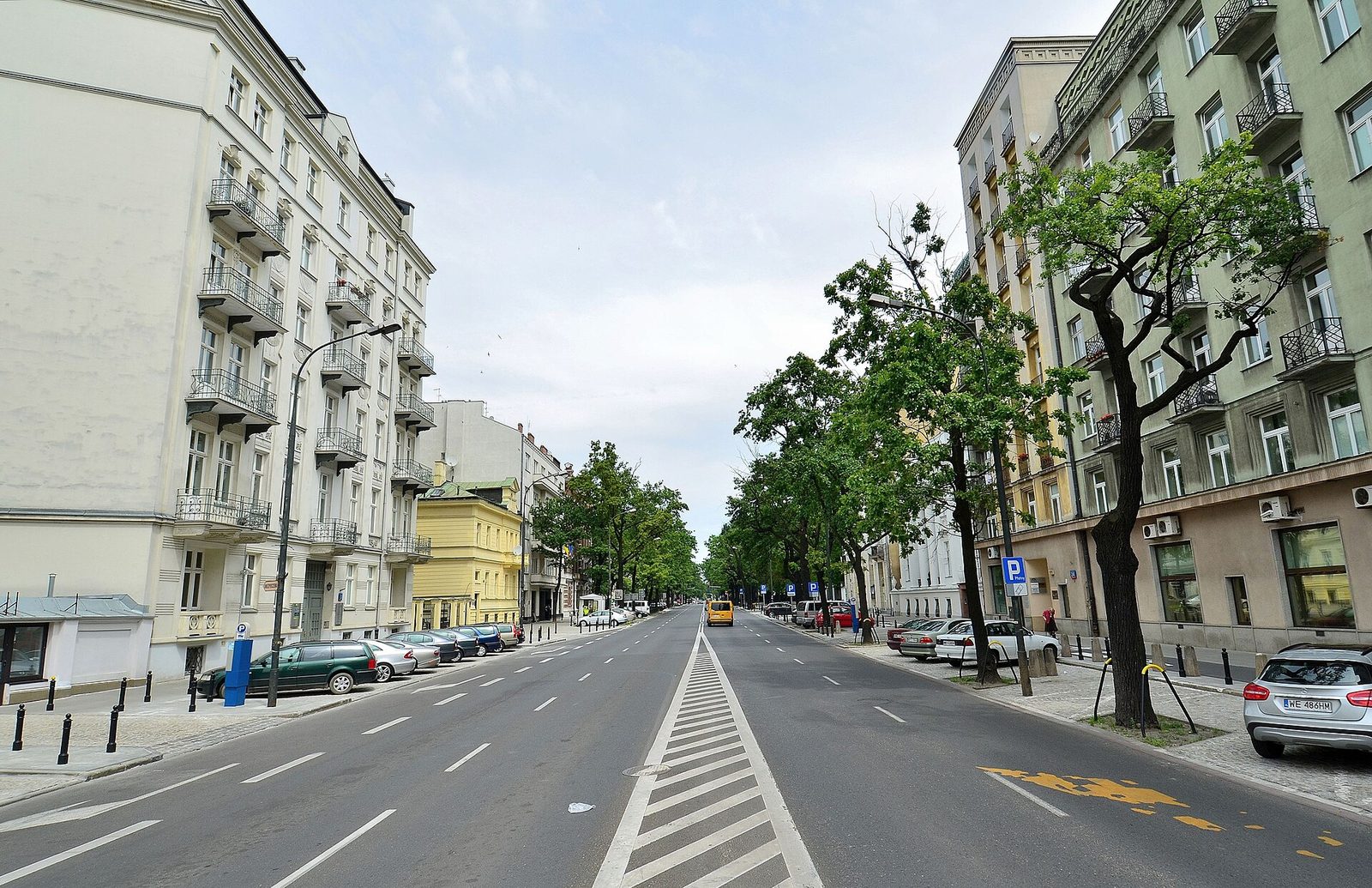
Tusk told the public, "I am certain that the Constitutional Tribunal will function as it should. Also, independently of me and in line with the constitution," as police deployed along Avenue Szucha outside the Constitutional Tribunal building in Warsaw.
President Karol Nawrocki turned back his plane during a flight to Senegal on Friday evening and returned home, after which he said, "Tonight, there was a breach of public order in the Republic of Poland and a forcible takeover of a constitutional body."
The crisis deepened after the Constitutional Tribunal said its longest-serving judge Anna Korwin-Piotrowska suspended Bogdan Święczkowski, the tribunal's president, and was now in charge of the court, while the dispute left the institution effectively paralysed.
The European Commission urged Nawrocki to approve the new judges nominated by parliament so the court could function in line with the constitution and EU law, according to a spokesman.
Competing claims and protests
Tusk accused conservative nationalist opposition leaders of wanting to "destroy democracy and rule of law" in a Saturday evening speech, as representatives of nationalist, far-right, and some governing coalition parties attended Nawrocki's crisis talks and Civic Coalition stayed away. Nawrocki convened the "urgent" consultations due to the threat to Poland's internal security presented by the sudden suspension on Friday of the Constitutional Tribunal’s chief judge, Bogdan Swieczkowski, and no breakthrough had emerged by Saturday afternoon. The Constitutional Tribunal's official X account described the government's move as a "coup d’etat," while Tusk argued the court’s judges were not politically neutral and that Swieczkowski’s removal was a "painful" but necessary decision.
US Ambassador to Poland Tom Rose called for calm, warning, "The last thing Poland needs is a confrontation that spirals into something far worse," as protests outside the court extended for weeks in support of PiS-friendly judges. The dispute also drew a legal framing from the Venice Commission, which said the president’s role in the procedure was ceremonial and that he should administer the oath without delay and should not claim the power to review parliament’s election of judges.
EU stakes and next steps
The European Union can respond to violations of judicial independence through legally established mechanisms, but the EU's authority has limits, and no mechanism grants EU institutions general authority to assume control of Poland’s Constitutional Tribunal or appoint its leadership. The EU Today account set out that Article 19(1) of the Treaty on European Union (TEU) establishes obligations concerning effective judicial protection, Article 258 of the Treaty on the Functioning of the European Union (TFEU) permits infringement proceedings, and Article 7 TEU provides procedures for addressing serious threats to the Union’s foundational values. The same analysis said the Court of Justice of the European Union (CJEU) found serious violations involving the institution in December 2025 and the European Court of Human Rights (ECtHR) issued interim measures in May 2026 concerning four judges prevented from exercising their duties.
Tusk vowed in a televised address that "the rule of law would prevail over violence" as he described Friday’s events as "scandalous incidents" and said restoring calm could not mean accepting lawlessness or violence. The confrontation threatened to deepen polarization, with Jian Junbo, director of the Center for China-Europe Relations at Fudan University, saying the dispute could undermine democratic institutions and the rule of law within the EU if political forces increasingly resorted to methods that depart from established institutional procedures.