Technology and Science · 11 August, 2026 · 3 min read
Royal College of Ophthalmologists Warns UK Solar Eclipse Viewing Can Cause Permanent Eye Damage
Directly looking at the sun can cause eye damage; use indirect viewing or eclipse glasses. Symptoms of damage include blurred vision, central blind spot, and light sensitivity; seek medical help.
What qualifies as safe viewing vs unsafe 'close' substitutes.
6 of 8 outlets skipped it: non-medical device use needs properly fitted solar filters.
28outlets compared
Same story, two versions
tap a side to read it in full
Medscape
“Ordinary sunglasses do not provide adequate protection and may increase the chance of damage”Read the original ↗
TTelegraph
“specialist eyewear sold out at many retailers across Britain, many people looked directly”Read the original ↗
Telegraph stresses real-world behaviour amid shortages; Medscape stresses strict technical safety.
Eclipse eye safety warnings
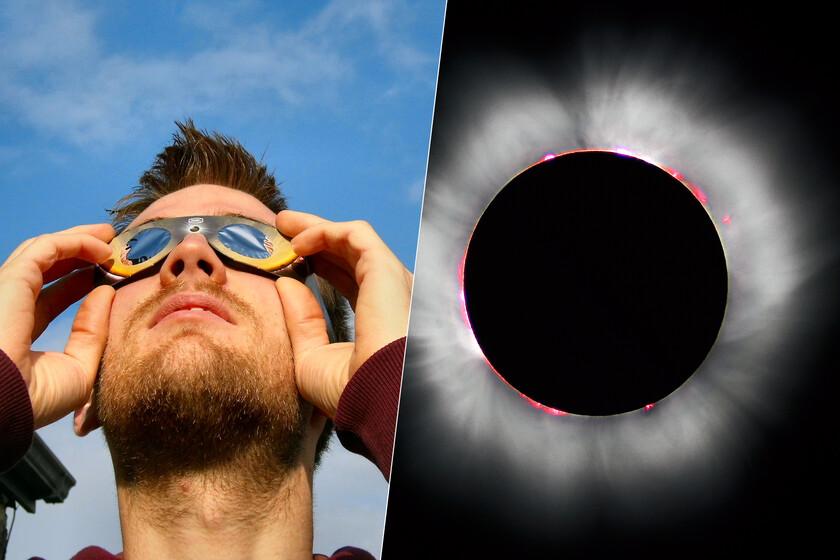
Ahead of Wednesday’s partial solar eclipse, the Royal College of Ophthalmologists warned people to view it indirectly and cautioned that looking directly at the sun without the right protection could cause permanent damage to eyesight. The UK Health Security Agency said the right glasses should be printed with the international safety standard ISO 12312-2:2015(E), and urged people to buy new glasses and not to re-use pairs from 1999. The college also warned that even when only a small part of the sun remains visible, sufficient radiation can still reach the retina to cause injury, and it said binoculars, telescopes, and camera viewfinders should never be used to view the eclipse unless fitted with a properly fitted solar filter.
In London, the eclipse was scheduled to begin at 6:17 PM, reach maximum coverage with around 90% of the sun covered at 7:12 PM, and end by 8:06 PM, with first contact varying elsewhere in the UK and Ireland. The Royal Observatory planned to broadcast the eclipse on its live stream from London from 6:10-8:00 PM.

Signs of possible retinal injury
Eye experts warned that symptoms of solar retinopathy can be delayed because the retina has no pain receptors, with the BBC describing how damage can come on within a few hours and may not hurt as it happens. Alexander Ionides, a consultant eye surgeon at Moorfields Eye Hospital in London, said the warning sign can be “a grey or a yellow or a dark spot right in the very centre of your vision.” Euronews reported that Dr Laura Sararols, head of the Retina Unit at Granollers General Hospital, said there are “two things we need to distinguish,” contrasting temporary dry-eye discomfort from the more serious central-vision change.
Euronews added that Sararols said the symptom requiring particular attention is “a kind of dark zone, an area that will not focus or a greyish patch that is always in the same place.” The BBC said people who think they have damaged their eyes should seek urgent medical attention, including retinal scans to look for solar retinopathy damage to the retina.

What to do if you looked
Multiple outlets tied the risk to the way partial eclipses can make the sun seem comfortable to stare at, with the Independent warning that “Looking directly at the sun, even for just a few seconds, can burn the retina.” The Independent said the condition, known as solar retinopathy, is painless and that symptoms can start within a few hours but could be up to 24 hours after an eclipse. Newsweek reported that NASA says it is unsafe to look directly at the sun during any partial solar eclipse without specialized eye protection, and it warned that viewing through binoculars, a telescope, or a camera lens without correct solar filters can result in severe eye injury almost instantly.
For those who did stare, the BBC said symptoms may include eye pain, redness, grittiness or irritation, sudden changes in sight, and increased sensitivity to light, and it urged urgent medical attention. Medscape added that after the eclipse on 11 August 1999, a national survey published in Eye identified 70 cases of vision problems, with half presenting to an ophthalmologist within 2 days and abnormal macular appearance reported in 84% at presentation.M