Sudanupdated 50m ago3 min read
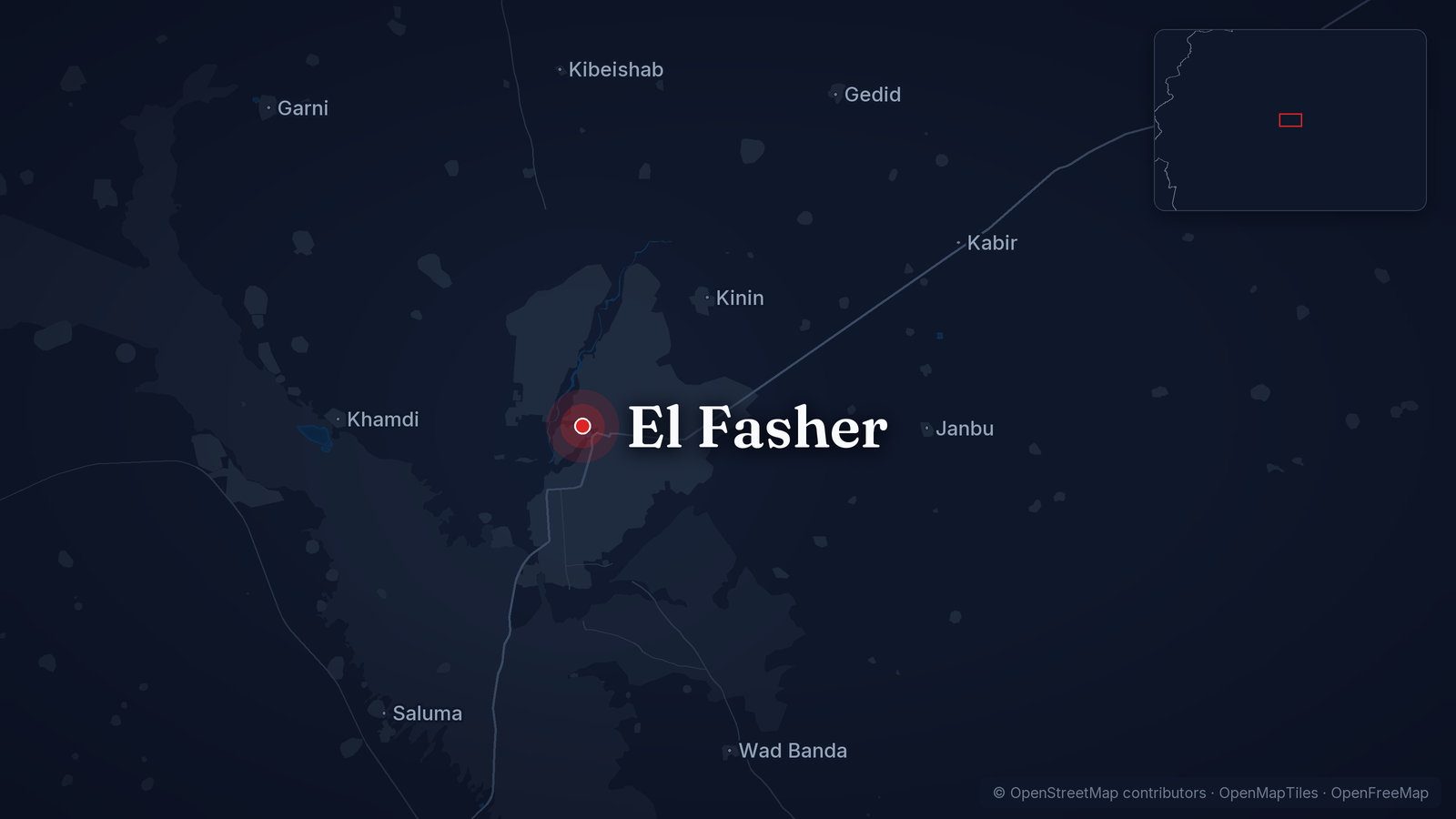
MapUK Sanctions 15 Sudan Commanders, Including RSF Colonel Hussein Abu Jalak, Over El Fasher Atrocities
“ending impunity required independent and transparent investigations, accountability based on evidence”
“the UK funded an investigation into the Sudanese civil war and described its findings as 'disturbing'.”
Map: © OpenStreetMap contributors, ODbL · Cropped for layout
This article is an automated aggregation of coverage from news outlets. Our editorials offer in-depth analysis curated by the NewsCord team.
UK sanctions 15 RSF and SAF commanders over suspected atrocities tied to El Fasher fall. UK commits £15 million aid for survivors and humanitarian work on El Fasher anniversary.
UK sanctions after El Fasher
The UK imposed sanctions on 15 senior commanders from the Rapid Support Forces and the Sudanese Armed Forces over suspected atrocities, as it marked the first anniversary of El Fasher's fall. Foreign Secretary Ed Miliband said UK funded investigations had documented the continued use of rape and starvation as weapons of war, and he added, "These are crimes against our humanity." The UK identified RSF Colonel Hussein Abu Jalak and Al-Nour Ahmed Adam, known as Al-Qubba, as having played prominent roles in the siege and attack on El Fasher, North Darfur's capital.
The UK announced £15 million in new support for survivors and humanitarian operations in Sudan, including £5 million for survivors of conflict related sexual violence and £10 million for humanitarian operations such as clean water and sanitation at displacement sites around Tawila and essential health and protection services in El Obeid. The UK said evidence included footage of RSF fighters discussing cutting off El Fasher's water supplies and preventing traders from bringing food into the city, and it said the measures build on five previous rounds of UK sanctions related to Sudan's conflict.
Human rights groups press for truth
Sudanese human rights organisations including the Sudanese Human Rights Monitor, the African Centre for Justice and Peace Studies, the Darfur Bar Association, and the Al Khatim Adlan Centre for Enlightenment and Human Development marked the first anniversary of the fall of El Fasher by calling for independent investigations and accountability. The groups demanded that authorities guarantee humanitarian access and redress for victims without discrimination or selectivity, and they stressed that protecting civilians required an end to violations, independent investigations, and accountability for those responsible for crimes. The organisations warned that growing use of ethnic rhetoric, hate speech, and incitement to violence and revenge posed a direct threat to social cohesion and risked fuelling further violence.
The groups also called on those controlling detention facilities to disclose where detainees were being held, notify their families, guarantee access to lawyers, allow detainees to challenge the legality of their detention, and provide necessary care. The statement said the signatories urged the relevant authorities to disclose investigation findings, recommendations, and the outcomes of referrals for judicial proceedings, and it stressed that establishing investigative committees did not replace independent criminal investigations or prosecutions where there were legal grounds.
Aid access, famine risk, and a ghost town
RFI described El-Fasher as a "ghost town" with a broken population one year after the Rapid Support Forces seized it on October 26, 2025, after several months of siege. RFI reported that an inspection mission later framed the city as "city totally destroyed, empty, a ghost town," and it quoted Renaud Douci, field coordinator for Solidarités International, saying, "We estimate the population at 40,000 to 60,000 people." RFI said nearly 100,000 people managed to flee during the offensive, and it reported that almost 6,000 people were killed during the assault according to the UN human rights office.
The UK said the war and drought associated with the El Niño phenomenon threaten to trigger famine, and it linked the risk of famine to attacks on markets, health centres, displacement camps and other infrastructure and restrictions on humanitarian access. Sudanhorizon quoted Ed Miliband saying, "The El Niño phenomenon may worsen an already deteriorating situation," and it said the UK warned that deepening famine was being driven by the Rapid Support Forces and the Sudanese Armed Forces, while both parties were told to stop attacking aid convoys and allow food to reach communities in need.