Ukraine War15 July, 20263 min read
Ukrainian Soldiers In Donbas Use Consumer Drones To Target Russian Positions Amid Lack Of Support
This article is an automated aggregation of coverage from news outlets. Our editorials offer in-depth analysis curated by the NewsCord team.
Foreign medical training is provided to Ukraine by foreign forces. Canadian and British contributors participate in Ukraine's training efforts.
Front-line shortages and deaths
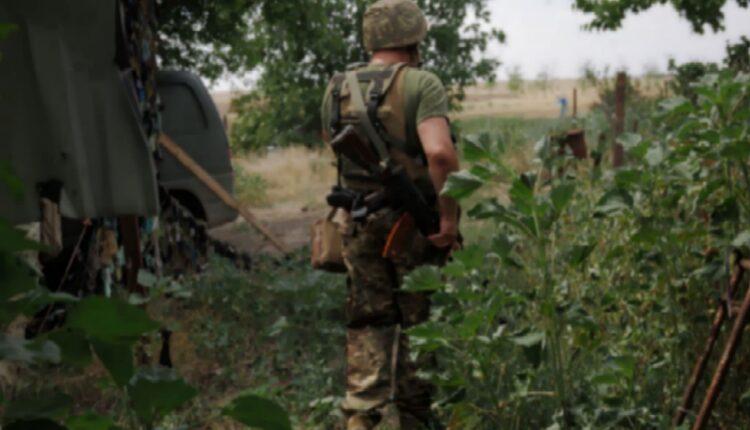
A Ukrainian soldier identified as Ivan said he is stationed in the Donbas region using off-the-shelf consumer drones to identify Russian positions to strike with artillery, while describing how his unit lacks basic support and even internet connection. Ivan said, "We have no Internet connection, which makes our work basically impossible," and he added that his team has to drive around to obtain a connection with mobile devices. He also described a trench near the front where, in ten days, fifteen soldiers died "all due to bombardments and shrapnel," and he said he asked a commander to bring heavy equipment to build a better bunker but was refused.
In the same account, Illya*, a 23-year-old Kyiv soldier, said his unit has no weapons or protection and that he joined the Ukrainian army shortly after the war began, but now wants to return home while warning that fleeing risks prison. Illya* told the story that "I have seen medical supplies donated to us being stolen," and he said vehicles that brought his unit to position were stolen as well.
Tourniquets and training gaps
A report on Ukraine’s battlefield medicine described a near-systematic use of the tourniquet and warned that improper use could trigger preventable amputations and even deaths.
Captain Rom A. Stevens, a former American military physician interviewed by The Telegraph, said about 75,000 of the 100,000 amputations recorded among Ukrainian soldiers since the Russian invasion of 2022 could be due to inadequate tourniquet placement.

The same report said Ukrainian surgeon Ostap Zubach, based in Lviv, warned, "In bad hands, it becomes a weapon," and it described a protocol problem in which the strategy of loosening the tourniquet is poorly understood or rarely applied.
It also cited a 2022 study by military surgeon Vladyslav Yatsun that found less than 25% of injuries with a tourniquet actually justified its use.
In parallel, a BBC account of Paul Taylor’s work with REACT Disaster Response described tactical battlefield medical training for civilians, including trauma medicine training focused on keeping someone breathing, stopping bleeding, and evacuating them to definitive medical care.
NATO unity and new programs
Canadian military training for Ukraine is being refined through Operation UNIFIER, and Le Devoir reported that Lieutenant Colonel Chelsea Braybrook called the mission "of crucial operational importance" during an interview with The Canadian Press in Warsaw. Le Devoir said the updated medical care program will be launched next month, and it described a shift from basic level of care for the wounded in combat to advanced training to become instructors. Radio-Canada reported that General Jennie Carignan sought to reassure Ukrainians at the Kiev Security Forum by saying NATO’s unity is "absolutely strong" and that militarily Canada and partners are "working and collaborating very effectively."
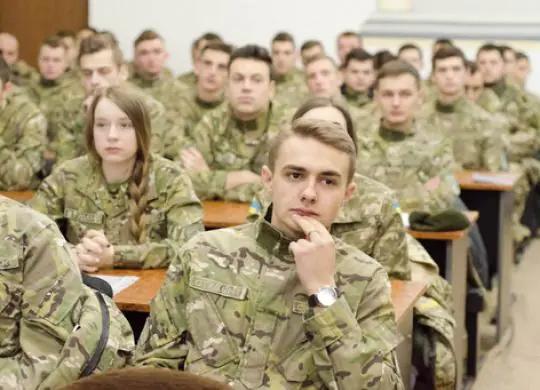
Radio-Canada also said the Carney government extended Operation UNIFIER until 2029, and it reported that since its creation the Canadian Army has trained more than 47,000 members of the Ukrainian Security Forces. In a separate development, Visit Ukraine said that starting in September 2025 students at Ukrainian universities will receive basic general military training with two components and 300 academic hours, and it stated that the practical course lasts 210 academic hours at special training centers of the Armed Forces.