Published

Syria

IAEA Finds Deir al-Zor Cooling Structure Matches Nuclear Reactor, Reports 73 Tons Uranium

Image via Ynetnews

At a glance

  1. Deir ez-Zor infrastructure matches a nuclear reactor, per IAEA findings.
  2. IAEA reports about 73 tons natural uranium at the site.

  3. Reactor nearly complete in 2007; could have produced weapons-grade material under Assad.

IAEA confirms reactor match

The International Atomic Energy Agency disclosed in a confidential report on Tuesday that inspection results at a site in Deir al-Zor, Syria, showed that the cooling structure matches that of a nuclear reactor.

The IAEA said it found 73 tons of natural uranium at a site inside Syria, including about 55 tons in the form of 8808 fuel rods and about 18 tons of uranium scrap and waste.

Consistent coverage

Where the coverage agrees

Most outlets consistently report the IAEA finding that Deir ez-Zor infrastructure matches a reactor and that about 73 tonnes of uranium were found.

The agency said its assessment is based on observations conducted at the Deir al-Zor site and that it will continue to monitor the activities at the site where inspections are currently taking place.

In the same reporting, the IAEA welcomed Damascus’s transparency and cooperation, saying it helps facilitate the disposition of outstanding safeguards issues related to past Syrian nuclear activities.

The report also tied the findings to the covert nuclear program developed by the regime of former President Bashar al-Assad, centered on the secret Al-Kibar nuclear reactor.
Damascus vows custody

Syrian Foreign Minister Assad al-Shibliani (Asad al-Shibani) affirmed earlier this month that his country adheres to its right to use nuclear energy for civilian and peaceful purposes, and said the nuclear materials at the “secret” site inside Syria will remain in the custody of the Syrian state under IAEA safeguards.

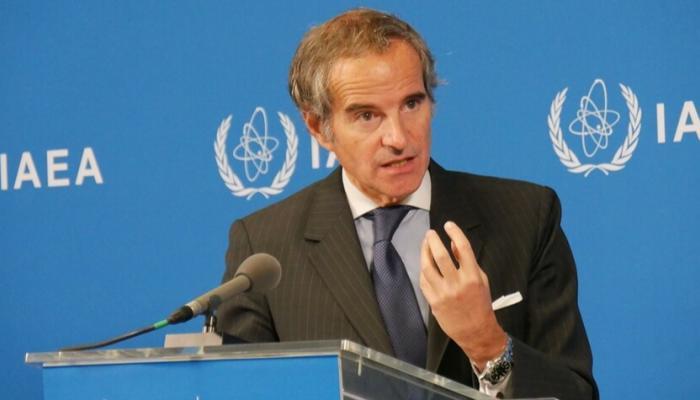
At a joint press conference in Damascus with IAEA Director General Rafael Grossi, Al-Shibliani said, “Damascus will work to create the necessary conditions to handle and securely store these materials, in coordination with the IAEA.”

The IAEA report described the agency’s conclusions as based on information provided by Syria and on verification work it carried out at several sites, while noting that previous Syrian authorities “had not disclosed nuclear materials, facilities, or activities.”

The IAEA also said it discovered a fuel fabrication plant intended for the Deir ez-Zor reactor, in addition to uranium remnants, and that its two-day visit included two locations, one in Deir ez-Zor and another housing nuclear materials recently discovered by Syria.

The agency stated on Tuesday that it “will continue to monitor activities at the site,” which is currently undergoing excavation and exploration work.
Reactor fuel, wider stakes

The IAEA report circulated to member states said the former Syrian authorities failed to report nuclear materials, facilities, and activities as required by the verification agreement of the Nuclear Non-Proliferation Treaty.

Inspectors visited the Deir ez-Zor site on August 29 to “follow up on the progress of drilling” and examined a cooling structure uncovered at the site, with the agency confirming it matches a nuclear reactor’s cooling system.

The report said three locations were “functionally linked” to the Deir ez-Zor site, including one associated with “conversion and/or fuel fabrication” and another used for “temporary storage of construction materials.”

Reuters reported that the report also confirmed that Syria was manufacturing fuel for the reactor and that the authorities did not declare the facilities and nuclear materials related to it.

Separately, Reuters said the IAEA resolved outstanding questions from its Syria investigation but made no progress in Iran, adding that the report on Iran showed the agency’s “lack of information about this nuclear material and access to facilities to verify it is a matter of proliferation concern” after June 2025 attacks.

Explore the original reporting

Compare all 26 sources

How each outlet frames it

Every outlet we compared, the headline it ran, and a link to the original article.

West Asian

Aajil
Aajil

IAEA: The discovered infrastructure in Deir al-Zor, Syria, matches the specifications of a nuclear reactor.

01 September, 2026

Al-Ain Al-Akhbariyah

A secret report reveals the truth about Deir ez-Zor.. A nuclear reactor

01 September, 2026

Al-Jarida Al-Jareedah Al-Kuwaitiya

"International Atomic Energy Agency": Existence of 73 tons of natural uranium, including 55 tons in the form of 8808 fuel rods in Syria.

01 September, 2026

Al-Jazeera Net
Al-Jazeera Net

Grousi reveals details of the Deir ez-Zor reactor.. Syria of the new era collaborated with transparency

08 September, 2026

Al-Jazirah Net
Al-Jazirah Net

Nuclear reactor and 73 tons of uranium.. Secret report reveals what the Assad regime hid

01 September, 2026

Al-Khaleej
Al-Khaleej

"IAEA confirms that the Deir ez-Zor facilities in Syria match the specifications of a nuclear reactor"

01 September, 2026

Al-ʿArabiyya
Al-ʿArabiyya

Nuclear energy: facility in Deir ez-Zor, Syria, corresponds to a nuclear reactor

01 September, 2026

ANF
ANF

IAEA: A facility in Deir ez-Zor conforms to a nuclear reactor design

01 September, 2026

Ash-Sharq al-Awasṭ
Ash-Sharq al-Awasṭ

UN report: Syria was building a nuclear reactor in Deir ez-Zor during Bashar al-Assad’s era

01 September, 2026

Daily Sabah
Daily Sabah

Syria built nuclear reactor under Assad, IAEA confirms

01 September, 2026

Mideast Online
Mideast Online

Did the Assad regime plan to produce fissile materials used in nuclear weapons?

07 September, 2026

Sawt Bayrut Intirnashonal

IAEA closes the Syria nuclear file and keeps concerns about Iran

01 September, 2026

Shabakat Sarmad al-I‘lamiyya

"IAEA": Syria close to owning a nuclear weapon in 2007

07 September, 2026

Western Alternative

Al-Monitor
Al-Monitor

Syria site infrastructure 'consistent with nuclear reactor': IAEA

01 September, 2026

Global Banking & Finance Review

Syrian Nuclear Reactor Had Weapons Potential, Says IAEA Chief

07 September, 2026

Western Mainstream

AP News
AP News

UN report finds Syria was building a nuclear reactor in Deir el-Zour under former President Assad

01 September, 2026

France 24
France 24

IAEA: Deir Ezzor reactor was nearly complete and could have been used to produce weapons

07 September, 2026

Reuters
Reuters

Syrian nuclear reactor could have been useful for weapons, IAEA chief says

07 September, 2026

Asian

Devdiscourse
Devdiscourse

Syria’s Secret Nuclear Reactor: A Historical Discovery

07 September, 2026

South China Morning Post

Syria was building nuclear reactor in Deir el-Zour under Assad, UN report finds

02 September, 2026

South China Morning Post

Syria was building nuclear reactor in Deir el-Zour under Assad: UN report

02 September, 2026

Other

KELO-AM
KELO-AM

IAEA reports progress in Syria investigation, none in Iran

01 September, 2026

The Brussels Times
The Brussels Times

Nuclear reactor found in Syria was likely used to produce weapons, IAEA head says

07 September, 2026

WBAL News Radio
WBAL News Radio

UN report finds Syria was building a nuclear reactor in Deir el-Zour under former President Assad

01 September, 2026

WTOP News
WTOP News

Oil giant Chevron is expected to announce it will expand operations in Venezuela, US official says

01 September, 2026

Israeli

Ynetnews
Ynetnews

73 tons of uranium revealed at secret nuclear site in Syria

01 September, 2026

Read stored source text: Aajil

The International Atomic Energy Agency (IAEA) disclosed in a confidential report on Tuesday that inspection results at a site in Deir al-Zor, Syria, showed that the cooling structure there matches that of a nuclear reactor, at the same time that the agency revealed the presence of 73 tons of natural uranium at a site inside Syria. The agency said its assessment is based on observations conducted at the Deir al-Zor site and emphasized that it will continue to monitor the activities at the site where inspections are currently taking place. The report stated: “Based on the observations made by the agency at the Deir al-Zor site, the agency confirms that the cooling structure revealed matches that of a nuclear reactor.” This was reported by Agence France-Presse. Regarding the nuclear materials found inside Syria, the agency clarified that the quantity amounts to 73 tons of natural uranium, about 55 tons of which are in the form of 8808 fuel rods, while the remaining amount, about 18 tons, consists of uranium scrap and waste. In its assessment of Syrian cooperation, the agency welcomed Damascus’s transparency and cooperation with it, considering that this helps facilitate the disposition of outstanding safeguards issues related to past Syrian nuclear activities. Earlier this month, Syrian Foreign Minister Assad al-Shibliani (Asad al-Shibani) affirmed that his country adheres to its right to use nuclear energy for civilian and peaceful purposes, explaining that the nuclear materials at the “secret” site inside Syria will remain in the custody of the Syrian state under IAEA safeguards. Al-Shibliani said at a joint press conference in Damascus with IAEA Director General Rafael Grossi: “Damascus will work to create the necessary conditions to handle and securely store these materials, in coordination with the IAEA.” These developments relate to the covert nuclear program developed by the regime of former President Bashar al-Assad, which centered on the secret Al-Kibar nuclear reactor. Earlier this month, American and Israeli officials revealed that the administration of U.S. President Donald Trump reached secret understandings with the Syrian government and with Israel’s occupation authorities, paving the way for the removal of nuclear materials stored at a secret site inside Syria, with the IAEA overseeing the operation, according to Axios. Among the sites closely monitored by the occupying power for about two years is a site known as “Site 99,” with Israeli officials stating that the Assad regime stored nuclear materials there that were part of the Al-Kibar nuclear reactor project.

Read stored source text: Al-Ain Al-Akhbariyah

The International Atomic Energy Agency said in a secret report on Tuesday that the infrastructure found in the Syrian city of Deir ez-Zor "matches the structure of a nuclear reactor." The agency, a UN nuclear watchdog, wrote in a report seen by AFP: "Based on the observations the Agency made at the Deir ez-Zor site, the Agency confirms that the cooling structure that was uncovered corresponds to the structure of a nuclear reactor." The Agency noted that the previous Syrian authorities "had not disclosed nuclear materials, facilities, or activities," noting that these conclusions are based on information provided by Syria and on verification work it carried out at several sites, according to the secret report. It also stated that the Agency discovered a fuel fabrication plant that was intended for the Deir ez-Zor reactor, in addition to uranium remnants. On August 18, the International Atomic Energy Agency and Syrian authorities announced the discovery of "several tons" of nuclear materials at a site "not disclosed as part of the legacy left by the toppled regime." Damascus authorities had informed the Agency about this site in July. The Agency’s two-day visit included two locations, one in Deir ez-Zor and another housing nuclear materials recently discovered by Syria, according to a joint statement issued at the time by the IAEA and the Syrian authorities. The International Atomic Energy Agency stated on Tuesday that it "will continue to monitor activities at the site," which is currently undergoing excavation and exploration work.

Read stored source text: Al-Jarida Al-Jareedah Al-Kuwaitiya

Text omitted for safety: The provided TEXT_1 contains a mix of Arabic news content and web app markers, including an International Atomic Energy Agency report about Syria. The passage references about 73 tons of natural uranium at a site, with roughly 55 tons in the form of 8808 fuel rods and about 18 tons of uranium scrap and waste, mentions earlier nuclear activities, and notes government transparency in Damascus. It also includes placeholder UI commands (e.g., !print, !decrease) and some timestamps. A direct, faithful translation would read as: "International Atomic Energy Agency: Existence of 73 tons of natural uranium, including 55 tons in the form of 8808 fuel rods and about 18 tons of uranium scrap and waste, at a site in Syria. The agency welcomed transparency by the Damascus government regarding past nuclear activities. A United Nations report accessed by the Associated Press indicates Syria was constructing a nuclear reactor in Deir ez-Zor during Bashar al-Assad's presidency. The IAEA report confirms the presence of approximately 73 tons of natural uranium at one site, of which about 55 tons are in the form of 8808 fuel rods and about 18 tons of uranium scrap and waste. It notes that under President Ahmad al-Shar' government in Damascus, measures were taken to address the situation by providing elements including reports on required nuclear materials. The IAEA welcomed Damascus’s transparency and its cooperation, which facilitates resolving outstanding issues." The text also contains several navigation and social media placeholders like !back to top and sharing buttons."

Read stored source text: Al-Jazeera Net

The Director General of the International Atomic Energy Agency, Rafael Grossi, stated yesterday, Monday, that the nuclear reactor discovered in the city of Deir ez-Zor (east of Syria) was near completion and could have been used to produce materials for making nuclear weapons, praising the 'cooperation and transparency demonstrated by the current Syrian authorities.' Grossi’s remarks come days after an IAEA report revealed that the facilities found in Deir ez-Zor — linked to activities carried out during the era of the ousted Syrian regime — conformed to the specifications of a reactor. The agency, in its report, disclosed the presence of about 73 tons of natural uranium metal, including 55 tons of fuel rods, with the remainder in waste form. Grossi said at a press conference in Vienna, where the IAEA Board of Governors is meeting this week: 'The reactor was nearly completed and would have required only loading the fuel to operate,' adding that it was clear that the Syrian officials at the time 'did not want the world to know what they were doing.' He added: 'We know that, given the design of this type of reactor and its technical characteristics, it is a highly efficient reactor for producing fissile materials that can be used directly to manufacture nuclear weapons.' Welcome for Damascus’ Cooperation Grossi welcomed the ' cooperation and transparency demonstrated by the current Syrian authorities,' considering it 'extremely important for Syria to rejuvenate its economy and restore its relations in political, economic, and other fields with the international community.' He added that the IAEA will continue to work with Syria to ensure the safety of materials and to report on its findings. Grossi visited Syria on August 17-18 of last month, including a site in Deir ez-Zor and a second site related to nuclear materials recently discovered by Syrian authorities. Damascus had informed the Agency of the site in a letter dated July 17 of the previous month, inviting it to 'cooperate with the Syrian authorities in inspecting the site and verifying any nuclear materials that may be found.' In 2018, Israel acknowledged bombing the al-Kibar site in Deir ez-Zor eleven years earlier, saying it targeted a nuclear reactor under construction in 2008, and less than a year after the raid, American officials accused Syria of attempting to build a secret reactor, noting that the Israeli strike destroyed it.

Read stored source text: Al-Jazirah Net

A secret report from the International Atomic Energy Agency, distributed to member states on Tuesday, said that the former Syrian regime was building a nuclear reactor in Deir ez-Zor in the eastern part of the country without informing the agency about the project, and without notifying the agency of related nuclear facilities and materials. According to the report, IAEA inspectors visited several sites in Syria in August to verify things. The agency said it was able to prove that the former Syrian authorities "did not report the materials, facilities, and activities related to nuclear matters, as required by the verification agreement of the Nuclear Non-Proliferation Treaty." The information included a nuclear reactor under construction in Deir ez-Zor, a fuel fabrication facility, and another site used for fuel storage. What did the inspectors prove? IAEA inspectors visited the Deir ez-Zor site on August 29 to "follow up on the progress of drilling" and examined a cooling structure uncovered at the site. Based on notes taken at the Deir ez-Zor site, the agency said it confirms that the cooling structure disclosed matches that of a nuclear reactor’s cooling system. The IAEA added that it will continue to monitor activities at the site. Israel had attacked and destroyed this facility in 2007, and the site only became publicly known afterward. Syrian authorities later levelled the site to the ground and did not provide a complete response to IAEA questions about it. In 2024, the agency took samples from the site and reported last year that they contained uranium particles. The Associated Press says it was believed during the era of the ousted president Bashar al-Assad that Syria ran a broad, undeclared nuclear program involving the Deir ez-Zor reactor, and that North Korea built it. Three sites connected to Deir ez-Zor The IAEA report said three sites were "functionally linked" to the Deir ez-Zor site. One was associated with "conversion and/or fuel fabrication" activities, while the second was used for temporary storage of construction materials. The third was used for temporary storage of construction materials moved from and to the site, in addition to being linked to planned reprocessing activities. Reuters reported that the report also confirmed that Syria was manufacturing fuel for the reactor and that the authorities did not declare the facilities and nuclear materials related to it. Seventy-three tons of uranium During the visit to Syria, IAEA Director General Rafael Grossi and a team of senior inspectors went to another site that had not previously been disclosed. Damascus had informed the agency of the site in a letter dated July 17, inviting it to cooperate with the Syrian authorities in inspecting the site and verifying any nuclear materials that might be found. The IAEA said the site contained "natural uranium metal in the form of fuel rods coated." After verifying the materials, the agency confirmed the presence of "about 73 tons of natural uranium metal." According to Reuters, about 55 tons of this amount were in the form of fuel rods, and the agency said the quantity was at a site connected to the Deir ez-Zor site. The agency confirmed that "all these nuclear materials are currently subject to containment and monitoring procedures" by the agency. Syria’s new leadership and Iran The IAEA praised what it described as "transparency and cooperation" from the new Syrian authorities. It said that after receiving the necessary information and access from Syria, it was able to clarify and resolve the agency’s questions related to the outstanding safeguards issues previously reported to the Agency’s Board of Governors. In tandem with the Syrian report, the IAEA sent member states a separate quarterly report on Iran. While the agency resolved its outstanding questions about previous nuclear activities in Syria, Reuters reported that Iran’s report did not show similar progress. The agency stated that its inability to verify Iran’s uranium stocks since the June 2025 American and Israeli attacks remains a "concern regarding nuclear proliferation."

Read stored source text: Al-Khaleej

The International Atomic Energy Agency (IAEA) said in a confidential report obtained by AFP on Tuesday that the infrastructure uncovered in the city of Deir ez-Zor, Syria, “is consistent with the structure of a nuclear reactor.” The agency, a UN nuclear watchdog, wrote in its report: “Based on the observations the Agency conducted at the Deir ez-Zor site, the Agency confirms that the cooling structure that was revealed is consistent with the structure of a nuclear reactor.” The agency noted that the previous Syrian authorities “did not disclose nuclear materials, facilities, and activities,” pointing out that these conclusions are based on information Syria provided and on the verification work it conducted itself at several sites, according to the confidential report. The agency also explained that it discovered a fuel fabrication plant that had been intended for the Deir ez-Zor reactor, in addition to uranium residues. On August 18, the IAEA and Syrian authorities announced the discovery of “a few tons” of nuclear materials at a site “not disclosed in the legacy left by the previous regime.” Damascus authorities had informed the Agency of this site in July. The IAEA’s two-day visit encompassed two sites, one in Deir ez-Zor and another housing nuclear materials that Syria recently discovered, according to a joint statement issued at the time by the IAEA and Syrian authorities. The IAEA said on Tuesday that it would “continue to monitor the activities at the site,” which are currently undergoing survey and exploration. The agency, a UN nuclear watchdog, wrote in its report: “Based on the observations the Agency conducted at the Deir ez-Zor site, the Agency confirms that the cooling structure that was detected is consistent with the structure of a nuclear reactor.” The agency pointed out that the previous Syrian authorities “did not disclose nuclear materials, facilities, and activities,” noting that these conclusions are based on information provided by Syria and on the verification work it conducted itself at several sites, according to the confidential report. The agency also explained that it discovered a fuel production plant intended for the Deir ez-Zor reactor, in addition to uranium residues. On August 18, the IAEA and Syrian authorities announced the discovery of “a few tons” of nuclear materials at a site “not disclosed within the legacy left by the regime.” Damascus authorities had informed the Agency of this site in July. The IAEA’s two-day visit covered two sites, one in Deir ez-Zor, and another containing nuclear materials Syria recently discovered, according to a joint statement issued at the time by the IAEA and the Syrian authorities. The IAEA on Tuesday stated that it would “continue to monitor the activities at the site,” which are currently undergoing mining and exploration.

Read stored source text: Al-Monitor

Syria site infrastructure 'consistent with nuclear reactor': IAEA A Syrian site held infrastructure "consistent with a nuclear reactor", the UN nuclear watchdog said in a confidential report seen by AFP on Tuesday, adding that the country under ousted former leader Bashar al-Assad "failed to report nuclear material, facilities and activities". Inspectors of the International Atomic Energy Agency (IAEA) last month visited two sites, one in Deir Ezzor and a second location related to nuclear material identified by Syria. "Based on observations made by the agency at the Deir Ezzor site, the agency confirms that the cooling infrastructure which has now been uncovered is consistent with that of a nuclear reactor," the IAEA said. The agency said it would continue to monitor the activities at the site "as the excavation work progresses". "Based on the information provided by Syria and the results of the agency's verification activities conducted at several locations in Syria, the agency is able to establish that the former Syrian authorities had failed to report nuclear material, facilities and activities," it said. Besides the "nuclear reactor under construction" at the Deir Ezzor site, the IAEA listed a fuel fabrication plant, where the nuclear fuel for the reactor was manufactured, and a location where the nuclear fuel, as well as uranium scrap and waste were stored. Grossi said last month in Damascus that IAEA inspectors had found several tons of nuclear material in Syria, at a site Damascus reported to the agency in July. - 73 tonnes of natural uranium metal - He praised Damascus's "courageous decision" to report the undisclosed site, which dates back to the rule of al-Assad. In its report, the IAEA said it found around 73 tonnes of natural uranium metal", comprising 55 tonnes of fuel rods and the rest uranium scrap and waste. No nuclear material or equipment was found at two other locations in Syria which the agency visited on August 19, it said, adding it was still awaiting results from environmental samples taken. The IAEA confirmed its previous assessment that the reactor under construction was a gas-cooled graphite moderate nuclear reactor, it said. In the report, IAEA head Rafael Grossi welcomed "Syria's transparency and cooperation with the agency". "Syria has taken measures to remedy the situation by providing to the agency the required nuclear material accounting reports and design information" for the facilities, the report said. Last month, Grossi visited the site in Deir Ezzor in the east, which has been shut for 18 years. In 2018, Israel admitted carrying out a top-secret air raid against the site 11 years earlier. In 2008, less than a year after the strike, US officials accused Syria of having sought to build a secret nuclear reactor and acknowledged that Israel had destroyed it in the raid. The UN atomic watchdog declared in 2011 that the Syrian site was "very likely" to have been a nuclear reactor, adding that information provided to it suggested that it was being built with North Korean assistance. jza/cw

Read stored source text: Al-ʿArabiyya

Home News Saudi Arabia Markets Sports Al Arabiya TV Al Arabiya Programs Technology Variety Articles Latest Mix Podcast Home News Saudi Arabia Markets Sports Al Arabiya TV Al Arabiya Programs Technology Variety Articles Latest Mix Podcast Close the sidebar Home Arab and World Syria Aerial photo of Deir ez-Zor city in Syria - March 2026 Reuters Nuclear energy: facility in Deir ez-Zor, Syria, corresponds to a nuclear reactor Syria Syria Riyadh - Al Arabiya Net Published on: September 1, 2026, 9:22 PM GST | Last updated: September 1, 2026, 9:52 PM GST The International Atomic Energy Agency (IAEA) confirmed in a confidential report on Tuesday that the infrastructure found in the Syrian city of Deir ez-Zor “is consistent with the structure of a nuclear reactor.” Syria Syria reveals nuclear materials at a secret site.. and Grossi collects samples The agency, a UN nuclear watchdog, wrote in its report, “Based on the observations made by the agency at the Deir ez-Zor site, the agency confirms that the cooling structure disclosed is consistent with a nuclear reactor structure,” adding that it “will continue to monitor activities at the site,” which is currently under inspection, according to AFP. It also noted, “We found 73 tons of natural uranium in Syria at one site, including about 55 tons in the form of 8808 fuel rods, and about 18 tons of uranium ore and waste.” Meanwhile, the IAEA report welcomed Damascus’s transparency and cooperation with the agency, which facilitates resolving outstanding safeguards issues related to previous Syrian nuclear activities. Earlier this month, Syrian Foreign Minister Asad Shiblyani affirmed that Syria坚持 its right to use nuclear energy for civil and peaceful purposes, stressing that the nuclear materials at the country’s secret site will remain under Syrian state custody, under IAEA safeguards. The minister said in Damascus at a joint press conference with the UN agency’s director-general Rafael Grossi, “Damascus will create the conditions necessary to process and safely store these materials, in coordination with the IAEA.” Your browser doesn’t support HTML5 video U.S. and Israeli officials had revealed earlier this month that the Trump administration reached secret understandings with the Syrian government and Israel to pave the way for the removal of nuclear materials stored at a secret site inside Syria, in a process supervised by the IAEA, according to Axios. The background traces to the secret nuclear program developed by the regime of former President Bashar al-Assad, focusing on the secret nuclear reactor project known as the “Site 99,” one of the facilities closely monitored by Israel for around two years. According to Israeli officials, Assad’s regime stored at the site nuclear materials that were part of the project for the alleged “Najr reactor.” Editors’ picks August roundup… the truth behind the phenomenon that emptied Alexandria’s beaches Egypt 5 hours ago Being single has hidden benefits… a study identifies a notable gain 6 hours ago Snow in the world’s driest deserts… the El Nino phenomenon 6 hours ago Before his resignation… US Defense Secretary complained to Trump 13 hours ago Before you go Al Arabiya video captures the developments of clashes against the Houthis west of Taiz

Read stored source text: ANF

IAEA: A facility in Deir ez-Zor conforms to a nuclear reactor design The International Atomic Energy Agency (IAEA), in a confidential report released on Tuesday, confirmed that infrastructure discovered in the city of Deir ez-Zor in eastern Syria conforms to the structure of a nuclear reactor. The IAEA, the UN agency responsible for monitoring nuclear activities, said its on-site observations showed that the cooling facility uncovered at the site matches a nuclear reactor design, while also noting that it will continue to monitor the site, which is currently under inspection. In related news, the agency reported finding about 73 tons of natural uranium at one Syrian site, including about 55 tons in the form of 8808 fuel rods, in addition to nearly 18 tons of uranium scrap and waste. The agency’s report welcomed Damascus’s transparency and cooperation with it, considering that such transparency helps address longstanding safeguards issues related to Syria’s previous nuclear activities. Earlier this month, Syrian Foreign Minister Assad Shihabani affirmed his country’s insistence on its right to use nuclear energy for civilian and peaceful purposes, stressing that the nuclear materials at a secret site inside Syria will remain under the custody of the Syrian state and guaranteed by the IAEA. Shihabani said, at a joint press conference in Damascus with IAEA Director General Rafael Grossi, that Syria will work to provide the necessary conditions to process and securely store those materials, in coordination with the agency. Secret understandings to remove nuclear materials US and Israeli officials revealed earlier this month that the Trump administration reached secret understandings with Damascus and Israel, paving the way for the removal of nuclear materials stored at a secret site inside Syria, in a process overseen by the IAEA, according to Axios. The case traces back to the covert nuclear program developed by the regime of former Syrian President Bashar al-Assad, linked to the project for the al-Kibar nuclear reactor. Among the sites closely monitored by Israel for about two years is a site known as “Site 99,” where Israeli officials said the Assad regime stored nuclear materials related to the al-Kibar reactor project.

Read stored source text: AP News

UN report finds Syria was building a nuclear reactor in Deir el-Zour under former President Assad VIENNA (AP) — Syria was constructing a nuclear reactor in Deir el-Zour under the leadership of ousted former President Bashar Assad, according to a U.N. report seen Tuesday by The Associated Press. Inspectors with the U.N. nuclear watchdog visited several sites in Syria in August and carried out verification work that confirmed the existence of a long-suspected nuclear site, according to the confidential report circulated to member states. Based on this visit, the International Atomic Energy Agency reported that it is “able to establish that the former Syrian authorities had failed to report nuclear material, facilities and activities as required under the NPT Safeguards Agreement.” This information included a nuclear reactor under construction in Deir el-Zour, a fuel fabrication plant and another site used for fuel storage during the rule of Assad. Under Assad, Syria was believed to have operated an extensive undeclared nuclear program that included a nuclear reactor built by North Korea in eastern Deir el-Zour province. Following Assad’s ouster, the new government agreed to give IAEA inspectors access to suspected former nuclear sites. The site in Deir el-Zour only became public knowledge after Israel launched airstrikes in 2007 that destroyed the facility. Syria later leveled the site and never responded fully to the IAEA’s questions about it. Israel is believed to have its own undeclared atomic weapons program that makes it the only country in the Mideast with nuclear bombs. Israel neither confirms nor denies having atomic weapons. The IAEA took samples at the site in 2024 and reported last year that they contained uranium particles. The new Syrian authorities have also expressed an interest in developing a civilian nuclear energy program and said any nuclear material found in the country would remain in Syria’s custody under international safeguards. The IAEA reported Tuesday that its inspectors visited the Deir el-Zour site on Aug. 29 “to monitor progress on the excavation work.” “Based on observations made at the location, the Agency confirms that the cooling infrastructure which has now been uncovered is consistent with that of a nuclear reactor.” In its confidential report, the IAEA said three locations were “functionally related” to the Deir el-Zour site. One was related to “conversion and/or fuel fabrication activities,” another was for “temporary storage of construction material,” and another was for the “temporary storage of construction materials being transferred to/from” the site, as well as for “planned reprocessing activities.” During the visit to Syria, IAEA Director General Rafael Grossi and a team of senior inspectors also visited a previously undeclared site in the country. Syria notified the agency of the site’s existence in a July 17 letter and invited the IAEA “to cooperate with the Syrian authorities in the inspection and verification of the site and of any nuclear material to be potentially found.” The IAEA said in its report that this new site contained “natural uranium metal in the form of fuel rods with cladding.” The agency verified the material and confirmed “the presence of around 73 tonnes of natural uranium metal.” The agency reported that “all of this nuclear material is currently subject to Agency containment and surveillance measures.” ___ The Associated Press receives financial support from multiple private foundations. AP is solely responsible for all content. Find AP’s standards for working with philanthropies, a list of supporters and funded coverage areas at AP.org.

Read stored source text: Ash-Sharq al-Awasṭ

A United Nations report, seen by The Associated Press, said that Syria was building a nuclear reactor in Deir ez-Zor during the tenure of former President Bashar al-Assad. According to the report, inspectors from the International Atomic Energy Agency visited several sites in Syria in August and conducted audits. Based on this visit, the agency said it had “been able to establish that the former Syrian authorities did not report nuclear materials, facilities, and activities, in accordance with the safeguards agreement for the Treaty on the Non-Proliferation of Nuclear Weapons.” The information included a nuclear reactor that was under construction in Deir ez-Zor, a fuel fabrication plant, and another site for fuel storage. The International Atomic Energy Agency, in a confidential report obtained by AFP on Tuesday, confirmed that the infrastructure found in the Syrian city of Deir ez-Zor “is consistent with the infrastructure of a nuclear reactor,” and the agency wrote in its report: “Based on observations the Agency made at the Deir ez-Zor site, the Agency confirms that the cooling infrastructure revealed is consistent with that of a nuclear reactor,” adding that it “will continue to monitor activities at the site,” which is currently undergoing inspections.

Read stored source text: Daily Sabah

The U.N. nuclear watchdog said a site in Syria contained infrastructure consistent with a nuclear reactor, concluding that the country’s former regime led by Bashar Assad failed to declare nuclear material, facilities and activities required under international safeguards. Inspectors of the International Atomic Energy Agency (IAEA) last month visited two sites, one in Deir el-Zour and a second location related to nuclear material identified by Syria. The IAEA said observations at the Deir el-Zour site confirmed that recently uncovered cooling infrastructure was consistent with that of a nuclear reactor. The agency said it would continue to monitor the activities at the site "as the excavation work progresses." "Based on the information provided by Syria and the results of the agency's verification activities conducted at several locations in Syria, the agency is able to establish that the former Syrian authorities had failed to report nuclear material, facilities and activities," it said. In the report, IAEA head Rafael Grossi welcomed "Syria's transparency and cooperation with the agency." "Syria has taken measures to remedy the situation by providing to the agency the required nuclear material accounting reports and design information for the above-mentioned facilities," the report said. Grossi said last month in Damascus that IAEA inspectors had found several tons of nuclear material in Syria, at a site Damascus reported to the agency last month. He praised Damascus's "courageous decision" to report the undisclosed site, which dates back to the rule of ousted regime leader Bashar Assad.

Read stored source text: Devdiscourse

In a revelation that sheds light on past nuclear ambitions, a nuclear reactor in Syria—which Israeli jets obliterated in 2007—was nearly complete and poised to produce fissile material for nuclear weapons. This assertion was confirmed by Rafael Grossi, chief of the U.N. nuclear watchdog, on Monday. The International Atomic Energy Agency has hailed this new information as a 'historic breakthrough.' Their recent investigations into Syria's secretive nuclear activities, conducted under the Assad regime, discovered approximately 73 metric tons of natural uranium metal, primarily in reactor fuel form. Reports to member states, seen by Reuters, reaffirmed that the bombed facility in Syria's Deir al-Zor province was indeed a nuclear reactor under construction, a fact that should have been disclosed to the agency. Following President Bashar al-Assad's ouster in late 2024, the new Syrian leadership has pledged cooperation with the IAEA, addressing nuclear safeguards to monitor and account for nuclear materials. Rafael Grossi praised Syria's transparency and collaborative efforts with the IAEA, facilitating the resolution of long-standing nuclear issues. (With inputs from agencies.) {{#source}}{{source}} {{/source}}{{#isBlog}} {{disclaimer}} {{/disclaimer}}

Read stored source text: France 24

IAEA: The Deir Ezzor reactor was nearly complete and could have been used to produce weapons Vienna (AP) – IAEA Director General Rafael Grossi said Monday that the nuclear reactor uncovered in the Syrian city of Deir Ezzor was nearly complete and could have been used to produce materials for making nuclear weapons. Published in: IAEA inspectors had visited two sites last month, one in Deir Ezzor in eastern Syria, and the other at an undisclosed location identified by Syrian authorities. Grossi’s remarks come a few days after a report by the UN agency found that the facilities discovered in Deir Ezzor, linked to activities carried out during the era of the late President Bashar al-Assad’s regime, were consistent with the specifications of a nuclear reactor. Grossi said at a news conference in Vienna, where the IAEA Board of Governors is meeting this week, “the reactor was nearly complete, and it would have only required loading fuel to become operational.” Although he did not go so far as to say explicitly that there were military aims for the program, Grossi stressed that it was clear that Syrian officials at the time “did not want the world to know what they were doing.” Nevertheless, Grossi added, “we know that given the design of this type of reactor and its technical characteristics, it is a highly efficient reactor for producing fissionable materials that could be used directly in the manufacture of nuclear weapons.” "Cooperation and transparency" In addition to the reactor under construction in Deir Ezzor, the IAEA reported finding a site for nuclear fuel production and 73 tons of natural uranium, including 55 tons of fuel rods, with the remainder in waste form, according to a report seen by AFP last week. Grossi welcomed the cooperation and transparency demonstrated by the current Syrian authorities, considering it “critical for Syria to revive its economy and restore its relations in political, economic and other fields with the international community.” The IAEA had announced in 2011 that the site was “most likely” a nuclear reactor, built, according to it, with the help of North Korea. A draft resolution seen by AFP and expected to be put to a vote this week invites closing the Syrian nuclear file. Grossi added that the IAEA will continue to work with Syria to ensure material safety and to report its findings. Last week, the Institute for Science and International Security (ISIS), a US-based nonprofit specializing in nuclear proliferation issues, noted issues that remain unresolved. In a statement, the institute said, “The new information in the IAEA report confirms prior data and provides new details, but it does not contain surprises or answer questions related to the full scope of the reactor project, reprocessing, and Syrian cooperation with North Korea.” The Deir Ezzor site has been closed for 18 years and Grossi visited it last month. In 2018, Israel acknowledged bombing the site eleven years earlier, and said it targeted a nuclear reactor under construction. In 2008, less than a year after the raid, US officials accused Syria of attempting to build a secret nuclear reactor, noting that the Israeli strike had destroyed it. © 2026 AFP

Read stored source text: Global Banking & Finance Review

IAEA Chief: Syrian Reactor Could Have Produced Nuclear Weapons Material IAEA Investigation and Findings on Syrian Nuclear Activities By Francois Murphy Background of the Syrian Reactor VIENNA, Sept 7 (Reuters) - The nuclear reactor Syria had nearly completed in 2007 when Israeli jets destroyed it was of a type that could quickly produce fissile material usable in nuclear weapons, U.N. nuclear watchdog chief Rafael Grossi said on Monday. Historic Breakthrough in Investigation The International Atomic Energy Agency has described as a "historic breakthrough" its recent investigation into secret nuclear activities under the Assad family's rule. The investigation uncovered around 73 metric tons of natural uranium metal, mainly in the form of reactor fuel. Details from the IAEA Report In a report to member states seen by Reuters, the IAEA confirmed its previous finding that the bombed site in Syria's eastern province of Deir al-Zor was a nuclear reactor under construction, and that fuel for it had been made in Syria, all of which should have been declared at the time to the agency. Grossi's Statements on Proliferation Concerns "This is a reactor that is very efficient in the production of fissile material that could be used directly for the fabrication of nuclear weapons," Grossi told a press conference, adding that it was "almost completed". Assessment of Syrian Authorities' Intentions "That was a very serious proliferation concern," he said, while cautioning that the then-authorities' intentions "cannot be judged". Syrian Cooperation with the IAEA Since the ouster of President Bashar al-Assad in late 2024, Syria's new authorities have committed to working with the IAEA to answer questions relating to so-called nuclear safeguards - the process of accounting for and monitoring nuclear material. Resolution of Safeguards Issues "Having received the necessary access and information from Syria, ... the Agency has been able to clarify and resolve the Agency's questions concerning the outstanding safeguards issues related to Syria's past nuclear activities," Grossi said in a speech to the IAEA's 35-nation board. Grossi's Praise for Syrian Transparency "I welcome Syria's transparency and cooperation with the Agency which facilitates the resolution of the outstanding safeguards issues related to Syria's past nuclear activities," he added. (Reporting by Francois Murphy)

Read stored source text: KELO-AM

By Francois Murphy VIENNA, Sept 1 (Reuters) – The U.N. nuclear watchdog has resolved its outstanding questions from an investigation into secret nuclear activities in Syria under the Assad family’s rule but made no progress in Iran, it said on Tuesday in confidential reports seen by Reuters. One of the International Atomic Energy Agency reports sent to member states ahead of next week’s quarterly meeting of the IAEA’s Board of Governors praised the new Syrian authorities for their “transparency and cooperation” in helping uncover the past activities and the material that remains. Since the ouster of President Bashar al-Assad in late 2024, Syria’s new authorities have committed to working with the IAEA. “The agency, having received the necessary information and access from Syria, … has been able to clarify and resolve the agency’s questions concerning the outstanding safeguards issues previously reported to the (IAEA) Board,” it said. TONS OF NUCLEAR REACTOR FUEL In 2007, Israel bombed an undeclared site in Syria’s eastern province of Deir al-Zor that Tuesday’s report confirmed was a nuclear reactor under construction. The IAEA also confirmed the presence of around 73 metric tons of natural uranium metal at a connected location, of which 55 tons were in the form of fuel rods, the report said, adding that fuel for the reactor was made at a location in Syria. All the nuclear material is “currently subject to Agency containment and surveillance measures”, the report said. Syria has said it will remain in the country. “The Agency is able to establish that the former Syrian authorities had failed to report nuclear material, facilities and activities as required,” the report said, listing the reactor, fuel fabrication plant and a location where the fuel was stored as facilities that should have been declared. “Syria has taken measures to remedy the situation by providing to the Agency the required nuclear material accounting reports and design information for the above-mentioned facilities,” the report said. ‘PROLIFERATION CONCERN’ IN IRAN The report on Iran showed there had again been no progress. Inspectors have yet to return to nuclear sites the United States and Israel bombed in June 2025. Until those attacks, the IAEA estimates Iran had 440.9 kg of uranium enriched to up to 60% purity, a short step from the roughly 90% of weapons-grade uranium. That is enough material, if enriched further, for 10 nuclear weapons, according to an IAEA yardstick, and Iran also had material enriched to lower levels. How much of that remains is unclear. “It is more than a year since the Agency lost continuity of knowledge in relation to the previously declared inventories of LEU (low-enriched uranium) and HEU (highly enriched uranium) enriched up to 60% U-235 at the declared nuclear facilities affected by the attacks of June 2025,” the report said. “The Agency’s lack of information about this nuclear material and access to facilities to verify it is a matter of proliferation concern … and needs to be addressed with the utmost urgency,” it added. (Reporting by Francois Murphy; editing by Barbara Lewis and David Gaffen)

Read stored source text: Mideast Online

Vienna — On Monday, Rafael Grossi, the director-general of the International Atomic Energy Agency, said that the nuclear reactor Syria was close to completing in 2007, before it was destroyed by Israeli aircraft, was the type that could rapidly produce fissile material usable in nuclear weapons. The IAEA described its investigations into secret nuclear activities conducted under the Assad era as a "historic achievement." The investigation revealed about 73 tons of natural uranium metal, most of it in the form of reactor fuel. In a report to member states, the agency reaffirmed its previous conclusion that the site struck in Deir ez-Zor Province, eastern Syria, was a nuclear reactor under construction and that its fuel had been manufactured in Syria, something the agency should have been informed of at the time. In a press conference, Grossi said, "This is a reactor highly efficient at producing fissile material that can be directly used to manufacture nuclear weapons," adding that it was "nearly complete." He noted, "This was a major concern regarding nuclear proliferation," while cautioning that one cannot judge the intentions of the authorities who were in power at the time. The new authority in Syria, after the ousting of former President Bashar al-Assad in late 2024, pledged to cooperate with the IAEA in answering questions related to what is called the "nuclear guarantees," a process of accounting for and monitoring nuclear material. In a speech to the IAEA's 35-member Board, Grossi said, "After allowing verification and access to the necessary information from Syria, the IAEA was able to ascertain and resolve the outstanding questions related to guarantees concerning Syria’s past nuclear activities." He added, "I welcome Syria’s transparency and cooperation with the Agency, which facilitates resolving those issues." The file dates back to 2007, when Israel bombed the facility in the Deir ez-Zor area, before the IAEA later concluded that the site was an undeclared nuclear reactor. Its existence at the time raised international questions about the nature of Syria’s cooperation with external actors, particularly North Korea, in developing the project—a claim Damascus had previously denied. This development comes as the Syrian authorities, at the start of the month, began a process to destroy remnants of the chemical weapons program dating to Assad’s era, in what is the first such step in about a decade, under the supervision of the Organisation for the Prohibition of Chemical Weapons (OPCW), which has been operating continuously inside Syria since November 2025, with the aim of inventorying stocks and facilities and verifying destruction operations. During inspections, Syrian teams working with the organization found more than 70 chemical munitions that were not listed in previous declarations, including missiles and air bombs, along with raw materials and equipment related to the production of sarin gas. The investigations also revealed an additional facility for chemical weapons production, a substance previously unknown to the organization and used in producing nerve agents, as well as two storage facilities for chemical weapons. In August, the organization’s teams documented the irreversible destruction of 42 air bombs, in the first verification of the destruction of chemical munitions inside Syria since 2014, according to the United Nations, reflecting the broad scope of international efforts to dismantle the remnants of the Syrian chemical weapons program and prevent the reuse of those materials or equipment.

Read stored source text: Reuters

VIENNA, Sept 7 (Reuters) - The nuclear reactor Syria had nearly completed in 2007 when Israeli jets destroyed it was of a type that could quickly produce fissile material usable in nuclear weapons, U.N. nuclear watchdog chief Rafael Grossi said on Monday. The International Atomic Energy Agency has described as a "historic breakthrough" its recent investigation into secret nuclear activities under the Assad family's rule. The investigation uncovered around 73 metric tons of natural uranium metal, mainly in the form of reactor fuel. Sign up here. In a report to member states seen by Reuters, the IAEA confirmed its previous finding that the bombed site in Syria's eastern province of Deir al-Zor was a nuclear reactor under construction, and that fuel for it had been made in Syria, all of which should have been declared at the time to the agency. "This is a reactor that is very efficient in the production of fissile material that could be used directly for the fabrication of nuclear weapons," Grossi told a press conference, adding that it was "almost completed". "That was a very serious proliferation concern," he said, while cautioning that the then-authorities' intentions "cannot be judged". Since the ouster of President Bashar al-Assad in late 2024, Syria's new authorities have committed to working with the IAEA to answer questions relating to so-called nuclear safeguards - the process of accounting for and monitoring nuclear material. "Having received the necessary access and information from Syria, ... the Agency has been able to clarify and resolve the Agency's questions concerning the outstanding safeguards issues related to Syria's past nuclear activities," Grossi said in a speech to the IAEA's 35-nation board. "I welcome Syria's transparency and cooperation with the Agency which facilitates the resolution of the outstanding safeguards issues related to Syria's past nuclear activities," he added. Reporting by Francois Murphy Our Standards: The Thomson Reuters Trust Principles.

Read stored source text: Sawt Bayrut Intirnashonal

Tuesday, 19 Rabi al-Awwal 1448 AH - September 1, 2026 | English Français Arabic Shahid Programs: Our latest episodes online World News The IAEA closes the Syria nuclear file while keeping concerns about Iran Two hours ago !International Atomic Energy Agency International Atomic Energy Agency A A A A secret report issued by the International Atomic Energy Agency, which Reuters saw on Tuesday, said the agency had resolved the outstanding issues in its inquiry into past secret nuclear activities in Syria during the Assad family rule. The agency welcomed the transparency of the Syrian authorities and their cooperation with it, noting that Damascus had taken steps to address the outstanding issues, including providing reports and information on the required nuclear materials. The agency said it was able, based on information supplied by the Syrian authorities, to clarify its inquiries regarding the outstanding safeguards issues previously reported to the IAEA Board of Governors. The report noted that former Syrian authorities failed to report materials, facilities, and nuclear activities, including a nuclear reactor under construction in Deir ez-Zor and a plant for processing nuclear fuel. The agency added that it concluded the reactor fuel under construction in Deir ez-Zor was manufactured at a single Syrian site. In contrast, a separate IAEA quarterly report on Iran showed no progress on its nuclear file, as the agency remains unable to verify the status of Iran’s uranium stocks since the American and Israeli attacks in June 2025. The agency stressed that its inability to verify the status of these nuclear materials is a concern for nuclear weapons proliferation, given ongoing restrictions on inspectors’ access to Iranian facilities. Source: Reuters More World News Most Read

Read stored source text: Shabakat Sarmad al-I‘lamiyya

The Director General of the International Atomic Energy Agency, Rafael Grossi, said on Monday that the nuclear reactor Syria had nearly completed in 2007, before it was destroyed by Israeli aircraft, was the type that could produce fissile material usable in nuclear weapons quickly. The International Atomic Energy Agency described its investigations into secret nuclear activities carried out during the Assad family era as a "historic achievement." The investigation revealed about 73 tons of natural uranium, most of it in the form of reactor fuel. The agency confirmed in a report to member states its previous conclusion that the site struck in eastern Deir ez-Zor province, Syria, was a nuclear reactor under construction, and that its fuel had been manufactured in Syria, which should have been brought to the agency’s attention at the time. Grossi told a press conference: "This is a highly efficient reactor for producing fissile material that can be used directly to manufacture nuclear weapons," adding that it was "nearly complete." He said, "This posed a grave concern regarding proliferation," while warning that one cannot judge the intentions of the authorities who were in power at that time. The new Syrian authorities, after ousting former President Bashar al-Assad in late 2024, pledged to cooperate with the IAEA in answering questions related to what is called the "nuclear guarantees," a process of monitoring and accounting for nuclear materials. In a speech to the IAEA’s 35-member Board of Governors, Grossi said: "After enabling verification and access to the necessary information from Syria, the Agency was able to clarify and resolve the outstanding guarantee-related issues concerning Syria’s past nuclear activities." He added, "I welcome Syria’s transparency and cooperation with the Agency, which facilitates the resolution of those issues."

Read stored source text: South China Morning Post

Syria was building nuclear reactor in Deir el-Zour under Assad, UN report finds Under the ex-president, Syria was believed to have operated an undeclared nuclear programme that included a reactor built by North Korea Inspectors with the UN nuclear watchdog visited several sites in Syria in August and carried out verification work, according to a confidential report circulated to member states and seen Tuesday by Associated Press. Based on this visit, the International Atomic Energy Agency reported that it is “able to establish that the former Syrian authorities had failed to report nuclear material, facilities and activities as required under the NPT Safeguards Agreement”. This information included a nuclear reactor under construction in Deir el-Zour, a fuel fabrication plant and another site used for fuel storage during the rule of former president Bashar al-Assad. Under Assad, Syria was believed to have operated an extensive undeclared nuclear programme that included a nuclear reactor built by North Korea in eastern Deir el-Zour province. The site in Deir el-Zour became public knowledge only after Israel launched air strikes in 2007 that destroyed the facility. Syria later levelled the site and never responded fully to the IAEA’s questions about it. The IAEA took samples at the site in 2024 and reported last year that they contained uranium particles.

Read stored source text: South China Morning Post

Syria was building nuclear reactor in Deir el-Zour under Assad, UN report finds Under the ex-president, Syria was believed to have operated an undeclared nuclear programme that included a reactor built by North Korea Inspectors with the UN nuclear watchdog visited several sites in Syria in August and carried out verification work, according to a confidential report circulated to member states and seen Tuesday by Associated Press. Based on this visit, the International Atomic Energy Agency reported that it is “able to establish that the former Syrian authorities had failed to report nuclear material, facilities and activities as required under the NPT Safeguards Agreement”. This information included a nuclear reactor under construction in Deir el-Zour, a fuel fabrication plant and another site used for fuel storage during the rule of former president Bashar al-Assad. Under Assad, Syria was believed to have operated an extensive undeclared nuclear programme that included a nuclear reactor built by North Korea in eastern Deir el-Zour province. The site in Deir el-Zour became public knowledge only after Israel launched air strikes in 2007 that destroyed the facility. Syria later levelled the site and never responded fully to the IAEA’s questions about it. The IAEA took samples at the site in 2024 and reported last year that they contained uranium particles.

Read stored source text: The Brussels Times

The regime of former Syrian president Bashar al-Assad was building a nuclear reactor that could likely have been used to produce weapons-grade material, the head of the International Atomic Energy Agency said on Monday. IAEA Director General Rafael Grossi said the reactor was almost complete. Only the fuel had yet to be loaded, he told a press conference in Vienna, where the agency’s board of governors is meeting this week. A few days earlier, the IAEA said in a report that infrastructure matching that of a nuclear reactor had been found in Deir ez-Zor, in eastern Syria. Agency staff visited several sites in the country in August. Grossi stopped short of explicitly confirming that the nuclear programme had a military purpose. However, he said it was clear to him that the regime did not want the world to know what they were doing. He added that, given the design and technical characteristics of this type of reactor, it was a very efficient reactor for the production of fissile material that could be used directly for the manufacture of nuclear weapons. Grossi also said he could not rule out the possibility that the Syrian authorities at the time had caused explosions to obstruct any investigation and make it harder to determine precisely what had been at the site. He welcomed the co-operation and transparency of Syria’s current authorities. The Deir ez-Zor site has been closed for 18 years. In 2018, Israel acknowledged that it had bombed the site 11 years earlier to destroy a nuclear reactor under construction.

Read stored source text: WBAL News Radio

VIENNA (AP) — Syria was constructing a nuclear reactor in Deir el-Zour under the leadership of ousted former President Bashar Assad , according to a U.N. report seen Tuesday by The Associated Press. Inspectors with the U.N. nuclear watchdog visited several sites in Syria in August and carried out verification work that confirmed the existence of a long-suspected nuclear site , according to the confidential report circulated to member states. Based on this visit, the International Atomic Energy Agency reported that it is “able to establish that the former Syrian authorities had failed to report nuclear material, facilities and activities as required under the NPT Safeguards Agreement.” This information included a nuclear reactor under construction in Deir el-Zour , a fuel fabrication plant and another site used for fuel storage during the rule of Assad. Under Assad, Syria was believed to have operated an extensive undeclared nuclear program that included a nuclear reactor built by North Korea in eastern Deir el-Zour province. Following Assad’s ouster, the new government agreed to give IAEA inspectors access to suspected former nuclear sites. The site in Deir el-Zour only became public knowledge after Israel launched airstrikes in 2007 that destroyed the facility. Syria later leveled the site and never responded fully to the IAEA’s questions about it. Israel is believed to have its own undeclared atomic weapons program that makes it the only country in the Mideast with nuclear bombs. Israel neither confirms nor denies having atomic weapons. The IAEA took samples at the site in 2024 and reported last year that they contained uranium particles. The new Syrian authorities have also expressed an interest in developing a civilian nuclear energy program and said any nuclear material found in the country would remain in Syria’s custody under international safeguards. The IAEA reported Tuesday that its inspectors visited the Deir el-Zour site on Aug. 29 “to monitor progress on the excavation work.” “Based on observations made at the location, the Agency confirms that the cooling infrastructure which has now been uncovered is consistent with that of a nuclear reactor.” In its confidential report, the IAEA said three locations were “functionally related” to the Deir el-Zour site. One was related to “conversion and/or fuel fabrication activities,” another was for “temporary storage of construction material,” and another was for the “temporary storage of construction materials being transferred to/from” the site, as well as for “planned reprocessing activities.” During the visit to Syria, IAEA Director General Rafael Grossi and a team of senior inspectors also visited a previously undeclared site in the country. Syria notified the agency of the site’s existence in a July 17 letter and invited the IAEA “to cooperate with the Syrian authorities in the inspection and verification of the site and of any nuclear material to be potentially found.” The IAEA said in its report that this new site contained “natural uranium metal in the form of fuel rods with cladding.” The agency verified the material and confirmed “the presence of around 73 tonnes of natural uranium metal.” The agency reported that “all of this nuclear material is currently subject to Agency containment and surveillance measures.” ___ The Associated Press receives financial support from multiple private foundations. AP is solely responsible for all content. Find AP’s standards for working with philanthropies, a list of supporters and funded coverage areas at AP.org .

Read stored source text: WTOP News

WASHINGTON (AP) — Oil giant Chevron is planning to expand its operations in Venezuela, a U.S. official said Tuesday, just days after President Donald Trump announced an ambitious deal to develop the nation’s oil reserves and give the Pentagon a stake in the profits. The official, who briefed reporters on the expected announcement, said the company’s officials and Energy Secretary Chris Wright are expected to visit Venezuela on Wednesday where the new investment will be formally unveiled. The official spoke on condition of anonymity under ground rules set by the White House for the call. Chevron is the second-largest U.S. oil company and the only one with a major presence in Venezuela. Chevron did not immediately respond to a request for comment. The announcement comes after the White House confirmed on Monday it is partnering with North American Blue Energy Partners (NABEP) as part of President Donald Trump ’s push to tap into Venezuela’s oil industry. The sweeping agreement has been met with skepticism from analysts who say it will take years to revive Venezuela’s production. They have questioned whether Venezuela’s acting President Delcy Rodríguez has the legal authority to give the company 100-year rights over 17 oil fields with reserves of 65 billion barrels — and whether future Venezuelan or American administrations would overturn the agreement. US official says private operator was vetted ahead of deal NABEP, owned by Venezuelan businessman Alejandro Betancourt, is already the second largest operator in Venezuela. The deal with the U.S. government would create a new company, where the Pentagon would take a 35% ownership stake, and the State Department would have the right to buy 20% of the oil produced at cost. The U.S. administration sought to defend its decision to partner with Betancourt, who has faced criminal investigations for alleged money laundering in Spain and Switzerland, according to multiple media reports. No formal charges were ever filed. The official said that Betancourt was vetted and the administration found that “no U.S. laws were violated.” At the same time, the official described Betancourt as the only viable partner available for the job, saying that “you have to work with the factors that you have in place.” The U.S. government is not investing money in the new company, the official told reporters, but its backing will help the company attract investment to ramp up production. Analysts say that the deal seems certain to face legal challenges and potentially questions of legitimacy. The Trump administration negotiated the agreement with Rodriguez, who took power after the January military operation to capture Nicolás Maduro and spirit him to the United States to face federal narcoterrorism and drug trafficking charges. The Venezuelan Constitution states that contracts of this kind with foreign governments must also be approved by the National Assembly, which did not occur. But the official said that agreement is a partnership with North American Blue Energy Partners, a private entity which is headquartered in Barbados and has its primary regional office and operations in Caracas, Venezuela. Deal being pitched as a step toward stability, democracy for Venezuelans The Trump administration wants elections to happen as quickly as feasible, but is aiming to maintain stability as it helps Venezuela transition following decades of autocratic rule, the official said. The official argued that maintaining stability during such transitions “almost invariably requires you to work with elements of the existing structure, even as you are creating a new one.” The Pentagon’s role in the deal comes through its Office of Strategic Capital, which was created under former President Joe Biden to invest in technology needed for national security. A second U.S. official speaking on condition of anonymity described the Venezuela agreement as “a very standard deal” and said the office has made several similar ones since Trump returned to office. Trump says other companies are readying for business Trump has had his eyes on Venezuela’s oil since Maduro’s capture, and his aides call it a path away from reliance on oil from the Middle East. Trump has been pressing to get U.S. businesses to restore a presence in the country. President Hugo Chávez completed the nationalization of Venezuela’s oil industry in 2007, leading major players like ExxonMobil and ConocoPhillips to leave Caracas. Talking to reporters at the White House on Monday, Trump suggested that other oil companies were readying for business in Venezuela. “We have Exxon going in, we have Chevron going in. We have our big oil companies going in,” he said. ExxonMobil did not immediately respond to a request for comment. Trump in January said he was inclined to leave Exxon out of Venezuela after CEO Darren Woods called the country “uninvestable.” Chevron has been the only major American oil company actively operating in Venezuela since the nationalization. Trump was scheduled to meet with a group of large and small oil refiners on Tuesday to discuss ways to increase America’s capacity to refine oil into gasoline. The White House has said that increasing the number of refineries and expanding the capacity at existing facilities would eventually reduce prices for consumers. The administration also sees the need for more refineries to process oil from Venezuela.

Read stored source text: Ynetnews

The International Atomic Energy Agency (IAEA) said Tuesday evening in a classified report that it had resolved all outstanding questions in its investigation of Syria’s nuclear program under the Assad regime, and praised the current government of President Ahmed al-Sharaa for cooperating with inspectors. According to excerpts of the report published by Reuters and AP, IAEA Director General Rafael Grossi, together with a senior inspection team, recently visited a secret site whose existence was only disclosed to the agency in July, where inspectors found 73 metric tons of natural uranium metal. Although reports on the document do not say so explicitly, the site may be the same secret facility reported on last month by Axios, known as “Site 99”. According to that report, the site was originally developed as part of the Assad regime’s covert nuclear program and stored nuclear material connected to the reactor project at al-Kibar, the reactor Israel bombed in 2007. The Axios report said that, with U.S. mediation, an agreement had been reached to remove the nuclear material from the site amid Israeli concern over its continued possession by Syria. But several days later, Syrian Foreign Minister Asaad al-Shaibani said the material would remain under Damascus’ control for “peaceful purposes”, adding that “Syria has the right to use the material for civilian purposes.” A U.S. official told Axios last month that the material at the site included “yellowcake,” a uranium powder that can later be processed and enriched as part of the nuclear fuel cycle. Although the material at the site cannot be used directly to manufacture a nuclear weapon, the report said it could be used to make a “dirty bomb,” a conventional explosive device that disperses radioactive material to contaminate a specific area rather than create a nuclear explosion. Israeli officials said the IDF bombed the entrances to the site shortly after the fall of the Assad regime in late 2024 in order to prevent access to it. One official said Jerusalem made clear to the Trump administration that it would not agree to the nuclear material remaining at the site. The new IAEA report does not explicitly say whether the location is “Site 99,” but the agency says Syria informed it of a new site in a July 17 letter and invited it “to cooperate with the Syrian authorities on safeguards and verification activities at the site and with respect to any nuclear material that may be present there.” During the subsequent visit, led by Grossi, inspectors found 73 metric tons of natural uranium metal, meaning unenriched uranium. Of that amount, 55 metric tons consisted of natural uranium in the form of “clad fuel rods.” The IAEA also reported that “all of this nuclear material is now under agency containment and surveillance measures.” The agency said in the report that it had closed its investigation into the secret nuclear program operated during the Assad era, confirming what had been known for years: that the al-Kibar facility bombed by Israel in 2007 was a nuclear reactor. The report said this was verified during an August 28 visit by an IAEA team to the site, which had been deliberately demolished by the Assad regime after the Israeli strike. According to the report, inspectors reviewed progress in excavations at the destroyed site and uncovered “cooling infrastructure consistent with that of a nuclear reactor.” The IAEA also praised the al-Sharaa government for its “transparency and cooperation,” which it said helped the agency clarify past activities and identify materials that remained in the country. “The agency, having received from Syria the necessary information and access, was able to clarify and resolve the agency’s questions concerning outstanding safeguards issues previously reported to the Board of Governors,” the report said. In a separate report Tuesday evening, the agency said it had been unable to resolve outstanding questions in its investigations of undeclared nuclear sites in Iran.