Africaupdated 1h ago2 min read
UNICEF Runs Child-Care Centres as DRC Ebola Outbreak Spreads Across Seven Provinces
This article is an automated aggregation of coverage from news outlets. Our editorials offer in-depth analysis curated by the NewsCord team.
UNICEF operates 12 additional child-care centres for children isolating from affected families. DRC Ebola outbreak described as the worst on record with thousands of confirmed cases.

Children stranded by Ebola
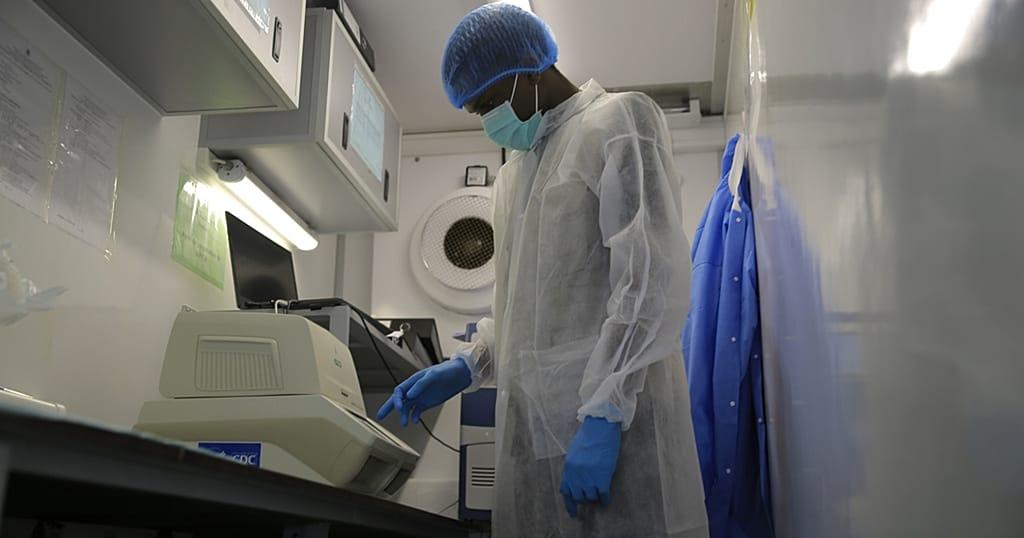
The Democratic Republic of Congo’s worst Ebola outbreak has spread to at least seven provinces, and UNICEF is operating 12 other child-care centres next to treatment centres full of Ebola patients.
Neema Nyaloka survived Ebola and now works with UNICEF to take care of children isolating from their parents who are being treated for it.
Lucia Elmi, director of global emergency programs at UNICEF, said, "We have children that are completely orphans, so they lost both parents," as the outbreak left at least 1,900 children separated from their caregivers.
TheWorld Health Organization estimates that children have a much higher fatality rate, at 60 per cent compared to 40 per cent for adults, and the D.R.C.’s public health institute reported that deaths have surpassed 4,400 as of Oct. 15.
Amy Mina, a project leader from Canada with Save the Children, said, "Sixty-one per cent of the children who died of Ebola are under the age of five."
Tracking failures and cross-border risk
Trish Newport, emergency programme manager for Médecins Sans Frontières in DRC, said, "people are moving around without knowing they might have Ebola," as experts warned that virus tracking weaknesses are putting containment at risk. The Independent reported that a 40-year-old Kenyan man who had been living in the DRC travelled by road to Kampala, Uganda, and then flew on to Nairobi, Kenya, where he was diagnosed with Ebola and died on 5 October. Dr Abdirahman Mahamud, the WHO’s Director of Health Emergency Alert and Response Operations, said, "Community leaders are the answer to the outbreak," while he added that they cannot carry the response alone.
The Independent warned that contact tracing remains below target at under 80 per cent, and it quoted Newport saying, "The whole process of listing contacts needs to improve." The WHO warned that without significant improvements in contact tracing, the outbreak could see continued undetected transmission, late diagnoses, geographically expanding clusters and further cross-border spread.

Cases rise, travel restrictions
CDC reported 9235 confirmed cases in the Democratic Republic of Congo, and CDC said the outbreak is spreading substantially faster than previous Ebola outbreaks. CDC said the outbreak surpassed 1000 confirmed cases within 40 days of response activation, compared with approximately 235 days in the 2018 DRC outbreak. CDC said travelers who were in the DRC within 21 days of their flight will not be allowed to board commercial flights to the US, and US citizens and nationals who have been in the DRC should remain outside the country for 21 days before entering the US.
CDC identified response challenges including limited health care infrastructure and ongoing conflict in the affected region, and CDC said violence against health care workers and shortages of personal protective equipment have led to infections among health care workers treating patients. CDC recommended avoiding all travel to Ituri and Nord-Kivu provinces, and avoiding nonessential travel to Haut-Uele and Tshopo provinces.