Business09 July, 20263 min read
Ursula Von Der Leyen Proposes EU Critical Raw Materials Club With United States, United Kingdom, Canada
This article is an automated aggregation of coverage from news outlets. Our editorials offer in-depth analysis curated by the NewsCord team.
India's graphite mining push underpins its critical minerals strategy. Africa's mineral wealth draws international investment, signaling diversification interests.

Europe’s rare-earth squeeze
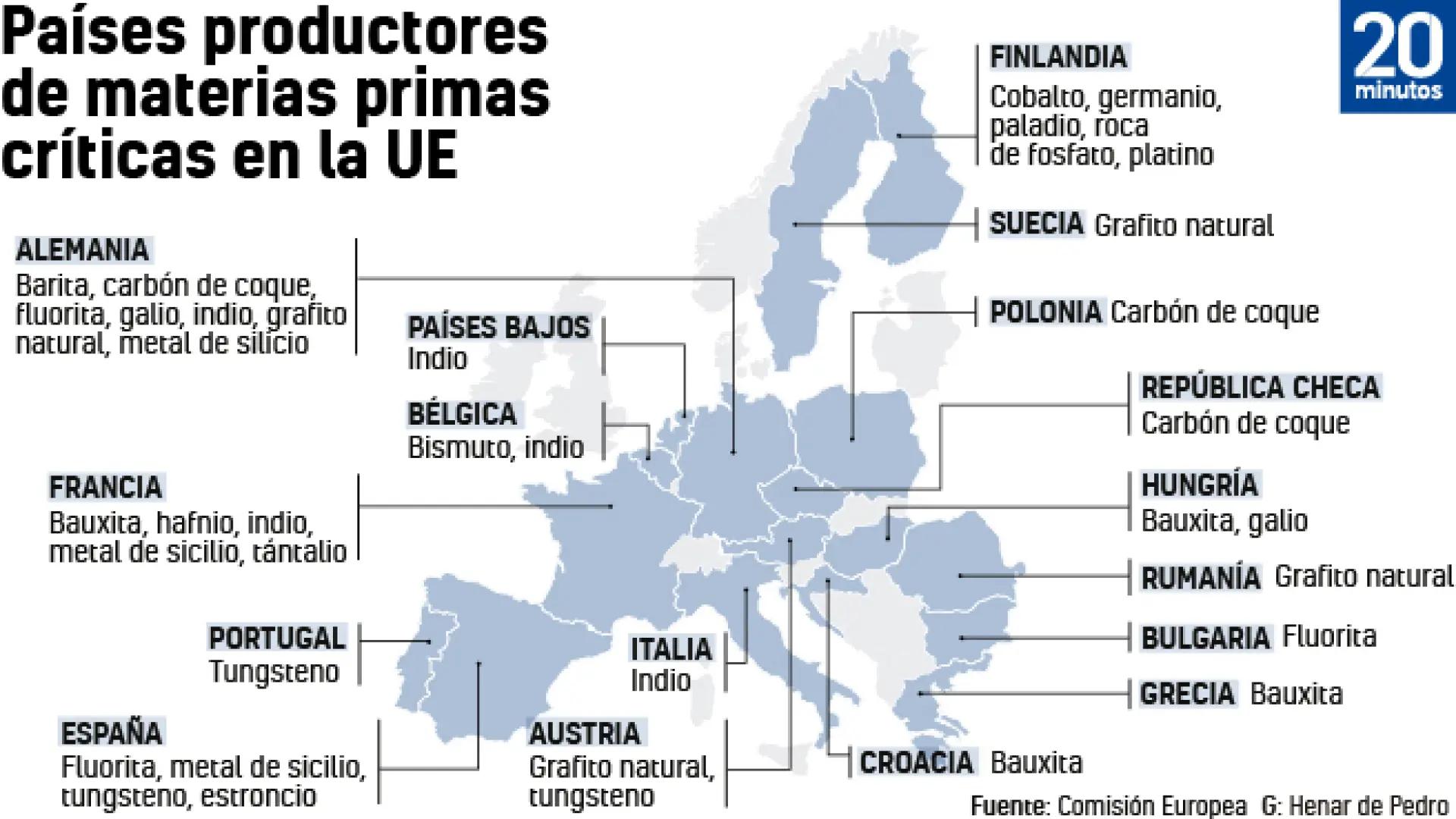
Europe’s dependence on China for rare earths is driving a push for new supply arrangements as Ursula von der Leyen, President of the European Commission, proposed creating a club of critical raw materials, including rare earths, between the EU and countries such as the United States, the United Kingdom, or Canada. The 20Minutos report says the EU is 98% dependent on China, which holds 85% of the world's rare earths, and frames the issue as a “war” over raw materials and rare earths tied to the clean energy transition. The same article links the push to the deployment of renewable energy and to manufacturing for computers and mobile phones, while noting that world reserves of rare earths are estimated at about 100 million tonnes.
“The EU is 98% dependent on China, which holds 85% of the world's rare earths.”
It also says only about 6% of rare earth deposits are viable, and describes rare earths as 17 chemical elements including scandium, yttrium, and lanthanum, cerium, praseodymium, neodymium, and others. In parallel, the BBC describes how foreign mining appetite—citing countries and blocs including the United States, China, Russia, Canada, the United Kingdom, the European Union, India, and the Arab states—has put critical minerals at the center of diplomatic agendas with African leaders.
Africa’s minerals, global demand
The BBC lays out how Africa holds a wide range of critical minerals in high demand, naming cobalt, graphite, lithium, bauxite, nickel, manganese, and PGMs, along with rare earth elements. It says Africa is estimated to hold about 60 different types of minerals, totaling about one-third of the world’s mineral reserves across all minerals, and cites an International Institute for Sustainable Development estimate that the continent would hold 90% of platinum group metals reserves and 80% of coltan. For the Democratic Republic of the Congo, the BBC reports the country accounts for more than 70% of global cobalt production, holds 51% of the world’s cobalt reserves, and has a 2025 budget where the mining sector’s contribution is estimated at 30% of 49.8 billion Congolese francs (USD 16.9 billion).
For South Africa, the BBC says the country is the world’s leading producer of palladium and platinum with 43% and 73% of global production respectively, and that it holds about 90% of global reserves of these minerals, totaling around 63 million tonnes. The Conversation adds that energy-transition metals such as cobalt, copper, lithium, and graphite account for nearly 29% of exports, while it describes Africa’s role in the global mining boom as significant even as investment there remains modest.
India’s graphite push
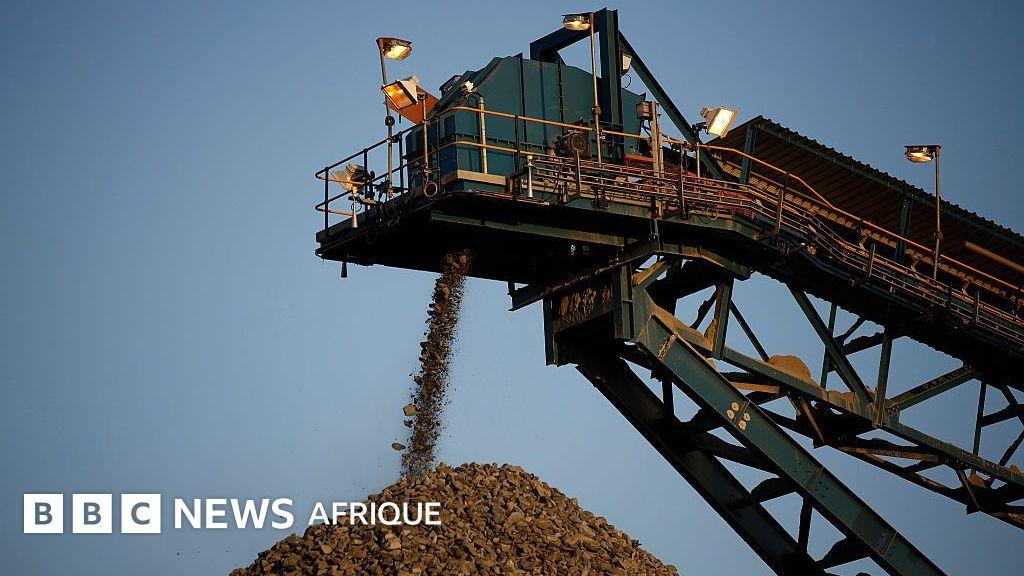
India is betting on critical minerals to power its clean energy future, launching the National Critical Mineral Mission (NCMM) in January 2025 to boost domestic graphite mining and reduce import dependency.
“These exploration and extraction projects have a long gestation period.”
ChemAnalyst says the NCMM is a seven-year mission with an outlay of 343 billion rupees ($3.7 billion), aiming to strengthen India’s energy security and accelerate industrial development, including auctioning over 100 critical mineral blocks and undertaking 1,200 exploration projects by 2030-2031.
The report also says India is promoting domestic processing and refining by waiving customs duties on 25 critical minerals and reducing them on two others, while diversifying supply chains away from countries with potential trade risks such as Russia, Madagascar, Indonesia, Peru, and China.
Climate Home News describes the local push in Arunachal Pradesh, where young villagers are trying to convince sceptical elders about graphite mining, with Gollo Doni saying, “The youth in our village migrate to cities for work. What’s better than to have jobs near home?”
It also quotes Kaira Rakheja warning that “These exploration and extraction projects have a long gestation period,” as India works to move from extraction toward processing for battery-grade graphite.