India31 October, 20252 min read
US and India Sign 10-Year Military Pact to Deepen War Cooperation and Arms Production
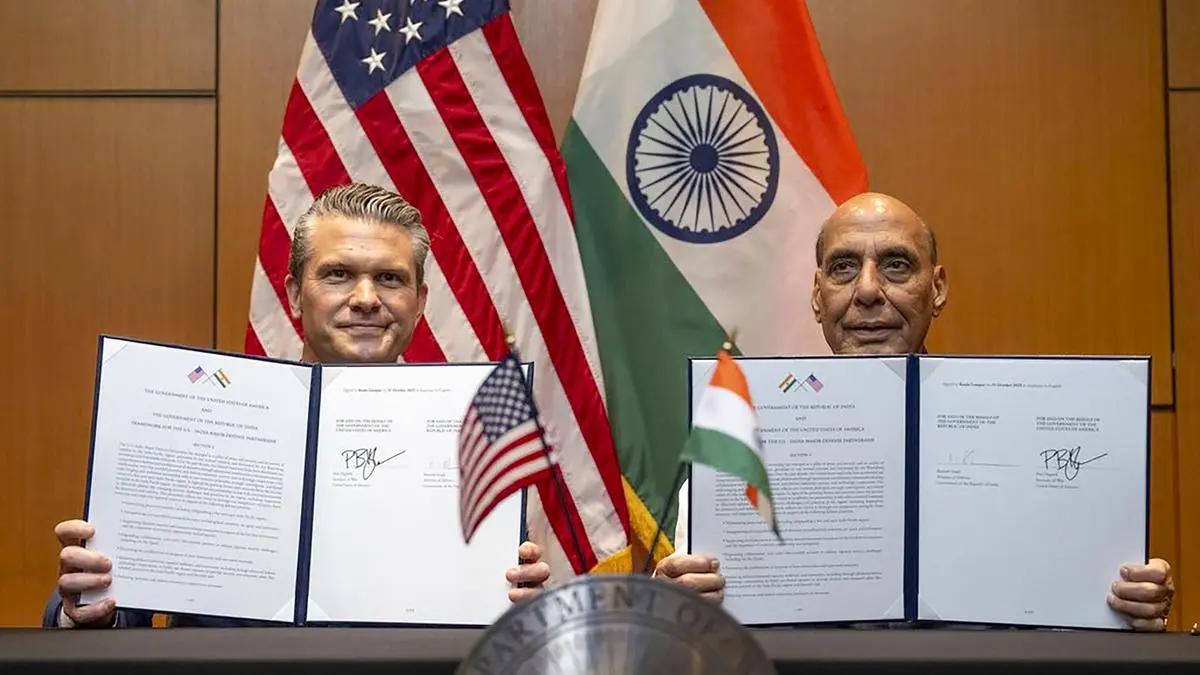
India and the US signed a 10-year defence framework agreement in Kuala Lumpur. The pact enhances military coordination, information sharing, and technological cooperation.

16 outlets told this the same way.
US-India Defence Agreement
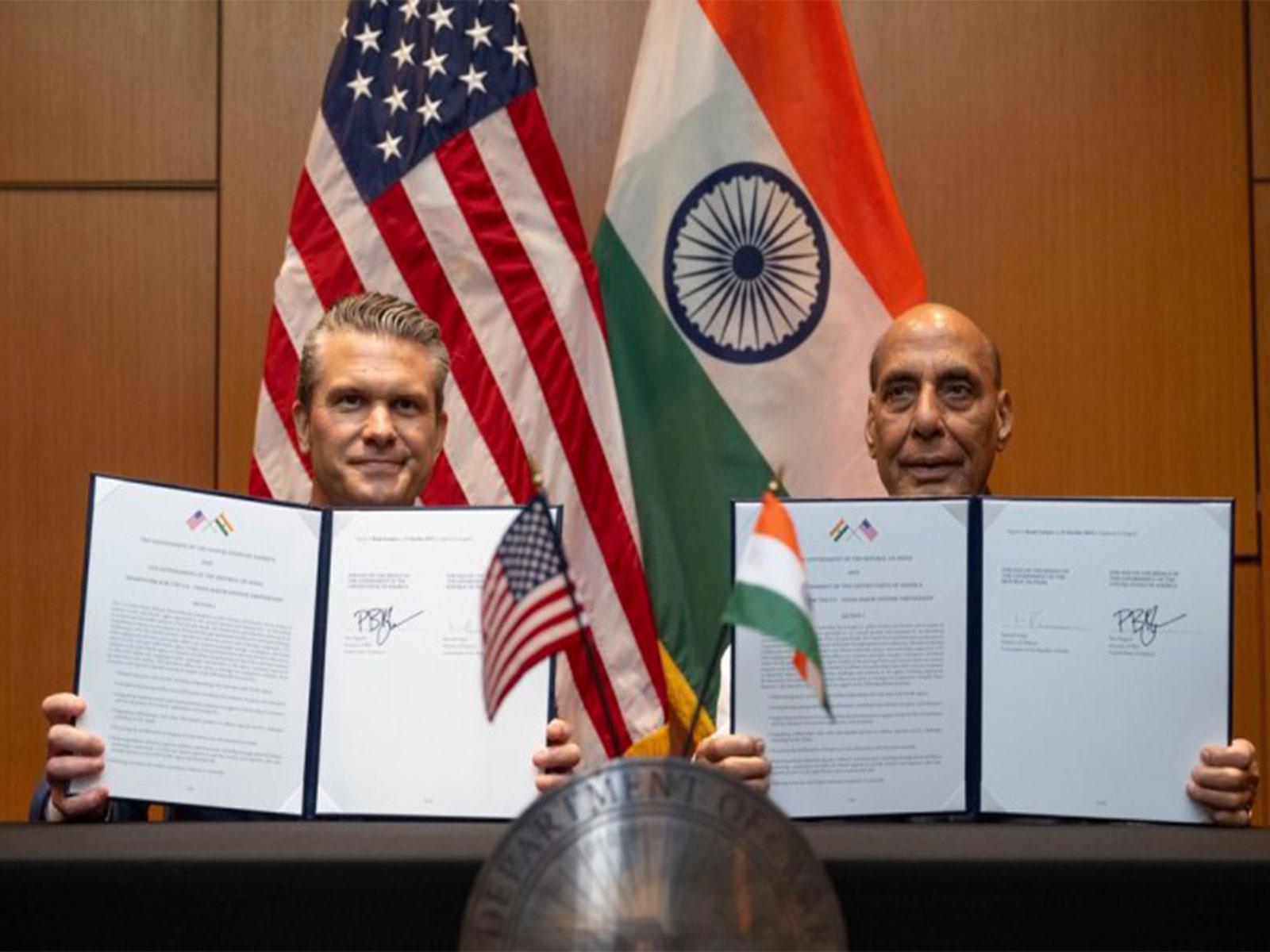
The United States and India signed a 10-year defence framework during meetings in Kuala Lumpur. India’s Defence Minister Rajnath Singh and U.S. official Pete Hegseth formalized the pact on the sidelines of ADMM-Plus. The agreement is framed as deepening coordination, information sharing, and technology cooperation to bolster regional stability and deterrence.
“The United States and India have signed a 10-year defense framework agreement aimed at strengthening regional stability and deterrence.”
Several outlets tie the announcement to the broader Indo-Pacific context and ASEAN engagements. Reports consistently place the signing at or around the ASEAN Defence Ministers’ Meeting-Plus. The defence ties are described as entering a “new chapter,” signaling a long-term strategic alignment between the two countries.
India's Defence Collaboration Framework
Reports indicate that the framework will enhance joint exercises, logistics, maritime security, and defence-technology collaboration. Some sources mention joint production, technology transfer, and strategic technology transfers as part of the agreement. One report highlights interoperability measures such as mutual use of bases and facilities, long-term access to advanced technologies for India’s modernization, and joint research and development in drones and AI warfare.
Other perspectives describe the pact as a policy guide for a free, open, and rules-based Indo-Pacific region. The framework is also seen as part of India’s Act East engagement with ASEAN.

Strengthening Diplomatic Relations
Officials’ statements underscore a strong upswing in ties. Hegseth is quoted describing the framework as “ambitious” and a long-term commitment. Singh is reported as calling it a new chapter in relations.
“Hegseth emphasized that the defense ties between the two countries have never been stronger.”
Some coverage highlights that defence ties have “never been stronger.” Other reports maintain a neutral, institutional tone centered on deterrence and stability.
Diplomatic and Economic Developments
The signing also sits within wider diplomatic and economic activity.
One outlet reports the accord followed recent high-level engagements, including a meeting between India’s S. Jaishankar and U.S. Secretary of State Marco Rubio.
These engagements occurred alongside ongoing trade talks where India stresses a cautious, autonomy-preserving approach.
Another source highlights that despite recent trade tensions, both sides affirmed security ties would remain unaffected.
Coverage further anchors the announcement to the ASEAN track, including the ASEAN-India Defence Ministers’ Informal Meeting and ADMM-Plus in Kuala Lumpur.
Media Coverage Variations
Some coverage gaps and inconsistencies remain across different outlets. A pair of outlets report that their texts lack sufficient content to summarize, which contrasts with detailed accounts found elsewhere. One report claims expanded interoperability, including mutual use of bases, but this is not reflected in several mainstream summaries.
“The provided text appears to be incomplete and does not contain enough information to summarize the news article.”
These mainstream summaries focus on coordination and technology cooperation, leaving aspects of implementation and access arrangements unclear. Outlets also differ in the naming of venues, such as ADMM-Plus versus ASEAN Defence Ministerial Summit. There are also variations in the titles used for U.S. officials across reports.