South America31 July, 20263 min read
U.S.-Backed Venezuela Talks Begin in Caracas Without Maria Corina Machado
This article is an automated aggregation of coverage from news outlets. Our editorials offer in-depth analysis curated by the NewsCord team.
U.S.-backed talks begin in Caracas between the interim government and an opposition faction. Maria Corina Machado is absent from the talks.

Talks start without Machado
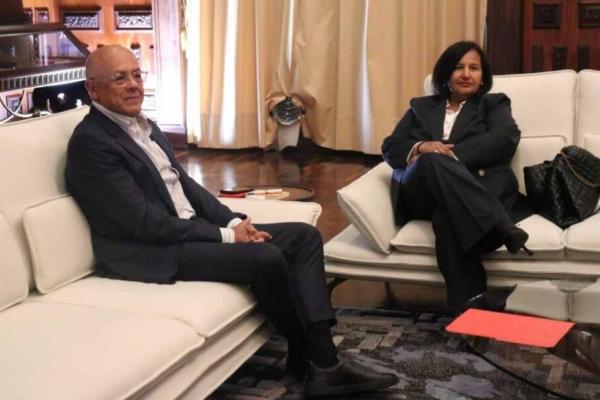
U.S.-backed negotiations between Venezuela’s interim government and a faction of the opposition are set to begin on Saturday, with Nobel Peace Prize winner Maria Corina Machado absent from the talks. The Reuters report says the talks will be led on the government side by Delcy Rodriguez’s brother Jorge Rodriguez, president of the National Assembly, while Dinorah Figuera leads the opposition delegation. France 24 reported that the absence of Machado has left her base skeptical, and it quoted former political prisoner and ex-lawmaker Williams Davila, 74, saying, "The people are hopeful that... we will arrive at free and democratic elections."
France 24 also said the talks will be held in the capital Caracas and that details of the process, including location, agenda and layout, have not been disclosed other than the talks will be in Caracas. Al Jazeera added that the proceedings come nearly seven months after the U.S. military’s abduction of Nicolas Maduro and that Machado has not been invited to attend, despite saying she would not obstruct “real progress” at the talks.

Leverage, legitimacy, and protests
The absence of Machado is tied to Washington’s influence over who is seated at the table, with Reuters describing Figuera as chosen because she leads an opposition-dominated national assembly cohort elected in 2015 that the U.S. still recognizes.
Reuters also said Machado was not participating because she is not a member of the 2015 assembly, and it quoted U.S. Secretary of State Marco Rubio saying, "every element of Venezuelan society needs to be represented."
France 24 reported that Chavistas and leftists protested ahead of the negotiations, and it quoted Socialist lawmaker Francisco Arias denouncing them as "approved only by those who run the US government."
France 24 also quoted public servant Noel Urbina, 45, saying he felt "very strong unease" after the U.S. "invasion" of Venezuela and questioning how there could be dialogue with an opposition "who promoted invasions."
Al Jazeera reported that Machado said she would judge the talks based on whether democratic institutions are restored, political prisoners are freed and elections are scheduled, while it noted that the Trump administration has kept her at arm’s length and denied reports it advised her not to return.
Agenda: elections and sanctions relief
Across the sources, the talks are framed around rebuilding democratic institutions and paving the way for elections, with the U.S. State Department saying the negotiations will focus on rebuilding democratic institutions, strengthening the electorate and guaranteeing political participation.
Al Jazeera reported that Figuera will push for overhauling the electoral council and top court, and it said Jorge Rodriguez will use the talks to push for more U.S. sanctions relief.
Internazionale said the interim government has said it will push for remaining U.S. sanctions to be lifted, and it described U.S. leverage as unprecedented influence over Venezuelan politics since the January raid that removed Nicolas Maduro and installed acting President Delcy Rodriguez.
France 24 reported that even before the June earthquakes that killed over 5,500 people, Venezuela was in flux after the U.S. forces deposed Maduro, and it said interim leader Delcy Rodriguez has been governing under Washington’s watchful eye since then.
Banca y Negocios added that the dialogue lacks known details about location, calendar, or dynamics, and it quoted Pedro Benítez saying the public powers are "illegitimate" and "not the product of the free will of Venezuelans."