
Full story
Economic D-Day Begins
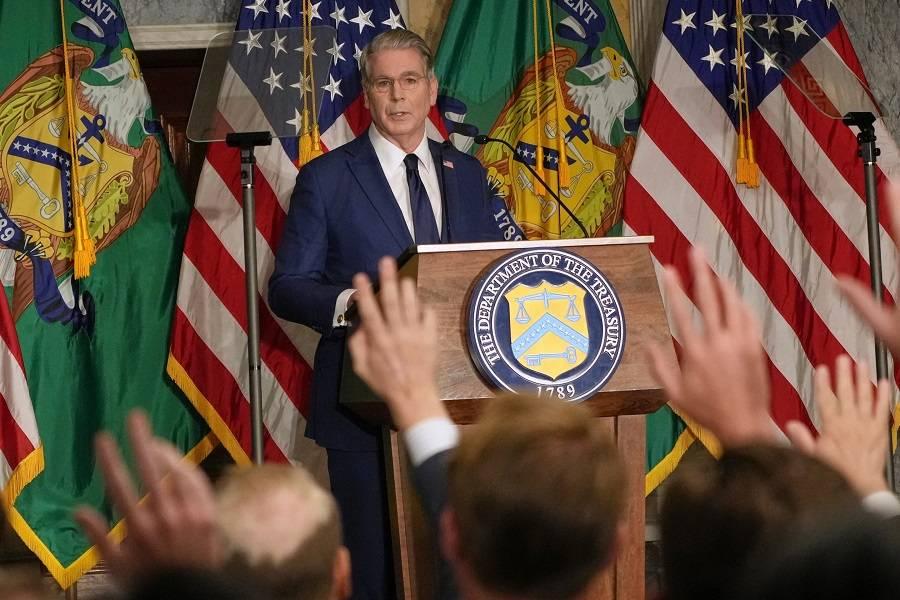
The United States launched “Operation Economic Outcast” to cut Iran’s economic lifeline, with U.S. Treasury Secretary Scott Bessent saying the campaign would target Tehran’s financial interests across the world and aim to “sever every economic lifeline that sustains this tyrannical regime until Tehran stands alone.”
““sever every economic lifeline that sustains this tyrannical regime until Tehran stands alone””
Bessent said the US would target all of Iran’s sources of revenue, including oil, and warned that countries and entities that “facilitate transactions and are part of the ecosystem that turns Iranian oil into money, into repression, they will be targeted.”

The plan was described as a nearly six-month effort after the US and Israel launched strikes against Iran, and it comes alongside a new wave of sanctions that, according to Al Jazeera, targeted “five of Iran’s most vital lifelines”: digital assets, technology, gold, aviation and shipping.
Bessent also framed the campaign as “economic D-day,” likening it to the Allies’ forces landing on French shores during World War II, while Iran’s Foreign Minister Abbas Araghchi dismissed the pressure, saying “They cannot think of any other solution in confronting the great Iranian people, so they repeatedly put forward the same old plans.”
Allies Warned, Secondary Penalties
Alongside the sanctions campaign, Bessent warned that “no one is exempt” from being targeted by indirect sanctions for dealing with Iran, and DW said the operation would target “five of the vital channels Iran exploits in other countries: digital assets, technology, gold, aviation, and maritime transport.”
DW reported that the Treasury imposed new sanctions on “more than sixty entities, individuals, and ships around the world,” and it said Washington would cut off access to the U.S. dollar system for entities that launder Iranian money, with Bessent telling reporters, “Any entity that facilitates money laundering on behalf of Iran will be excluded from the U.S. dollar system.”
In parallel, EL PAÍS described the “economic D-Day” as beginning this Monday and said Iran threatened 46 ships with fines or outright seizure in the Strait of Hormuz, with the Gulf Strait Authority warning that ships “may face restrictions on future crossings, including fines, detention, or confiscation.”
EL PAÍS also quoted Mohsen Rezaei, head of Iran’s Supreme National Security Council, warning neighboring countries that anyone joining the U.S. economic war would be considered an enemy, saying “Anyone who does so, we will consider an enemy,” in an interview with Iran’s state broadcaster IRIB.
Isolation vs Reintegration
The new U.S. pressure campaign was framed as forcing a choice between total isolation and reintegration into the global economy, with France 24 saying the plan targets entities, individuals and ships accused of illicitly facilitating Iran’s access to technology and missiles.
“warning that the regime faces two paths: total isolation or reintegration into the global economy.”
France 24 reported that Washington warned countries cooperating with Tehran will be sanctioned, while the New York Times said Iran would not bow to Trump’s economic pressure and quoted Esmaeil Baghaei, spokesman for Iran’s Foreign Ministry, saying the administration was “simply 'repeating methods that have proven ineffective' in the past.”
The New York Times also said the defiant remarks came ahead of new measures expected to be announced by Scott Bessent on Monday afternoon, as the Trump administration shifted to wear down Iran economically after more than six months of intermittent fighting failed to force Iranian leaders to accept U.S. terms.
In the same reporting stream, the New York Times said a ceasefire signed in June collapsed just weeks after Iran resumed its blockade of the Strait of Hormuz, and it described the Strait as “the crucial maritime route for oil and gas in the Persian Gulf.”