Iran23 August, 20263 min read
US Military Supports “Dark” Tanker Transits After Kiku Vanishes Near Dubai
This article is an automated aggregation of coverage from news outlets. Our editorials offer in-depth analysis curated by the NewsCord team.
US escorted 'dark' tankers through Strait of Hormuz after Kiku vanished near Dubai Tankers cloak AIS, reappear on the opposite side, continuing Gulf oil shipments

Dark tankers through Hormuz
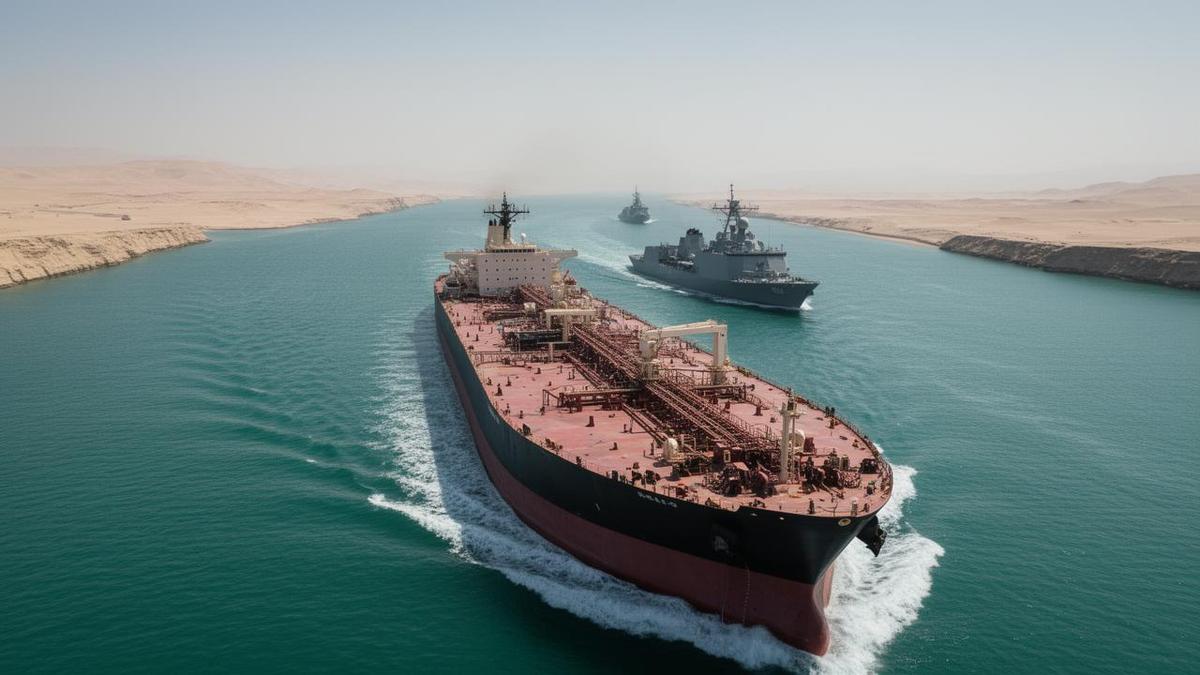
In the Strait of Hormuz, tankers carrying millions of barrels of Gulf crude are operating with their Automatic Identification System (AIS) transponders switched off, then reappearing hours later on the other side of the strait as part of “dark” transits supported by the US military. Gulf News described the Greek-owned supertanker Kiku loading crude at Qatar’s Mesaieed terminal and then vanishing from maritime tracking systems near the coast of Dubai on July 31, with its AIS signal disappearing and later reappearing on the other side of Hormuz at 10am the next day.
BigGo Finance similarly reported that on July 31 shortly after 2 p.m. near the coast of Dubai, the Kiku “simply vanished from maritime tracking systems” with its AIS transponder switched off, before reappearing on the morning of August 1 in the Gulf of Oman. The two accounts tie the tactic to reducing exposure to Iranian drone attacks, with Gulf News saying the “dark” transit is designed to reduce the danger from Iranian drone attacks and BigGo Finance saying the goal is to avoid Iranian drone attacks, like the one that struck the Kiku a month earlier without detonating.
Threats and selective access
While the “dark” crossings keep oil moving, CNN Arabic reported that Iranian Supreme National Security Council Secretary Mohsen Rezaei vowed to “neutralize the economic war” with the United States and threatened to halt oil flows through the Strait of Hormuz and the Gulf. CNN Arabic quoted Rezaei warning: "If they take this action, we will not allow a single drop of oil to pass through the Gulf, and oil will not exit via either the Strait of Hormuz or the Gulf."
CNN Arabic also said Iran allows several Iraqi oil tankers to pass through the Strait of Hormuz, presenting Tehran’s approach as selective access to the waterway even as it threatens to stop navigation. In parallel, Bloomberg Línea framed the stakes of the U.S. plan to economically isolate Iran as raising the risk of retaliation, saying Iran’s Islamic Revolutionary Guard Corps “could prove immune to such pressure and has numerous ways to retaliate,” with the Strait of Hormuz described as strategically important.

Oil flows, insurance, and risk
Gulf News reported that about 80% of traffic through Hormuz over the past two weeks has been operating “dark,” and it cited the US Department of Energy estimate that oil traffic through the strait has averaged between 8 million and 9 million barrels a day.
BigGo Finance added that the strategy shifted the cost of war-risk insurance and physical danger of Iranian attacks from commercial shipowners to the US government and the producers themselves, while also noting that radar can still detect a vessel with its transponder off.
EnergyNow (Reuters) said oil prices jumped about 6% as Iran stepped up attacks on the United Arab Emirates and ships in the Middle East Gulf, with Brent futures settling at $114.44 per barrel and U.S. West Texas Intermediate (WTI) crude settling at $106.42.
Looking ahead, Bloomberg Línea warned that the economic isolation campaign could “trigger one of the worst economic crises in Iran’s history,” while also describing how Iran’s ability to retaliate and keep the Strait of Hormuz “almost closed” has already pushed global energy prices higher and forced wealthy Gulf nations to pressure Washington for a diplomatic exit.