USA · 01 July, 2026 · 3 min read
U.S. Supreme Court Rejects Trump Bid to End Birthright Citizenship in 6-3 Ruling
Supreme Court rejected Trump's bid to end birthright citizenship in a 6-3 ruling. Citizenship at birth remains for those born on U.S. soil.
What the ruling implies for future policy—Congress vs enforcement.
10 of 12 outlets skipped it: roberts referenced earlier common-law soil-over-blood principle..
23outlets compared
Same story, two versions
tap a side to read it in full
Frames next steps as either legislative change or expanded criminal/immigration enforcement.
Supreme Court blocks order
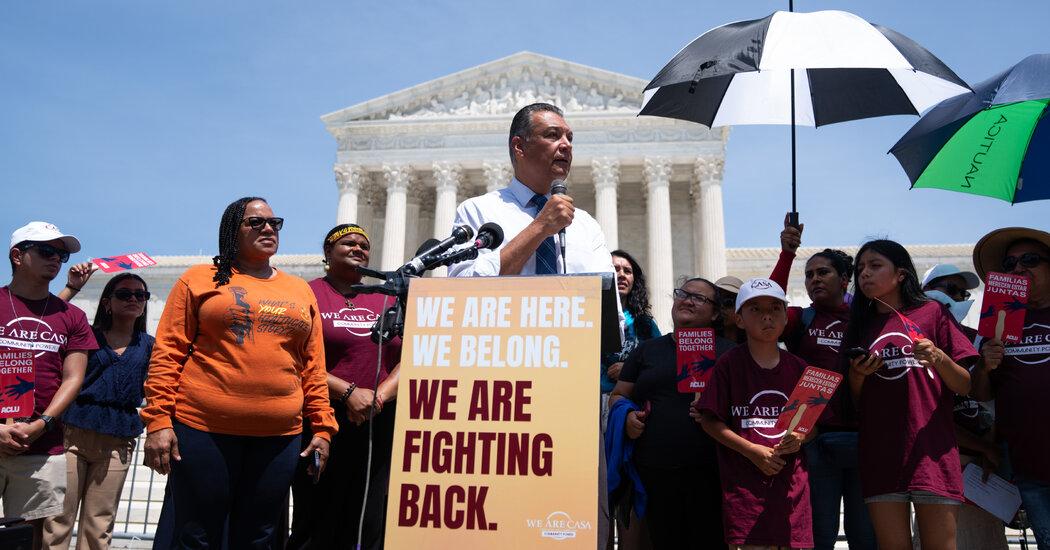
The U.S. Supreme Court rejected President Donald Trump’s effort to end birthright citizenship in a 6-3 ruling on June 30, striking down his executive order that sought to deny citizenship to children whose parents aren’t authorized or are only temporarily authorized to be in the United States.
Chief Justice John G. Roberts Jr. wrote that the Constitution’s citizenship promise applies to children born in the U.S. and “subject to the jurisdiction thereof,” and the BBC said the decision upheld a constitutional right for babies born in the U.S. to parents “to parents unlawfully or temporarily present.”
The ruling followed Trump’s January 2025 executive order signed on his first day back in office, and CNN said the Court rejected the guarantee that all children born on U.S. soil are citizens regardless of their parents’ immigration status.
In his dissent, Neil Gorsuch argued that while he believes Trump’s executive order “on its face” is fully lawful, he would still have been open to a constitutional challenge if the administration later applied it to deny citizenship to children whose parents have unlawfully made their permanent home in the country.
Clarence Thomas dissented as well, and Democracy Now! quoted Thomas’s view that the clause “was designed and understood to secure equal rights for the freed blacks” after the end of slavery.
Trump pivots to Congress
After the Supreme Court defeat, Trump and allies said they would redirect the fight toward Congress, with NBC News reporting that Trump called on Congress to pass a law banning birthright citizenship and said, “We can easily make it up in Congress through Legislation.” NPolitico reported that in the hours after the ruling, White House aides and allies discussed policy options targeting women who come to the U.S. to give birth so their child will automatically be a citizen, and it quoted an administration official saying, “Going forward, the administration will continue its fight against pull factors for illegal immigration.” PPolitico also said the administration’s internal discussions included using a federal law section known as 212(f) to ban some immigrants from entering the United States, and it quoted Ken Cuccinelli saying, “Under current law, pregnant women can be barred from entry.”P
CNN described how Brett Kavanaugh joined the majority in blocking the executive order but suggested Congress could amend relevant federal laws or enact new legislation establishing exceptions, and it quoted Kavanaugh’s concept that “Congress could – consistent with the Fourteenth Amendment – amend (the relevant federal laws).” Democracy Now! quoted Trump’s social media message after the decision, saying, “Congress should start TODAY to work on ending expensive and unfair to our Country, Birthright Citizenship.”
What’s at stake next
The ruling’s immediate effect was to keep birthright citizenship in place for children born in the U.S., and ABC News & Headlines said the decision was a major blow to Trump’s hardline agenda on immigration after the Court blocked his executive order. NBC News said Trump’s executive order would have limited birthright citizenship to those with at least one parent who is a U.S. citizen or permanent resident, and it quoted the 14th Amendment language that “All persons born or naturalized in the United States, and subject to the jurisdiction thereof, are citizens of the United States.” NThe Hill reported that Justice Samuel Alito called the decision “one of the most important decisions” in the court’s history and a “serious mistake,” warning in dissent that it could have “grotesque results,” including encouraging “birth tourism.”
Scripps News said the case centered on the first section of the 14th Amendment and quoted Roberts writing that children born in the U.S. to parents who are unlawfully or temporarily in the country meet the requirements of the 14th Amendment, adding, “Under the Constitution, they are citizens at birth.” Looking ahead, Politico said the Supreme Court setback did not derail the administration’s broader efforts to curtail illegal immigration, and it reported that the ruling added fuel to efforts to remove immigrants residing in the U.S. under temporary status, including temporary protected status and parole.P